Breaking waves, pictorial.

capnsensible

Well-Known Member
Joined
15 Mar 2007
Messages
49,539
Location
Atlantic
Visit site
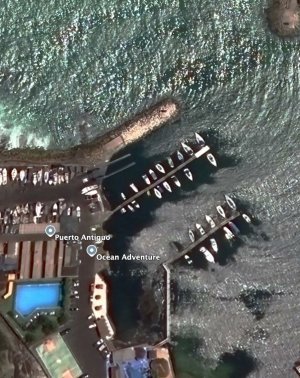
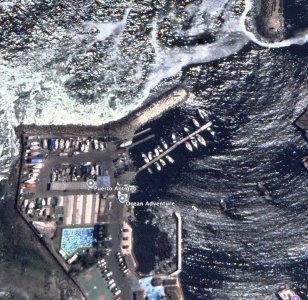
There is an excellent video of a huge wave striking the Peruvian shore recently. This shows the effect of breaking waves on moored fishing boats and why these waves are the thing I really don't like to tangle with at sea.

Tragically, there have been a couple of deaths, but there is a big visual lesson.

Unfortunately, it's a news website so I can't link to it.

It's well worth a Google to see how it happens.
 
It's sometimes easy to forget the power of the sea......

When gawd knows how many tons of water from a single breaking wave lands in your cockpit, its somewhat uncomfortable and mind sharpening.

The vid is tsunami like, no?
 
The pressures developed by breaking waves are enormous; so high that the upper limit isn't known because no measuring equipment has survived it! Back in the Stone Age (about 1973) I remember learning that the highest measured pressure was from the sea wall at Dunbar; but I can't recall the number (I think I can be excused not remembering an incidental detail from a lecture over 50 years ago!). From my own experience of sitting out a serious gale at Dunbar, I can believe it. Attempts have been made to install lights on Rockall, but none have succeeded because the wave pressure has defeated modern adhesives that were selected knowing the likely stresses, even well above sea level.

The destructive force of waves is tremendous.
 
The pressures developed by breaking waves are enormous; so high that the upper limit isn't known because no measuring equipment has survived it! Back in the Stone Age (about 1973) I remember learning that the highest measured pressure was from the sea wall at Dunbar; but I can't recall the number (I think I can be excused not remembering an incidental detail from a lecture over 50 years ago!). From my own experience of sitting out a serious gale at Dunbar, I can believe it. Attempts have been made to install lights on Rockall, but none have succeeded because the wave pressure has defeated modern adhesives that were selected knowing the likely stresses, even well above sea level.

The destructive force of waves is tremendous.
Rockall, lit or unlit? for more about Rockall!
 
Cavitation induced erosion is likely a significant factor in rock destruction rather than just pressure forces alone. Dam spill ways can be wrecked due to cavitation when operating in emergency mode and maximum flow rates are reached. I have a recollection of rock erosion in Australia that suggests cavitation failure, likely caused by a very big tsunami waves.
 
Top