boat brands - prejudice or reality

You are obviously getting a bit upset on this thread.

The reason this debate in unwinnable, for either side, is that there is no doubt old and new are different, but there is also no reason why a modern, or an old boat like yours, would be unsuitable for the type of sailing you do. It's a preference and priorities problem, which for every person is different.

I couldn't understand why you seem so vociferously opposed to anything modern, until I found your blog.

Wild Bird Adventures

It's a shame it stopped because it is both entertaining and interesting. Many could learn from the content.

I've got great respect for those who buy a close-to-end-of-life boat and put loads of money and time into bringing it up to scratch, breathing another decade or more of life into it. Why not start some threads on here, based on your experiences? You could highlight issues specific to older boats.

As far as I can gather, the teak decks were leaking and worn out, so you removed them completely apart from re-doing the cockpit and coach-roof, filled around 2000 screw holes, glassed the decks "for strength" and re-bedded all the deck hardware which involved taking the interior headlining out to get to the underside of the deck. Great job, it needed doing. Let's hear about it, with costs, time, and other useful information like availability of teak, how to make a non-slip deck etc. You could even give your perspective to people thinking of buying a boat with a 30 year old teak deck - especially the bit about how it is less than ideal in the Caribbean heat.

The original solid windscreen was severely corroded and the windows crazed, so you removed it and replaced it with a sprayhood - getting a decent spray-hood/bimini arrangement on a centre cockpit isn't easy - you could give people tips on how to adapt a centre cockpit to hot climates, the vents for your portlights and hatches looked interesting too.

There was also the corroded mast support, which you noticed when the bulkhead started creaking. You pulled the floor up, and found you could poke a screwdriver through the mast support. Things corroding in the bowels of old boats are to be expected. The bulkhead sunk into the bilge and started creaking. This structural issue required a mast removal and a repair, pretty much what Sailing Fair Isle had to do with a similar problem. As I understand it, due to the prohibitive cost of a mast removal, you sanctioned use of a hydraulic jack, and had the mast jacked up to allow fitting of a stainless steel section in the mast support. In the process, this separated the bulkhead from the hull, so you and your lovely wife had to re-glass the bulkhead due to the extremely loud noises it was making as the hull flexed (requiring ear-plugs to sleep?) - in the process of making the repair, you had to remove a considerable amount of the interior. Sounds like a great learning experience to me, and not atypical for boats of this age. Would also be interesting to people on this forum considering an older boat.

Old boats come with these sort of problems, however you paint them as a solid, dependable, safe choice, bash modern designs, and consistently fail to concede the associated issues of buying an old boat.

There are sailors, who don't want the hassle, cost, stress or uncertainty of relying on a 40+ year old structure. After reading the blog, which was very interesting, I can only conclude that your dogmatic attacks on modern boats could in part be due to a bit of cognitive dissonance? It must be difficult to evangelise your boat choice, knowing all the issues you have had.

Anyway, you seem to be enjoying yourself, as are the owners of modern boats.
I think the only person getting upset here is you. You felt the need to try to find me on the Internet and you dug up a blog from over 10 years ago!
I bought my boat fully aware of what we were getting into.
I retired in 2014 at the age of 50 and wanted a project. I am not the person to retire and sit in front of the telly until I die. We wanted a big project to get our teeth into and understood the benefits are taking a high quality older vessel and doing a full refurbishment on her for our benefit.

As a retired engineer, the kind of work you identified that we were doing doesn't phase me. I enjoy it. I have done far more to her than you saw in my blog!
As I am sure you are aware we just crossed the pond from the UK 5,600nm. We had zero issues other than some problems with a new AIS in the Canaries that wouldn't talk nicely with my Raymarine Axiom.
Our 45 year boat didn't creak, or break anything even though we saw winds of 40kts and experienced an extended period of bad weather. We also had a fast passage that would have placed us 4th in the ARC+ if we had entered and had the same conditions. Slow these old boats, eh!

I have the financial resources to go out and buy a new production boat of the same size as Wild Bird but they are not what we wanted. You will hopefully understand why as you know my feeling about modern boats.

You seem to think you have scored a goal against me. The reality is you couldn't be further from the truth.

If anybody want to read my blog from 10 years ago Baggyface has kindly linked it for you all to see😀
 
Last edited:
I think the only person getting upset here is you. You felt the need to try to find me on the Internet and you dug up a blog from over 10 years ago!
I bought my boat fully aware of what we were getting into.
I retired in 2014 at the ago of 50 and wanted a project. I am not the person to retire and sit in front of the telly until I die. We wanted a big project to get our teeth into and understood the benefits are taking a high quality older vessel and doing a full refurbishment on her for our benefit.

As a retired engineer, the kind of work you identified thst we were doing does phase me. I enjoy it. I have done far more to her than you saw in my blog!
As I am sure you are aware we just crossed the pond from the UK 5,600nm. We had zero issues other than some problems with a new AIS in the Canaries that wouldn't talk nicely with my Raymarine Axiom.
Our 45 year boat didn't creak, or break anything even though we saw winds of 40kts and experienced an extended period of bad weather. We also had a fast passage that would have placed us 4th in the ARC+ if we had entered and had the same conditions. Slow these old boats, eh!

I have the financial resources to go out and buy a new production boat of the same size as Wild Bird but they are not what we wanted. You will hopefully understand why as you know my feeling about modern boats.

You seem to think you have scored a goal against me. The reality is you couldn't be further from the truth.

If anybody want to read my blog from 10 years ago Baggyface has kindly linked it for you all to see😀

We know most of this, and this isn't about scoring goals against anyone, it's about the pros and cons of boats, both modern and old, and about being truthful rather than disingenuous.

It was an AI that found your blog. I was looking for pros and cons of old boats, structural problems etc. and then following the links it provided to see if they had any merit. I landed on your blog at the part where your mast support had corroded and was collapsing - I would be lying if I said it didn't raise an eyebrow though. ;)

Back on the boat more investigations were needed into the ominous ‘creak’. Floorboards up, head torch on and screw driver probing revealed that the steel post which supports the underside of the main mast and sits on top of the keel was corroded so much so that Tim managed to push the screwdriver through it!

The trip across was windless which was good for keeping the load of our sickly mast post. .....

Unfortunately the boat furniture was making some terrible noises, a testament to the fact that the mast post was just too short, so that the weight of the rig was being taken by the internal furniture instead. More investigations and repairs would need to be made in the Canaries.

Time to do a few jobs the main one being to fibre glass the very squeaky bulkhead. If you’ve ever watched those films featuring old wooden sailing ships like Pirates of the Caribbean and they’re down below deck and everything is creaking, that’s how our boat has been ever since the Madeiran bodgers jacked our mast up too far replacing the mast post. So now we wanted to try and fix it. It only creaked when we were sailing, but across the Atlantic we had to screw our ear plugs in really hard to get to sleep!!!

I really don't know what to say. How do you square the bold bits from the blog with "Our 45 year boat didn't creak" .... didn't creak when? No mention today of how you got from the situation above to the present state ... not even a hint that you had those problems.

Problems like this are all too common with old boats, and can sink people financially, too many boats end up neglected because dreamers don't understand the cost and effort required to restore a fixer-upper - so they give up deflated, never get afloat, and the boat goes further downhill.

I have no objections to you telling everyone how wonderful your boat is, but at least give newcomers an inclination of how much money and effort is required to get an older boat to that standard. That's all. You can even carry on bashing modern boats .... it's all part of the discourse. People will make their own minds up anyway.
 
We know most of this, and this isn't about scoring goals against anyone, it's about the pros and cons of boats, both modern and old, and about being truthful rather than disingenuous.

It was an AI that found your blog. I was looking for pros and cons of old boats, structural problems etc. and then following the links it provided to see if they had any merit. I landed on your blog at the part where your mast support had corroded and was collapsing - I would be lying if I said it didn't raise an eyebrow though. ;)


I really don't know what to say. How do you square the bold bits from the blog with "Our 45 year boat didn't creak" .... didn't creak when? No mention today of how you got from the situation above to the present state ... not even a hint that you had those problems.

Problems like this are all too common with old boats, and can sink people financially, too many boats end up neglected because dreamers don't understand the cost and effort required to restore a fixer-upper - so they give up deflated, never get afloat, and the boat goes further downhill.

I have no objections to you telling everyone how wonderful your boat is, but at least give newcomers an inclination of how much money and effort is required to get an older boat to that standard. That's all. You can even carry on bashing modern boats .... it's all part of the discourse. People will make their own minds up anyway.
People's attitude to boats wasn't part of the original discussion. It was about prejudice between old and new.
Eventually your boat will be old. Will you view it as old and no longer fit for the purpose? You currently assess it as ideal or you wouldn't have recently purchased it.
My gripe is when people say because its a brand new model it must be far better than something older. This doesn't distinguish between something that was built to the highest quality in its time, using the best materials in its time. 'Old boat' is banded around as if it is something inferior in every way.
The reality is that the hull quality and the materials used in my boat would not look out of place in a high end modern, custom built boat.
Where as the cheapest production boats are built to a price.
My surveyor told me that in his opinion the very latest production boats get worse than the previous versions as builders work out how to shave cost a little more with every model.
This is nothing wrong with this if it meet the owners requirements and use profile, but don't assume its a better boat for my application than my boat.
You will by now be aware that my old boat has had a huge amount of work done to it to return it to a condition as good as, and in certain areas better than original, where modern developments have allowed me to improve it.

I haven't done it to make money and expect that when I sell it I won't recover what I have spent on it. I never intended to. I do expect to get several more years out of her, and I expect to put 10 of thousands more ocean miles on her before we swallow the anchor. It will be the last boat we own.

The money spent on her is not significant to me and if you take in the whole, we have had 12 out of the last 14 years with minimal marina fees. We rented our house out as it was crazy to leave it empty whilst we were off sailing. The income from the house has paid for the work on the boat and some.
 
I accept that my boat isn’t cutting edge. And whilst the design choice is, er, individual, most people would accept it was a premium product, and that the new ones are too. Due to it’s construction, and engineering standards, plus maintenance, it's still entirely functional. There is still no monohull that comes even into the ball park, in spite of a flurry of performance monohulls in recent times. A new one would be better, only a whisker faster, but roomier, and even better engineering. Would I like one? Sure. Just not enough to move house to do it.
 
People's attitude to boats wasn't part of the original discussion. It was about prejudice between old and new.
Eventually your boat will be old. Will you view it as old and no longer fit for the purpose? You currently assess it as ideal or you wouldn't have recently purchased it.
My gripe is when people say because its a brand new model it must be far better than something older. This doesn't distinguish between something that was built to the highest quality in its time, using the best materials in its time. 'Old boat' is banded around as if it is something inferior in every way.
The reality is that the hull quality and the materials used in my boat would not look out of place in a high end modern, custom built boat.
Where as the cheapest production boats are built to a price.
My surveyor told me that in his opinion the very latest production boats get worse than the previous versions as builders work out how to shave cost a little more with every model.
This is nothing wrong with this if it meet the owners requirements and use profile, but don't assume its a better boat for my application than my boat.
You will by now be aware that my old boat has had a huge amount of work done to it to return it to a condition as good as, and in certain areas better than original, where modern developments have allowed me to improve it.

I haven't done it to make money and expect that when I sell it I won't recover what I have spent on it. I never intended to. I do expect to get several more years out of her, and I expect to put 10 of thousands more ocean miles on her before we swallow the anchor. It will be the last boat we own.

The money spent on her is not significant to me and if you take in the whole, we have had 12 out of the last 14 years with minimal marina fees. We rented our house out as it was crazy to leave it empty whilst we were off sailing. The income from the house has paid for the work on the boat and some.
In a way I have done a similar renovation. I could have bought a fully equipped new 32 footer in 2013/4, but I could not justify spending so much on one item. Instead I decided a maximum budget of £40000 would be sufficient to give me the same enjoyment after a break of 21 years due to business and family commitments. Both my parents had died and left me a reasonable legacy. My mother's dying wish was for me to buy another boat. Never having bought a secondhand boat before, as I had only sailed on or bought new boats, it was a daunting task to choose what would be best to sail single handed. In the past I had sailed many different types of boats, including racing at a high level, so I wanted some performance. I thought 35ft would be a sensible limit considering I was then 60. The choice was vast and there had been lots of changes and developments to yachts over that couple of decades.

Initially I thought a Trapper 700 fitted the bill. Whilst awaiting for probate to be completed, I watched one continue to be reduced in price, but it sold before the funds became available. Then a chance comment from my brother, he suggested a Westerly Fulmar. What, a Westerly, you must be joking as they only built floating caravans. He then reminded me of racing against one back in the early 1980's. A bit of research confirmed many things that met my idea of a good boat. The racing background, a three quarter rig giving a large mainsail and smaller head sails//spinnaker, plus a good quality builder with an active owners association.

The problem was the first 7 Fulmars I found for sale had all been sold. There was one I liked that I thought was over priced as it still had the original engine, it was then reduced by £4000 to £28000. I went to view it and made an offer £1000 below the asking price. This was the first time I had even stepped on a Fulmar. As I drove home, the agent phoned me to say another interested party who had made an offer £4000 below the reduced price, had decided to pay the asking price. I was gutted as I could easily have paid the full price. A few weeks later I found another Fulmar, but when I saw it, I decided there were too many things that needed replacing or improving for the price they were asking. I made a reasonable offer, which was rejected. Then by chance I saw a 4 line advert for a Fulmar that was local to me. I phoned the owner and found he had bought another boat and this one has been out of the water for 18 months but had failed to find a buyer. I went to view Concerto and she was very tired, but had a replacement engine, the mast had been replaced 15 years earlier with a previous owner, the sails were by Hoods and the instruments were by B&G and most of the headlining had recently been replaced. These factors swayed me as a tired boat could be easily brought back to life. I thought about the price and drove a hard bargain. I offered £21,500 subject to survey with the price fixed unless any major faults were found. I thought this condition showed I was not using the survey to reduce the price further. The surveyor said there was nothing structurally wrong, but he thought it too tired compared to other boats of similar age. From the time I first saw Concerto, paid a holding deposit, arranged the survey and completed the purchase was only 5 days.

Then a few problems arose. Firstly she was in a yacht club boat yard and to keep her there meant I had to become a member. Then I suffered a bad dose of food poisoning that meant I was admitted to hospital for 4 days. My brain was actively thinking about what I going to do before launching. I set a budget of £12000. From January 2014 until the end of April, all I did was work from the rubbing strake down. The keel was stripped back to bare metal, the antifouling was taken back to gel coat for Gel Shield to be applied, the transom was stripped of the red paint back to original gel coat, the topsides were compounded to remove the UV discoloured gel coat and the style line was changed from red to Oxford blue. She was then launched and moved to a marina. A new sprayhood and stack pack were fitted in Oxford blue. Then I found the sprayhood stopped the genoa winches on the aft end of the coach roof swinging any winch handle - even a 8"! Luckily for me my brother was just up grading this genoa winches from Lewmar 43 self tailers to Lewmar 48's. He sold them to me for a bargain price of £200 the pair. These were then mounted on the cockpit coaming and I started going sailing. A chart plotter was installed as an improvement over an old GPS plotter. The propeller was changed to a Gori 2 bladed folding one. 3 new batteries were fitted.

The following winter I started working on deck. All the deck paint was removed and small gel coat blemishes were sorted before new paint. The life lines had some cracking in several of the aluminium stanchion bases, so these were all changed to stainless steel and raised from 24" to 27" and side gates were added. The forward hatch had a crack in the plexiglass and leaked slightly. I found a Bainbridge hatch that was a similar cost to getting the plexiglass professionally replaced. The TreadMaster in the cockpit was ripped out as it was badly damaged, only to find osomsis under the cockpit seats (and under the solar panel). New 9mm teak panels were fitted. Bought Vectran genoa and fully battened mainsail. New running rigging.

Later all the upholstery was replaced, all the lighting was updated, the fore cabin foam backed vinyl was replaced as the final area that needed changing. More recently I have stripped all the interior woodwork back to bare wood, changed the cooker, added hot and cold pressure water along with a shower, the cool box was converted to a fridge, changed the fuse panel to circuit breakers, fitted a solid kicker, upgraded the auto pilot to a Raymarine EV100 from a tiller pilot, the wood and aluminium instrument box over the main hatch was changed to a glassfibre one with wood front, new solar panel, a wind generator, etc. This winter all the standing rigging is being changed and a new genoa furler as the old one had reached the end of its life. Once back in the water I have a little work needed to the reinforced keel rib as a few cracks have appeared in several rib joints. Nothing major, just precautionary. I might even fit new sound proofing in the engine compartment.

The £12000 budget has been shattered to over £35000. Virtually all of the work I have done myself. Do I regret spending so much. No. Part of this was paid for as I bought a probate sale flat for my daughter whilst at university. She paid me a discounted rent, rather than a seedy landlord. Again I renovated the flat for her and later made a nice capital gain of £12000, so I gave her £5000 back so she could buy her first house.

Concerto has been renovated to my requirements and will be my last boat, but after sailing round Britain in 2022, I will be going round Ireland this year. Not quite as many miles as geem, but to date I have sailed 7300 miles in 11 years. Not a huge mileage, but I do use her and in the future I am planning to return to the Western Isles plus Orkney and Shetland.

There are links in my signature to some of the work I have completed. I know many of you have recommended me as being knowledgeable on many aspects of boats and I have always tried to assist anyone with advice - including buying a Fulmar. I know I will never get back what I have spent on Concerto, but she is a testament to what can be done to a well build quality boat. She has still only cost a third of what the new boat would have cost me and I have enjoyed bringing her her back to an almost new condition throughout. When I do final swallow the anchor, she will be very easy to find a new custodian to look after her.

Edit. I forgot to mention the berthing costs, maintenance and running costs far exceed what I have spent on the renovations and improvements.
 
Last edited:
Twenty years ago, we were looking for a bigger boat to travel further distances and live aboard for longer periods, suitable for two with occasional guests. We looked at new mass produced boats on the market, didn't like them so decided to go used and bought an 18 years old Moody 376, which suited our needs with twin cabins (fore and aft) with en suite heads. Cost then was £66k.

It was very basically kitted out but looking at costs of upgrading (often quoted as liability by some here), most of the items would have cost extra on new boats - electric windlass, radar, heater, liferaft, dinghy, outboard, gantry, solar, bimini, etc. so could be left out of the price comparison. 20 years on, still happy with the boat and only major cost has been new engine, DIY fitted as with everything else.
 
In a way I have done a similar renovation. I could have bought a fully equipped new 32 footer in 2013/4, but I could not justify spending so much on one item. Instead I decided a maximum budget of £40000 would be sufficient to give me the same enjoyment after a break of 21 years due to business and family commitments. Both my parents had died and left me a reasonable legacy. My mother's dying wish was for me to buy another boat. Never having bought a secondhand boat before, as I had only sailed on or bought new boats, it was a daunting task to choose what would be best to sail single handed. In the past I had sailed many different types of boats, including racing at a high level, so I wanted some performance. I thought 35ft would be a sensible limit considering I was then 60. The choice was vast and there had been lots of changes and developments to yachts over that couple of decades.

Initially I thought a Trapper 700 fitted the bill. Whilst awaiting for probate to be completed, I watched one continue to be reduced in price, but it sold before the funds became available. Then a chance comment from my brother, he suggested a Westerly Fulmar. What, a Westerly, you must be joking as they only built floating caravans. He then reminded me of racing against one back in the early 1980's. A bit of research confirmed many things that met my idea of a good boat. The racing background, a three quarter rig giving a large mainsail and smaller head sails//spinnaker, plus a good quality builder with an active owners association.

The problem was the first 7 Fulmars I found for sale had all been sold. There was one I liked that I thought was over priced as it still had the original engine, it was then reduced by £4000 to £28000. I went to view it and made an offer £1000 below the asking price. This was the first time I had even stepped on a Fulmar. As I drove home, the agent phoned me to say another interested party who had made an offer £4000 below the reduced price, had decided to pay the asking price. I was gutted as I could easily have paid the full price. A few weeks later I found another Fulmar, but when I saw it, I decided there were too many things that needed replacing or improving for the price they were asking. I made a reasonable offer, which was rejected. Then by chance I saw a 4 line advert for a Fulmar that was local to me. I phoned the owner and found he had bought another boat and this one has been out of the water for 18 months but had failed to find a buyer. I went to view Concerto and she was very tired, but had a replacement engine, the mast had been replaced 15 years earlier with a previous owner, the sails were by Hoods and the instruments were by B&G and most of the headlining had recently been replaced. These factors swayed me as a tired boat could be easily brought back to life. I thought about the price and drove a hard bargain. I offered £21,500 subject to survey with the price fixed unless any major faults were found. I thought this condition showed I was not using the survey to reduce the price further. The surveyor said there was nothing structurally wrong, but he thought it too tired compared to other boats of similar age. From the time I first saw Concerto, paid a holding deposit, arranged the survey and completed the purchase was only 5 days.

Then a few problems arose. Firstly she was in a yacht club boat yard and to keep her there meant I had to become a member. Then I suffered a bad dose of food poisoning that meant I was admitted to hospital for 4 days. My brain was actively thinking about what I going to do before launching. I set a budget of £12000. From January 2014 until the end of April, all I did was work from the rubbing strake down. The keel was stripped back to bare metal, the antifouling was taken back to gel coat for Gel Shield to be applied, the transom was stripped of the red paint back to original gel coat, the topsides were compounded to remove the UV discoloured gel coat and the style line was changed from red to Oxford blue. She was then launched and moved to a marina. A new sprayhood and stack pack were fitted in Oxford blue. Then I found the sprayhood stopped the genoa winches on the aft end of the coach roof swinging any winch handle - even a 8"! Luckily for me my brother was just up grading this genoa winches from Lewmar 43 self tailers to Lewmar 48's. He sold them to me for a bargain price of £200 the pair. These were then mounted on the cockpit coaming and I started going sailing. A chart plotter was installed as an improvement over an old GPS plotter. The propeller was changed to a Gori 2 bladed folding one. 3 new batteries were fitted.

The following winter I started working on deck. All the deck paint was removed and small gel coat blemishes were sorted before new paint. The life lines had some cracking in several of the aluminium stanchion bases, so these were all changed to stainless steel and raised from 24" to 27" and side gates were added. The forward hatch had a crack in the plexiglass and leaked slightly. I found a Bainbridge hatch that was a similar cost to getting the plexiglass professionally replaced. The TreadMaster in the cockpit was ripped out as it was badly damaged, only to find osomsis under the cockpit seats (and under the solar panel). New 9mm teak panels were fitted. Bought Vectran genoa and fully battened mainsail. New running rigging.

Later all the upholstery was replaced, all the lighting was updated, the fore cabin foam backed vinyl was replaced as the final area that needed changing. More recently I have stripped all the interior woodwork back to bare wood, changed the cooker, added hot and cold pressure water along with a shower, the cool box was converted to a fridge, changed the fuse panel to circuit breakers, fitted a solid kicker, upgraded the auto pilot to a Raymarine EV100 from a tiller pilot, the wood and aluminium instrument box over the main hatch was changed to a glassfibre one with wood front, new solar panel, a wind generator, etc. This winter all the standing rigging is being changed and a new genoa furler as the old one had reached the end of its life. Once back in the water I have a little work needed to the reinforced keel rib as a few cracks have appeared in several rib joints. Nothing major, just precautionary. I might even fit new sound proofing in the engine compartment.

The £12000 budget has been shattered to over £35000. Virtually all of the work I have done myself. Do I regret spending so much. No. Part of this was paid for as I bought a probate sale flat for my daughter whilst at university. She paid me a discounted rent, rather than a seedy landlord. Again I renovated the flat for her and later made a nice capital gain of £12000, so I gave her £5000 back so she could buy her first house.

Concerto has been renovated to my requirements and will be my last boat, but after sailing round Britain in 2022, I will be going round Ireland this year. Not quite as many miles as geem, but to date I have sailed 7300 miles in 11 years. Not a huge mileage, but I do use her and in the future I am planning to return to the Western Isles plus Orkney and Shetland.

There are links in my signature to some of the work I have completed. I know many of you have recommended me as being knowledgeable on many aspects of boats and I have always tried to assist anyone with advice - including buying a Fulmar. I know I will never get back what I have spent on Concerto, but she is a testament to what can be done to a well build quality boat. She has still only cost a third of what the new boat would have cost me and I have enjoyed bringing her her back to an almost new condition throughout. When I do final swallow the anchor, she will be very easy to find a new custodian to look after her.

Edit. I forgot to mention the berthing costs, maintenance and running costs far exceed what I have spent on the renovations and improvements.
That is a good real world account of how you arrived at a boat to suit your needs, as is Geem's resurrected blog. I suspect that even if you had bought a new or newer boat you would have wanted to change or upgrade things.

I think coastal sailing of the sort you do is demanding - local weather effects, headland seas and the pressure to keep up an average speed.

Whenever I repair or replace something I try to ensure the result is better than when the boat was new. Over several years you end up with a boat tailored to your needs and steadily improving rather than declining. The costs matter but do pale to less significance set against other costs in life which bring far less reward. But an accountant might struggle to follow this approach.

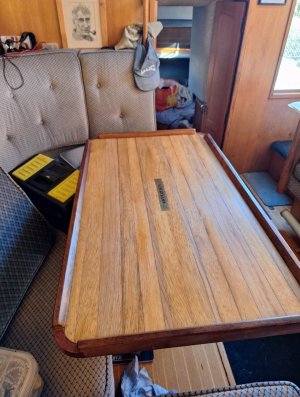
My changes this maintenance season are a second furler for the Solent jib, a new saloon table without folding to increase kneeroom and new blocks for the running rigging.

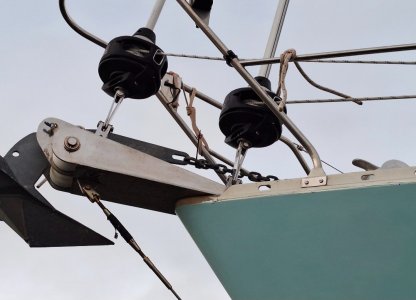
Screenshot_20260129_144523_Gallery.jpgScreenshot_20260129_144554_Gallery.jpg
 
People's attitude to boats wasn't part of the original discussion. It was about prejudice between old and new.
Eventually your boat will be old. Will you view it as old and no longer fit for the purpose? You currently assess it as ideal or you wouldn't have recently purchased it.
I think you have this backwards.

Nobody is saying that older boats are not fit for purpose. It would be utterly perverse to claim that they aren't, at least the ones we still have, as they're literally doing the thing they were designed for, and have been doing that for years.

No, the argument that is put forward is actually the opposite and made by the other camp, that new boats, and specifically new boats from volume production yards, are not fit for purpose. And those of us who don't see it that way are really refuting this, not attacking the older boats. But often "hey, these newer designs are ok you know" is read as "your old boat is bad, you should give it a viking funeral and buy a new one". Which is palpably absurd.

And the problem that I have with this is that often reasons given for dismissing the latest offerings, e.g Chines or twin rudders are not actually based on any experience or analysis of what the actual effect of having them on the boat would be but mostly seem to be based on the fact that older boats don't have them, so they can't be good. And scare stories of slamming etc.

And one of the main issues with the scare stories that I have is that so often if you dig into them, you see that what's actually happened is that someone has jumped onto a newer boat who is used to an older style boat, and just sailed it with the same inputs, same reactions as their older boat. For example they've tried to sail a wider, chined, twin rudder, non overlapping rig boat upwind using the same trim techniques, same helming technique as they would use on their 1970s pin tailed IOR, massive genoa design. There is no thought whatsoever going into how they're sailing. The fact that the boat responds badly to their inputs is only put down to the failure of the boat, and not anything to do with the frankly obvious thought that such a different style of boat must need to be sailed in a slightly different way. That it will reward different techniques...

And I say this as someone who swapped from driving a typical heavy C/R of the early 2000s era to a JPK. We had to adapt significantly the trim inputs we were using. Main is trimmed significantly differently, a lot more traveller up, gust response with sheet rather than trav, going for added twist and bow a degree or 2 down for speed build through the gust rather than blade it out and feather through the gust. I had to adapt my helming technique, for example as I said pinching for gusts is less effective, VMG with extra speed rather than pointing is the name of the game. You can lean on the main a lot more without risking spinning out, but if you're too pinched you get stopped by waves. And can slam if you get it wrong. When the seas build you need to just ease down a few degrees and go for speed. And that was a huge mental change to make for someone used to a heavy C/R, it was easily the most challenging part of dialing the new boat in. Small wonder boat testers who grew up sailing narrow heavy boats report slamming when they try and sail newer designs.
Downwind it's massively different. Smaller smoother inputs are the key. Sawing at the wheel to keep it straight and correcting every tiny lurch instantly to stop a wipeout are things of the past.

Because, and this should be obvious, a twin ruddered chined boat that weighs just under 4 Tonnes does not like the same techniques as an 8 tonne C/R with an absurdly deep narrow rudder, a deep heavy keel and somewhat limited form stability.

It's the one thing I want to ask those German testers. "How did you adapt your sailing to the different types of boat? Did you change your trim, your helming style etc? or did you just use the same inputs and then judged all the boats based on how they responded to the inputs you had developed sailing the long keel boat?"
 
… I had to adapt my helming technique, for example as I said pinching for gusts is less effective, VMG with extra speed rather than pointing is the name of the game. You can lean on the main a lot more without risking spinning out, but if you're too pinched you get stopped by waves. And can slam if you get it wrong. When the seas build you need to just ease down a few degrees and go for speed. And that was a huge mental change to make for someone used to a heavy C/R, it was easily the most challenging part of dialing the new boat in. Small wonder boat testers who grew up sailing narrow heavy boats report slamming when they try and sail newer designs.
Downwind it's massively different. Smaller smoother inputs are the key. Sawing at the wheel to keep it straight and correcting every tiny lurch instantly to stop a wipeout are things of the past. …

That’s exactly what I experienced when chartering a new boat. I thought that my helming reaction was not fast or fine enough, stalling and slamming. I eventually sailed free because folks were complaining, not because I had worked it out. Your insight is appreciated as it solves something that has bothered me.
 
I think you have this backwards.

Nobody is saying that older boats are not fit for purpose. It would be utterly perverse to claim that they aren't, at least the ones we still have, as they're literally doing the thing they were designed for, and have been doing that for years.

No, the argument that is put forward is actually the opposite and made by the other camp, that new boats, and specifically new boats from volume production yards, are not fit for purpose. And those of us who don't see it that way are really refuting this, not attacking the older boats. But often "hey, these newer designs are ok you know" is read as "your old boat is bad, you should give it a viking funeral and buy a new one". Which is palpably absurd.

And the problem that I have with this is that often reasons given for dismissing the latest offerings, e.g Chines or twin rudders are not actually based on any experience or analysis of what the actual effect of having them on the boat would be but mostly seem to be based on the fact that older boats don't have them, so they can't be good. And scare stories of slamming etc.

And one of the main issues with the scare stories that I have is that so often if you dig into them, you see that what's actually happened is that someone has jumped onto a newer boat who is used to an older style boat, and just sailed it with the same inputs, same reactions as their older boat. For example they've tried to sail a wider, chined, twin rudder, non overlapping rig boat upwind using the same trim techniques, same helming technique as they would use on their 1970s pin tailed IOR, massive genoa design. There is no thought whatsoever going into how they're sailing. The fact that the boat responds badly to their inputs is only put down to the failure of the boat, and not anything to do with the frankly obvious thought that such a different style of boat must need to be sailed in a slightly different way. That it will reward different techniques...

And I say this as someone who swapped from driving a typical heavy C/R of the early 2000s era to a JPK. We had to adapt significantly the trim inputs we were using. Main is trimmed significantly differently, a lot more traveller up, gust response with sheet rather than trav, going for added twist and bow a degree or 2 down for speed build through the gust rather than blade it out and feather through the gust. I had to adapt my helming technique, for example as I said pinching for gusts is less effective, VMG with extra speed rather than pointing is the name of the game. You can lean on the main a lot more without risking spinning out, but if you're too pinched you get stopped by waves. And can slam if you get it wrong. When the seas build you need to just ease down a few degrees and go for speed. And that was a huge mental change to make for someone used to a heavy C/R, it was easily the most challenging part of dialing the new boat in. Small wonder boat testers who grew up sailing narrow heavy boats report slamming when they try and sail newer designs.
Downwind it's massively different. Smaller smoother inputs are the key. Sawing at the wheel to keep it straight and correcting every tiny lurch instantly to stop a wipeout are things of the past.

Because, and this should be obvious, a twin ruddered chined boat that weighs just under 4 Tonnes does not like the same techniques as an 8 tonne C/R with an absurdly deep narrow rudder, a deep heavy keel and somewhat limited form stability.

It's the one thing I want to ask those German testers. "How did you adapt your sailing to the different types of boat? Did you change your trim, your helming style etc? or did you just use the same inputs and then judged all the boats based on how they responded to the inputs you had developed sailing the long keel boat?"

Buy that man a virtual beer .... this is exactly the point.
 
Twenty years ago, we were looking for a bigger boat to travel further distances and live aboard for longer periods, suitable for two with occasional guests. We looked at new mass produced boats on the market, didn't like them so decided to go used and bought an 18 years old Moody 376, which suited our needs with twin cabins (fore and aft) with en suite heads. Cost then was £66k.

It was very basically kitted out but looking at costs of upgrading (often quoted as liability by some here), most of the items would have cost extra on new boats - electric windlass, radar, heater, liferaft, dinghy, outboard, gantry, solar, bimini, etc. so could be left out of the price comparison. 20 years on, still happy with the boat and only major cost has been new engine, DIY fitted as with everything else.
You have - inadvertently -depressed me; by reminding me it was nearly 20 years ago that I bought my last boat… and 12 since I sold that.

As my school reports so often said: I must try harder. 😂
 
That’s exactly what I experienced when chartering a new boat. I thought that my helming reaction was not fast or fine enough, stalling and slamming. I eventually sailed free because folks were complaining, not because I had worked it out. Your insight is appreciated as it solves something that has bothered me.
The mistake people make, especially when tempted by a wheel, familiar to them from cars, is thinking that they need to 'steer' the boat. The purpose of the rudder is to provide a force to balance that on the keel, and hull. Most of the time, depending on the boat, this can be done by adding a force to the helm without actually moving it, using it as a trim tab for the keel so to speak. If moving the helm results in the need for a corrective movement shortly after, then that movement was unnecessary, and will have slowed the boat.
 
I think you have this backwards.

Nobody is saying that older boats are not fit for purpose. It would be utterly perverse to claim that they aren't, at least the ones we still have, as they're literally doing the thing they were designed for, and have been doing that for years.

No, the argument that is put forward is actually the opposite and made by the other camp, that new boats, and specifically new boats from volume production yards, are not fit for purpose. And those of us who don't see it that way are really refuting this, not attacking the older boats. But often "hey, these newer designs are ok you know" is read as "your old boat is bad, you should give it a viking funeral and buy a new one". Which is palpably absurd.

And the problem that I have with this is that often reasons given for dismissing the latest offerings, e.g Chines or twin rudders are not actually based on any experience or analysis of what the actual effect of having them on the boat would be but mostly seem to be based on the fact that older boats don't have them, so they can't be good. And scare stories of slamming etc.

And one of the main issues with the scare stories that I have is that so often if you dig into them, you see that what's actually happened is that someone has jumped onto a newer boat who is used to an older style boat, and just sailed it with the same inputs, same reactions as their older boat. For example they've tried to sail a wider, chined, twin rudder, non overlapping rig boat upwind using the same trim techniques, same helming technique as they would use on their 1970s pin tailed IOR, massive genoa design. There is no thought whatsoever going into how they're sailing. The fact that the boat responds badly to their inputs is only put down to the failure of the boat, and not anything to do with the frankly obvious thought that such a different style of boat must need to be sailed in a slightly different way. That it will reward different techniques...

And I say this as someone who swapped from driving a typical heavy C/R of the early 2000s era to a JPK. We had to adapt significantly the trim inputs we were using. Main is trimmed significantly differently, a lot more traveller up, gust response with sheet rather than trav, going for added twist and bow a degree or 2 down for speed build through the gust rather than blade it out and feather through the gust. I had to adapt my helming technique, for example as I said pinching for gusts is less effective, VMG with extra speed rather than pointing is the name of the game. You can lean on the main a lot more without risking spinning out, but if you're too pinched you get stopped by waves. And can slam if you get it wrong. When the seas build you need to just ease down a few degrees and go for speed. And that was a huge mental change to make for someone used to a heavy C/R, it was easily the most challenging part of dialing the new boat in. Small wonder boat testers who grew up sailing narrow heavy boats report slamming when they try and sail newer designs.
Downwind it's massively different. Smaller smoother inputs are the key. Sawing at the wheel to keep it straight and correcting every tiny lurch instantly to stop a wipeout are things of the past.

Because, and this should be obvious, a twin ruddered chined boat that weighs just under 4 Tonnes does not like the same techniques as an 8 tonne C/R with an absurdly deep narrow rudder, a deep heavy keel and somewhat limited form stability.

It's the one thing I want to ask those German testers. "How did you adapt your sailing to the different types of boat? Did you change your trim, your helming style etc? or did you just use the same inputs and then judged all the boats based on how they responded to the inputs you had developed sailing the long keel boat?"
I think the average new production boat owner wouldn't have a clue how to sail their boat to get the most out of it. They come from the builder with mediocre sails not performance sails, as the average customer isn't that bothered about performance. For the same reason they have a fixed prop.
I appreciate that this wouldn't apply to you. A JPK is far from an average production boat.

I am sure this is an extreme example, but last year Glasson Boatyard near Lancaster were commissioning a Beneteau First 44 for a customer. The work included a vinyl wrap in Champagne.
Once their portion of the works was complete, the boat was loaded on to transport and travelled by road to lake Windermere. It was destined for life as a holiday home with 11 miles of lake to go at!
 
I think the average new production boat owner wouldn't have a clue how to sail their boat to get the most out of it.
Oh for sure. There's a huge difference between "not getting the most out of it" and understanding little tips that make sailing your boat a more comfortable experience though.

And the issue I have at the moment with the experienced people who weigh in on this subject in the "modern boats are rubbish" side is that they're not taking the time to think about how the differences in design between the boats that they are used to, and the boats that they are disparaging should be reflected in their sailing techniques.

I've seen so many reviews where they talk about the boat rounding up for example, and then you see a pic of their trim and just think "I'm not surprised it rounds up if you sail it like that". Ditto slamming. In most boats slamming when sailing into a moderate seaway can be seriously reduced if not eliminated with a change of technique. But the reviewers with beards and a taste for Frey Bentos aren't telling people that. They're telling people that it's just a thing you have to accept as a trade off to get the big cabin etc.
 
The mistake people make, especially when tempted by a wheel, familiar to them from cars, is thinking that they need to 'steer' the boat. The purpose of the rudder is to provide a force to balance that on the keel, and hull. Most of the time, depending on the boat, this can be done by adding a force to the helm without actually moving it, using it as a trim tab for the keel so to speak. If moving the helm results in the need for a corrective movement shortly after, then that movement was unnecessary, and will have slowed the boat.

I sailed with a JSA race skipper, who was very accomplished. This was in the late 80’s. On a Contessa 34, Scottish Series, long offshore, his helm method was incredible. Exactly as flaming describes, sawing, but tiny movements. When I took over we dropped a tenth of a knot. I tried to replicate what he did, but he had an excellent feel for the boat. He came in first on corrected time. I can’t remember his name. Years later I watched the Nikki Louder story, he described his ability to feel the car through his bum and tell when it was just on the edge. This guy was like that. His concentration was amazing, just focused ahead and constant tiny tiller adjustments when beating.
 
I am sure this is an extreme example, but last year Glasson Boatyard near Lancaster were commissioning a Beneteau First 44 for a customer. The work included a vinyl wrap in Champagne.
Once their portion of the works was complete, the boat was loaded on to transport and travelled by road to lake Windermere. It was destined for life as a holiday home with 11 miles of lake to go at!
When that First 44 comes up for sale it will have never been stressed, and never been in a salty environment. Will probably be an immaculate and fantastic buy for its next owner 👍😍 ..... my brothers AWB spent the first 12 or so years of its life on Windermere and now it's in Scotland ... it was in astounding condition when he bought it and the shipping costs to Scotland were not that extreme. It's people like the First 44 owner who create the hard to find gems on the second hand market. 👍
 
When that First 44 comes up for sale it will have never been stressed, and never been in a salty environment. Will probably be an immaculate and fantastic buy for its next owner 👍😍 ..... my brothers AWB spent the first 12 or so years of its life on Windermere and now it's in Scotland ... it was in astounding condition when he bought it and the shipping costs to Scotland were not that extreme. It's people like the First 44 owner who create the hard to find gems on the second hand market. 👍
I think he had 4 kids. It might not be as pristine as you might of hoped😅
 
You are obviously getting a bit upset on this thread.

The reason this debate in unwinnable, for either side, is that there is no doubt old and new are different, but there is also no reason why a modern, or an old boat like yours, would be unsuitable for the type of sailing you do. It's a preference and priorities problem, which for every person is different.

I couldn't understand why you seem so vociferously opposed to anything modern, until I found your blog.

Wild Bird Adventures

It's a shame it stopped because it is both entertaining and interesting. Many could learn from the content.

I've got great respect for those who buy a close-to-end-of-life boat and put loads of money and time into bringing it up to scratch, breathing another decade or more of life into it. Why not start some threads on here, based on your experiences? You could highlight issues specific to older boats.

As far as I can gather, the teak decks were leaking and worn out, so you removed them completely apart from re-doing the cockpit and coach-roof, filled around 2000 screw holes, glassed the decks "for strength" and re-bedded all the deck hardware which involved taking the interior headlining out to get to the underside of the deck. Great job, it needed doing. Let's hear about it, with costs, time, and other useful information like availability of teak, how to make a non-slip deck etc. You could even give your perspective to people thinking of buying a boat with a 30 year old teak deck - especially the bit about how it is less than ideal in the Caribbean heat.

The original solid windscreen was severely corroded and the windows crazed, so you removed it and replaced it with a sprayhood - getting a decent spray-hood/bimini arrangement on a centre cockpit isn't easy - you could give people tips on how to adapt a centre cockpit to hot climates, the vents for your portlights and hatches looked interesting too.

There was also the corroded mast support, which you noticed when the bulkhead started creaking. You pulled the floor up, and found you could poke a screwdriver through the mast support. Things corroding in the bowels of old boats are to be expected. The bulkhead sunk into the bilge and started creaking. This structural issue required a mast removal and a repair, pretty much what Sailing Fair Isle had to do with a similar problem. As I understand it, due to the prohibitive cost of a mast removal, you sanctioned use of a hydraulic jack, and had the mast jacked up to allow fitting of a stainless steel section in the mast support. In the process, this separated the bulkhead from the hull, so you and your lovely wife had to re-glass the bulkhead due to the extremely loud noises it was making as the hull flexed (requiring ear-plugs to sleep?) - in the process of making the repair, you had to remove a considerable amount of the interior. Sounds like a great learning experience to me, and not atypical for boats of this age. Would also be interesting to people on this forum considering an older boat.

Old boats come with these sort of problems, however you paint them as a solid, dependable, safe choice, bash modern designs, and consistently fail to concede the associated issues of buying an old boat.

There are sailors, who don't want the hassle, cost, stress or uncertainty of relying on a 40+ year old structure. After reading the blog, which was very interesting, I can only conclude that your dogmatic attacks on modern boats could in part be due to a bit of cognitive dissonance? It must be difficult to evangelise your boat choice, knowing all the issues you have had.

Anyway, you seem to be enjoying yourself, as are the owners of modern boats.
Crikey, some A+++ top quality stalking going on here. Top marks.
 
I think the average new production boat owner wouldn't have a clue how to sail their boat to get the most out of it. They come from the builder with mediocre sails not performance sails, as the average customer isn't that bothered about performance. For the same reason they have a fixed prop.
….
I think that is a very presumptuous and pretentious statement, without much basis.
New boat buyers will be diverse. But certainly we have a local Jeanneau dealer and many / most of the new boat buyers appear to be experienced sailors - some moving up from previous boats, some with extensive experience in dinghy racing and charters etc.
Folding props are either part of a standard package or a commonly ticked option, as almost none seem to have fixed props.
And yes the standard sails are rarely North carbon laminates, but mostly reasonable sails.
 
I sailed with a JSA race skipper, who was very accomplished. This was in the late 80’s. On a Contessa 34, Scottish Series, long offshore, his helm method was incredible. Exactly as flaming describes, sawing, but tiny movements. When I took over we dropped a tenth of a knot. I tried to replicate what he did, but he had an excellent feel for the boat. He came in first on corrected time. I can’t remember his name. Years later I watched the Nikki Louder story, he described his ability to feel the car through his bum and tell when it was just on the edge. This guy was like that. His concentration was amazing, just focused ahead and constant tiny tiller adjustments when beating.
There are techniques used by dinghy sailors using the waves to work their way into the wind, but the average cruising boat won’t be responsive enough to gain from such micro-management, even if it may help to keep the principles in mind.
 
Top