boat brands - prejudice or reality

Come to think of it that new Rassy is cored in the topsides. Mature technologies tend to end up in a race to the bottom.

Certainly not a feature worth paying a premium for.

.
Although the premium may be paid to ensure the quality and durability.

As with many examples of premium quality it won't become apparent until extremes of weather, age or neglect take effect.

The question remains whether most of us "average" sailors will notice.

That said, I do appreciate cupboards, drawers and doors that open and close properly.
 
Go to Yachtworld, set the filter to 1985 and earlier, look at the pictures. Then set the filter to 2015 and later, look at the pictures. Get it? 👍
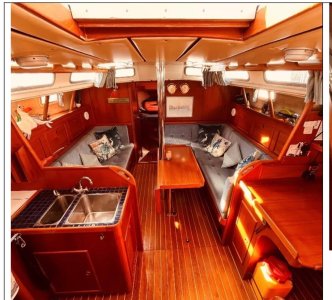
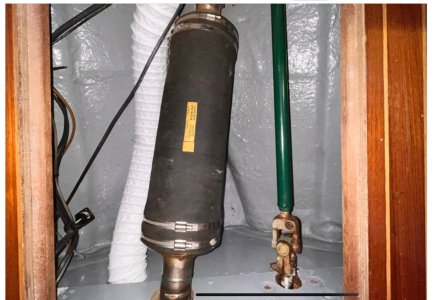
Pictures below of my dark, cramped, antique shop interior and old and rotten stinking bilge in my dirty and smelly 1980’s boat. Book matched, heavy teak interiors are so dreadful. I wish that I had seen this thread earlier and been educated into buying something nice 😊.IMG_2264.jpegIMG_2259.jpeg
 
Come to think of it that new Rassy is cored in the topsides. Mature technologies tend to end up in a race to the bottom.

Certainly not a feature worth paying a premium for.

.
I haven’t studied recent Rassys but my 2000 boat has a non-structural foam lining that looks like a core, down to just below the waterline, chiefly for insulation. I don’t know if later models have changed.
 
Pictures below of my dark, cramped, antique shop interior and old and rotten stinking bilge in my dirty and smelly 1980’s boat. Book matched, heavy teak interiors are so dreadful. I wish that I had seen this thread earlier and been educated into buying something nice 😊.View attachment 205435View attachment 205436
Gosh, that is horrible! How you can spend time there beggers belief! Well, sort of.. ;o)
 
I haven’t studied recent Rassys but my 2000 boat has a non-structural foam lining that looks like a core, down to just below the waterline, chiefly for insulation. I don’t know if later models have changed.
So many reasons for a foam core. We have little or no condensation except on the washboard. Obviously we have foam, for stiffness, lightness and strength. The insulation is a welcome offshoot.
 
Pictures below of my dark, cramped, antique shop interior and old and rotten stinking bilge in my dirty and smelly 1980’s boat. Book matched, heavy teak interiors are so dreadful. I wish that I had seen this thread earlier and been educated into buying something nice 😊.
The boat is a credit to you 😍.... the exception that proves the rule 👍

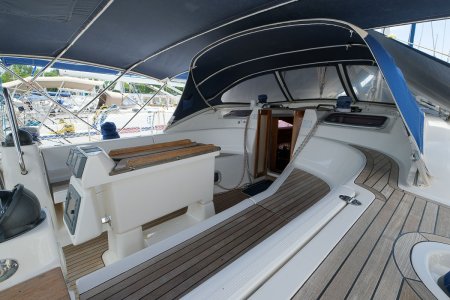
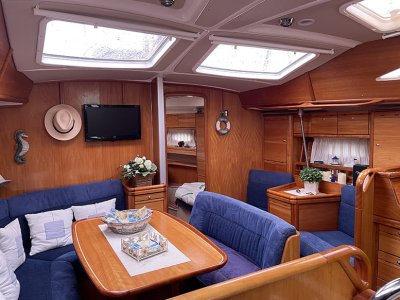
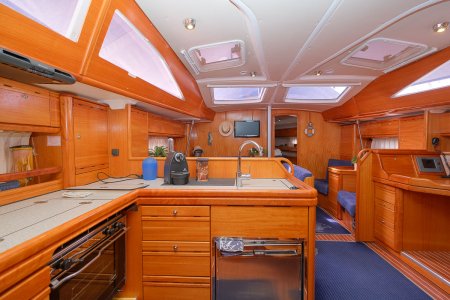
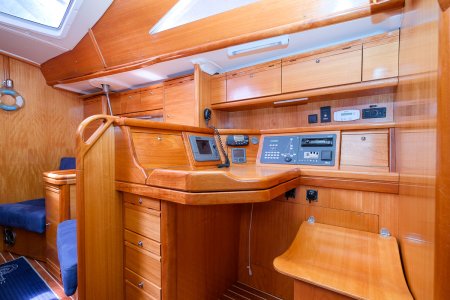
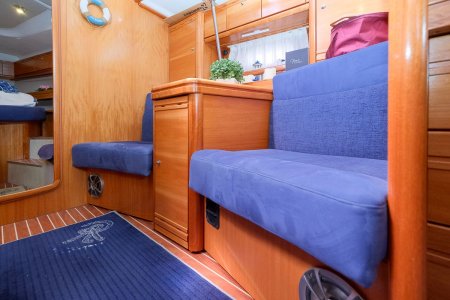
Here's some brochure pictures of an IKEA loft apartment, (haven't found the keel yet, must have dropped off somewhere) ....

 
The boat is a credit to you 😍.... the exception that proves the rule 👍
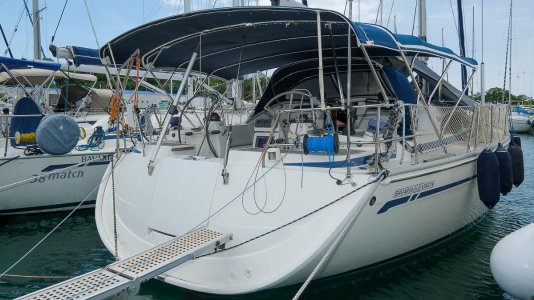
Here's some brochure pictures of an IKEA loft apartment, (haven't found the keel yet, must have dropped off somewhere) ....

Where are the hull windows? So not that current a design. Nice looking interior.
 
Where are the hull windows? So not that current a design. Nice looking interior.
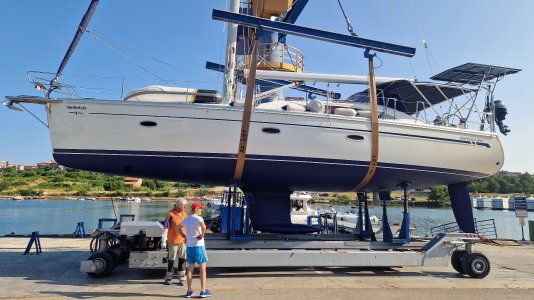
Thanks. The hull windows are not very big, so I've got a hull window inferiority complex. 3 on each side, they've got curtains over them in the pics. It's not a current Bav either ... I guess it's a middle-aged AWB.

View of a sunset from the forward berth.

1769205494514.jpeg

Even being small, it's nice to see out when seated in the saloon, or have a check on conditions without getting out of bed.

Windows are in this exterior pic.

1769206264614.jpeg
 
I think cored hulls have been abandoned for all but high performance boats, as you imply, for very good reason.
Solid GRP coachroofs and decks have a lot to commend especially when coupled with well designed inner liners.

.
You really do seem to be totally out of touch with modern boat building. HRs (like almost all boats) have had cored hulls and decks for at least 30 years. With today's materials and construction techniques there is no merit in solid GRP except along the centre line and maybe around the hull/deck and stem areas - Bavarias for example use Kevlar in the solid stem layup. You are right to be concerned about cored hulls and decks in 40+ year old (mainly British built) boats because the core technology was in its infancy and there are many examples of poorly designed and executed cored layups that fail and either rot from water ingress or bonding failure of the core to GRP. Even HR had some issues in the early days but revised their layup schedules reducing the area of core in the topsides. However as you will see from the video of the 370 construction they use cores extensively, taking care to ramp down to solid for example in way of through hulls or solid where fittings are attached. Other builders for example Hanse and Bavaria use tapped metal plates in the laminate for fittings so they do not penetrate the cored areas.

The almost universal adoption of cored hulls and decks is nothing to do with a "race to the bottom". Solid laminations are cheaper than cored, but inferior. Heavy, difficult to engineer strength where required and mould to high levels of consistency. Have a look at the Bavaria material posted earlier, the HR videos and this hanseyachts.com/gb/engineering/ to get a flavour of how boats are built today. A world away from the sorts of boats you are familiar with
 
Last edited:
It might be true to say that balsa cores have been largely abandoned. But PVC and more exotic cores, along with unidirectional glass, kevlar and carbon particularly in key areas is what makes modern boats possible.
 
It might be true to say that balsa cores have been largely abandoned. But PVC and more exotic cores, along with unidirectional glass, kevlar and carbon particularly in key areas is what makes modern boats possible.
Indeed, the Hanse link shows a good example of what modern construction looks like. Add to that many now also use infusion methods for consolidating and curing layup. The Bavarias built the year after mine had this on the hull which saved 200kgs. This trend is driven as much by pressure on the use of scarce raw materials and constraints on working conditions as on cost. The upshot though is better more consistent quality.
 
My German isn't good enough to see what their conclusions were, I'm afraid. It looked to me as if the Beneteau had the easiest motion going to windward because of its finer entry and less heel, though I wasn't sure which conditions were being shown, as sometimes they had a reef and sometimes not. The sailors seemed to be fiddling with the helm in a way that I would generally discourage, especially on the HR, and this can have a marked effect on boat comfort too.

I can assure you that my German is decent enough and assuredly the commentators had very little positive to report on the Sun Odyssey, apart that she had the more spacious accommodation at dockside.
The intention of the test was to explore the behavior of various types in a seaway. Apparently and by Baltic standards, 1.5m waves represent a notable sea state, at least for sub 30' boats.
On all courses, the SO had the poorest handling and the worst motion. Reaching and downwind, where it had first been thought that the SO would have the advantage, the boat showed a strong inclination to (repeated) broaching. Notably, it wasn't a bean quicker then the HR or the Vindoe. The long keel Vindoe lost points downhill, because the ridiculously small steering wheel made countering yaw somewhat tiresome as compared to a tiller.

What I like about this particular test is that the boats were of a size, unlike the apples & oranges discussions this forum occasionally likes to engage in when it comes to comparing boats.
Of course, so I am assured, everything is now much better. The laws of physics have been properly adjusted. Now we have twin rudders to fix all steering problems and Sirius has no less than three, whetted area saved on the keel is shifted to the hull, to provide lift for planing (whether the boat could or not is immaterial), chines are added to give that saucer some needed grip in the water and marinas have to handle the poor thing with kid gloves at haul-out when they gingerly rest it on it's skinny keel.

I have nothing against Bavs, Hanses or any of the French offerings for that matter. I'm sure they (mostly) meet the needs of their owners.
However, I do think that the requirements for racing craft and cruising boats are not congruent and on quite a few occasions, both past and present, buyers have been sold a bill of goods.
When IOR was in full swing, lots of cruisers, even more ridiculously, some motorsailers, were given pinched stern sections. I'm convinced this leads to exaggerated roll behaviour when going downwind; it certainly limits upper end speed. Now we have gone to the other extreme. Double aft cabins not withstanding. The truth probably lies somewhere in the middle. I also believe that the era of the cruiser/racer is finally done: real racers foil, cruisers not so much.

One thing one could say, especially about "older" Scandinavian designs, is that their keel structures were built to take a pounding. The thought being that it is not a question whether you hit something solid, but when. Apparently there are plenty of areas up there where the glaciers left their tailings and that have not yet been surveyed in detail or perhaps their Navies are reticent to pass on the information.
Eliasson & Larsson suggest that the keel structure be engineered in such a way that the boat survives ground contact with solid rock and at hull speed.
Not so with contemporary mass production boats.
The current practice of gluing down the keel grid with resin paste, instead of laminating it properly, can quickly lead to absolutely staggering repair costs when running aground at even relatively modest speeds.
 
, there is no discernable difference in actual performance between modern and even rather traditional designs. There is a wealth of empirical data to back this up.
I’d love to see some of that, since it is utterly contrary to my own experience of racing contemporary designs against 1970s designs etc. I’ve shown you race results before, you know where sunfast 3300s beat well sailed 40 foot older designs to the fastnet rock in a heavy airs beat etc.

On the subject of chines, what they do to the handling of a boat doesn’t seem to be well understood by people who seek to knock them. As someone who has been sailing a boat with a modest chine for 7 seasons now, the effect is really quite something. Upwind, once you heel over and put the chine in the water it’s like getting more stability. Unlike in the previous boat, which was comparatively narrow and round bilged, the boat just sits and tracks. Doesn’t spin out in the same way, despite being about 4 tonnes lighter, and is generally a lot easier to sail.

When Sunsail replaced their old first 40s with the sun Oddessy 410s they have now, they ran a mixed fleet for about half a season. The working assumption, as I’m sure yours would have been, was that the slimmer, pointier, un-chined, first 40 would be quicker upwind. Not so, the new fat things were significantly faster upwind once the wind was over about 10kts. They just sat on their chines and powered away.
 
Last edited:
The boat is a credit to you 😍.... the exception that proves the rule 👍
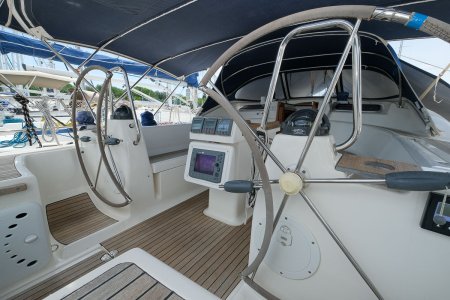
Here's some brochure pictures of an IKEA loft apartment, (haven't found the keel yet, must have dropped off somewhere) ....

That is a very good looking boat. I could live with that easily.

Maybe the not surprising lesson here is that condition and ongoing investment by previous owners is the key to older boat buying. You had a fastidious previous owner who obviously cherished the boat. Mine had a “well heeled, elderly spinster lady” for 25 years who employed a professional crew to take her day sailing and invested massively ( Anderson electric winches, self tacking cutter rig, generator, folding propeller, Nav gear, under cover winter storage, scrupulous professional maintenance ect), followed by a director or a well known rigging company who did a fairly comprehensive refurbishment ( all new electrics, plumbing, gas, rigging, cordage, sails, life raft, deck gear, canvas, anchor gear ect) a few years ago.

Maybe both are exceptions to the rule but they are out there, I purchased mine a few years earlier than planned because of its condition and history and because it’s purchase price was the same as a “average” boat of it’s age and type.
 
That is a very good looking boat. I could live with that easily.

Maybe the not surprising lesson here is that condition and ongoing investment by previous owners is the key to older boat buying. You had a fastidious previous owner who obviously cherished the boat. Mine had a “well heeled, elderly spinster lady” for 25 years who employed a professional crew to take her day sailing and invested massively ( Anderson electric winches, self tacking cutter rig, generator, folding propeller, Nav gear, under cover winter storage, scrupulous professional maintenance ect), followed by a director or a well known rigging company who did a fairly comprehensive refurbishment ( all new electrics, plumbing, gas, rigging, cordage, sails, life raft, deck gear, canvas, anchor gear ect) a few years ago.

Maybe both are exceptions to the rule but they are out there, I purchased mine a few years earlier than planned because of its condition and history and because it’s purchase price was the same as a “average” boat of it’s age and type.
Thanks, previous owner ran a tax consultancy company with his wife, and it was bought and registered in her name. She was in tears when she signed the contract to sell it ... and they replaced it with an Azimuth 42 for health reasons.

They bought it from new and employed a cabinet-maker to replace anything that looked cheap with solid mahogany, which was a nice bonus. It was used predominantly as a day-sailer and a private floating swim platform in the Northern Adriatic. They had a huge HGV RV that they lived in on a nearby camp site, so the interior was hardly used. It cost half of my total budget, so I was able to immediately update all the instrumentation, add a solar arch, lithium, new sails, bowsprit + code zero, new anchor & windlass etc. etc. etc. Still not finished as I'm doing it myself and the boat is 650km away.
 
I can assure you that my German is decent enough and assuredly the commentators had very little positive to report on the Sun Odyssey, apart that she had the more spacious accommodation at dockside.
The intention of the test was to explore the behavior of various types in a seaway. Apparently and by Baltic standards, 1.5m waves represent a notable sea state, at least for sub 30' boats.
On all courses, the SO had the poorest handling and the worst motion. Reaching and downwind, where it had first been thought that the SO would have the advantage, the boat showed a strong inclination to (repeated) broaching. Notably, it wasn't a bean quicker then the HR or the Vindoe. The long keel Vindoe lost points downhill, because the ridiculously small steering wheel made countering yaw somewhat tiresome as compared to a tiller.

What I like about this particular test is that the boats were of a size, unlike the apples & oranges discussions this forum occasionally likes to engage in when it comes to comparing boats.
Of course, so I am assured, everything is now much better. The laws of physics have been properly adjusted. Now we have twin rudders to fix all steering problems and Sirius has no less than three, whetted area saved on the keel is shifted to the hull, to provide lift for planing (whether the boat could or not is immaterial), chines are added to give that saucer some needed grip in the water and marinas have to handle the poor thing with kid gloves at haul-out when they gingerly rest it on it's skinny keel.

I have nothing against Bavs, Hanses or any of the French offerings for that matter. I'm sure they (mostly) meet the needs of their owners.
However, I do think that the requirements for racing craft and cruising boats are not congruent and on quite a few occasions, both past and present, buyers have been sold a bill of goods.
When IOR was in full swing, lots of cruisers, even more ridiculously, some motorsailers, were given pinched stern sections. I'm convinced this leads to exaggerated roll behaviour when going downwind; it certainly limits upper end speed. Now we have gone to the other extreme. Double aft cabins not withstanding. The truth probably lies somewhere in the middle. I also believe that the era of the cruiser/racer is finally done: real racers foil, cruisers not so much.

One thing one could say, especially about "older" Scandinavian designs, is that their keel structures were built to take a pounding. The thought being that it is not a question whether you hit something solid, but when. Apparently there are plenty of areas up there where the glaciers left their tailings and that have not yet been surveyed in detail or perhaps their Navies are reticent to pass on the information.
Eliasson & Larsson suggest that the keel structure be engineered in such a way that the boat survives ground contact with solid rock and at hull speed.
Not so with contemporary mass production boats.
The current practice of gluing down the keel grid with resin paste, instead of laminating it properly, can quickly lead to absolutely staggering repair costs when running aground at even relatively modest speeds.
Thanks for that. I imagine that the film was recorded some years ago, and Sun Oddysseys of the time appeared to be poor sailers belied by their looks. From what I have seen, though I haven't given it much attention, all the common marques have improved in this respect. As you might expect, I am generally in favour of moderate designs, with my HR 34 being fairly typical. HR's later offerings have advanced in some respects but lost out in others.

The mock-IOR designs of the '70s were often poor, and the move away from this, such as the Sadler 25 was a great improvement. I had a Mystere 26 from just before the Sadler came out, which was designed to 1/4 ton. Less extreme than some, it was pinched more than the Sadler. Although not a great performer off the wind because of the short waterline, it was exceptionally easy to manage and if you eased the backstay it would sail as if on rails, even when hard pressed under spinnaker, unlike some of the UFOs, and probably the Arpege whose motion was notoriously emetic in a quartering sea.
 
Top