Best way to clean a fuel tank???

Assuming you only have access via the filler, or perhaps the level switch fitting, I would drain down as far as possible, then use an endoscope camera to carry out an inspection, I would then attach this a few inches up from the end of a length of plastic tube attached to a small electric pump via a separator filter (e.g. Baldwin) to suck out the crud. Might need to change the element, and add some more fuel once filtered to keep the crud loose, then work your way around the base of the tank.

Once you have as much out as you can get, top up with a decent fuel additive such as Fuelset or Grotamar.

My homemade portable fuel polisher is shown on my blogsite (below) - improvements page.
 
Assuming you only have access via the filler, or perhaps the level switch fitting, I would drain down as far as possible, then use an endoscope camera to carry out an inspection, I would then attach this a few inches up from the end of a length of plastic tube attached to a small electric pump via a separator filter (e.g. Baldwin) to suck out the crud. Might need to change the element, and add some more fuel once filtered to keep the crud loose, then work your way around the base of the tank.

Once you have as much out as you can get, top up with a decent fuel additive such as Fuelset or Grotamar.

My homemade portable fuel polisher is shown on my blogsite (below) - improvements page.

Well, the pain is still with me! I still have crud in the bottom of the tank, despite hours and hours poking towelling rages in mopping-up and sucking-out with a vacuum pump. The endoscope views a tiny bit, but once "bent into the tank" is uncontrollable. Can't make out a thing.
And I've just been told I may well have a baffle, which stops me getting to the far end anyway.

Only recommendation I have been given is to mop as much up as possible, fill with fuel (diesel, I presume?), go for a bumpy spin around to slosh the crud up and KEEP MONITORING/CHANGING your fuel filters. Slightest sound of the engine wavering, stop, drain the fuel lines, check and change the filter again - and keep repeating until no crud comes into the filters.

Sorry to be a doom-monger - I wish you well.

This coming winter I'll remove the tank, fit an inspection hatch and replace the tank where I can easily get at it!

Good luck.
 
Tek Tanks in Upper Froyle, Hants, do a sort of tank topper where you cut a 4" hole in the tank and hoover all the crud out, then reseals it like a deckhatch.

For rusty steel tanks, just on the bottom, check out Classic Bike magazine. Old bike tanks rust like a bugger, plenty of cures on the market.
 
Well, the pain is still with me! I still have crud in the bottom of the tank, despite hours and hours poking towelling rages in mopping-up and sucking-out with a vacuum pump. The endoscope views a tiny bit, but once "bent into the tank" is uncontrollable. Can't make out a thing.
And I've just been told I may well have a baffle, which stops me getting to the far end anyway.

Only recommendation I have been given is to mop as much up as possible, fill with fuel (diesel, I presume?), go for a bumpy spin around to slosh the crud up and KEEP MONITORING/CHANGING your fuel filters. Slightest sound of the engine wavering, stop, drain the fuel lines, check and change the filter again - and keep repeating until no crud comes into the filters.

Sorry to be a doom-monger - I wish you well.

This coming winter I'll remove the tank, fit an inspection hatch and replace the tank where I can easily get at it!

Good luck.

Oh yes and a Racor 500 or pattern version from ebay, or if your engines are a bit bigger of for serious contamination the 900 series with magnetic bug killers. I have Pure Fuels FMIS08 units fitted to engine engine supply directly fitted to the Racor pattern 900 pre-filters. My fuel systems haven't missed a beat since these improvements, including the low level polishing connections, were installed.
 
Last edited:
I used to run boats in some pretty crappy areas in South America that we ran Alfa Laval centrifuges before the day tanks. They are a couple of grand a piece, but work well when offshore for weeks on end.
 
I used to run boats in some pretty crappy areas in South America that we ran Alfa Laval centrifuges before the day tanks. They are a couple of grand a piece, but work well when offshore for weeks on end.
How big were your tanks - we had these on Type 42 Destroyers and similar size Frigates with water displaced fuel tanks - rated in tonnes per hour, mostly 3 phase powered ?
 
How big were your tanks - we had these on Type 42 Destroyers and similar size Frigates with water displaced fuel tanks - rated in tonnes per hour, mostly 3 phase powered ?

Not as big as your beggers. :)

No, just normal ones on fishing boat, 6/8 tonnes in each tanks. 6 tanks on each boat. The big bugger was close in size to yours, 10,000 mile range at cruise.
 
It has rust and all sorts or shit in there what's the best way to clean it?

There is not an easy way. It depends on your tank and the access you have. Some tanks have a sump to collect rubbish, others have a dip tube to pick up fuel above the bottom of the tank. Cleaning in situ can only be done by sucking out the fuel and debris through the filler or on some tanks removing the fitting plate. A Pela pump is useful for sucking out but it it might not remove big lumps.

The ideal is to remove the tank and have it steam cleaned. However on many older small yachts like yours this is not an easy job, and you may well find when you get it out that the bottom is extensively rusted and in need of serious repair or replacement.
 
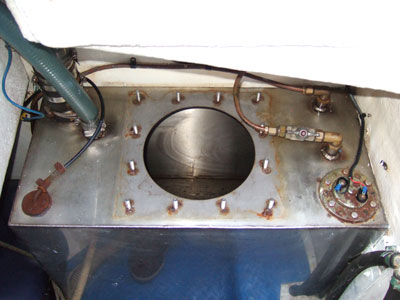
The tank on my Moody 336 had a nice big access hatch on the top.
TankA.jpg

I'm not sure how you can do it without decent access.
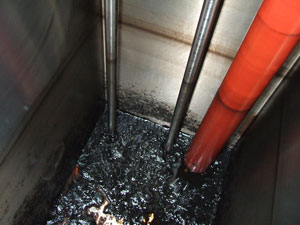
BEFORE:
Tank1.jpg

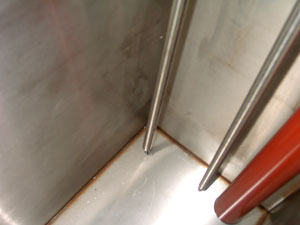
AFTER many trips to the marina's oil dump, "shit" shovelling, lots of elbow grease and soapy water then finally use of a domestic steam cleaner:
Tank2.jpg

The engine was extremely happy thereafter! :)
 
Oh yes and a Racor 500 or pattern version from ebay, or if your engines are a bit bigger of for serious contamination the 900 series with magnetic bug killers. I have Pure Fuels FMIS08 units fitted to engine engine supply directly fitted to the Racor pattern 900 pre-filters. My fuel systems haven't missed a beat since these improvements, including the low level polishing connections, were installed.

Just looked up on ASAP supplies, £160+.
Are they powered in some way? The blurb mentions turbine filtering 227 l/h

Sounds like a useful bit kit and peace of mind.
 
water displaced tanks= warships have a need to keep in trim to fire their weapons, as fuel is consumed it is replaced in the tank by sea water, thus the ship remains level. this poses a big issue for the fuel systems which are fitted with centrifuges and huge filters about 3 feet in diameter and about 6 to 8 feet long, which I had a hand in making/designing. The filters contain banks of elements which will separate up to 10% water down to parts per million levels
 
It has rust and all sorts or shit in there what's the best way to clean it?
You really really need to get inside tank to take look.No amount of filtering or refiltering/ changing of filters is going to prevent problem reoccuring if tank is corroded internally.It will merely put off the day when you are out somewhere a bit lumpy and enough scale/gunge will dislodge to block filters.
Not too bad if you have twin engine set up or perhaps boat on a sheltered inland waterway.
Dirty tanks have stopped me a couple of times,once in an American petrol sports boat where the stupid designer prats had bonded tank into floor of boat.Tank had to chainsawed/removed with a grinder from under floor of boat and inspection hatch fitted to top.
On another occasion muck was stirred up during a rough passage blocking filters.Fortunately this time it was on a Broom with easy access to tank and a nice BIG inspection hatch on the top.
 
I would agree that getting inside is the only way. You could spend a fortune on fancy filters and still end up having to get inside it. Rust would worry me though . Assuming its not stainless then I would be considering replacing it as if its started rusting , you will have trouble stopping it.
 
It's and old outboard with rust in tank and I have put cider vinegar in to was out then neutralise the acid with bleach so they say for motor bikes etc etc
 
Top