Wandering Star
Well-Known Member
I’m not on the boat but does anyone know offhand, what the Rival 32 prop shaft diameter is?
And what the best shaft seal to buy would be?
And what the best shaft seal to buy would be?



Best & best value maybe slightly different - I have worked with some military/commercial spec ones in the past that are simply brilliant, but far too expensive for most people to justify.
Provided it will fit on your vessel, the VP lip seals are a very popular option as they are affordable, effective and simple. They also have great availability should a replacement be needed.
I personally don't like the face contact seals (PSS type) as I've seen too many issues with those over my years as an engineer, but I appreciate that this is my personal opinion and they have a strong and loyal following.
I'm a fan of the lip type seals and understand both the limitations and the benefits, so my prefernce would be:
Volvo Penta
Tides Marine
Vetus

HiI’m not on the boat but does anyone know offhand, what the Rival 32 prop shaft diameter is?
And what the best shaft seal to buy would be?
How do you do that? Pull it back and give it a slosh, or run water through it somehow?My PSS is at least 10 years old and has been remarkably trouble free since I began rinsing it in fresh water at haul-out.

When we got our boat it had a face seal type. I thought I would change it as I had also heard bad things about them. What I know now is it depends a lot on the boat. The face seal types don't work well with any longitudinal movement of the prop shaft. When we removed our shaft seal and the thrust block we found that the shaft has a machined groove all around the shaft. This locates on a matching ridge on a split bush inside the bearing housing. With this set up, it is impossible to get any longitudinal movement of the shaft. The face seal stays perfectly aligned on its faces. As a result it doesn't leak. It can be a pain to align but once set seems to work well.Best & best value maybe slightly different - I have worked with some military/commercial spec ones in the past that are simply brilliant, but far too expensive for most people to justify.
Provided it will fit on your vessel, the VP lip seals are a very popular option as they are affordable, effective and simple. They also have great availability should a replacement be needed.
I personally don't like the face contact seals (PSS type) as I've seen too many issues with those over my years as an engineer, but I appreciate that this is my personal opinion and they have a strong and loyal following.
I'm a fan of the lip type seals and understand both the limitations and the benefits, so my prefernce would be:
Volvo Penta
Tides Marine
Vetus

I joined the Rival Owners Association a few weeks ago but I’ve been less than impressed with the contents, I’m sure it’s just me not using it properly but I can’t find any of the drawing and technical stuff, I have found a spreadsheet referencing various projects and improvements Rival owners have made which would be useful but there doesn’t seem to be a way of accessing the actual articles mentioned in the spreadsheet? I also created a Facebook account in order to join the Rival Owners Facebook group but can’t navigate this either for any useful technical stuff - just some interesting general stuff. What am I doing wrong? I’d love to read an account of some Rival 32 owner fitting a shaft seal for example - there must be plenty who have done so.The Rival Owners Association website has all the technical drawings and details of the Rival 32 (and all the models); I’m not connected to it, but I am a member and have found it invaluable during our first year of ownership. It’s also really good value and the first year is free. If you’re able to stump up £30 (I think) it’s well worth it for the technical help. We’ve got a Rival 36 and that has a 25mm shaft; I suspect that’ll be the case across the range but worth checking of course.

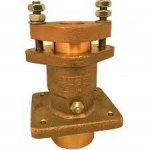
That is not "proper" arrangement at all, just a Victorian solution and times have moved on. plus it uses a mix of enormously expensive bits of material that require regular attention to ensure it keeps working, often in inaccessible places. I shall be junking that as soon as I can and replacing it with a Radice. Simple, one piece moulding, no maintenance apart from a squirt of grease once a year and no water entering the boat.Especially on such a solid boat with traditional qualities, why not use a proper arrangement? Why would you fit an over-complex modern gadget, which will need expensive maintenance in an awkward area? And possibly sink you?
This is what you need.
View attachment 137778
Could not agree more. I was involved in selling and installing face seals when they first came out for boats - an experience which put me off for life. They are fine in their original application on things like pump shafts but do not adapt well to prop shafts that are inclined to move about and for pleasure boats are often left stationary for long periods. To be fair things have moved on and the PSS is far better engineered than the early types but the basic drawbacks remain, but they need regular maintenance to stop the faces sticking and checking bellows pressure to stop the daces opening up through shaft movement. Biggest drawback now though is the cost compared with lip seals.When we got our boat it had a face seal type. I thought I would change it as I had also heard bad things about them. What I know now is it depends a lot on the boat. The face seal types don't work well with any longitudinal movement of the prop shaft. When we removed our shaft seal and the thrust block we found that the shaft has a machined groove all around the shaft. This locates on a matching ridge on a split bush inside the bearing housing. With this set up, it is impossible to get any longitudinal movement of the shaft. The face seal stays perfectly aligned on its faces. As a result it doesn't leak. It can be a pain to align but once set seems to work well.
I have seen the Volvo type with a lip seal wear the stainless shaft so these can have issues as well.
I think if I was starting again I would go for the lip seal type on balance. It is far simpler
I have a Victorian boat, with a Victorian gland, and the only 'regular attention' during 127 years has been turning the handle on the greaser.That is not "proper" arrangement at all, just a Victorian solution and times have moved on. plus it uses a mix of enormously expensive bits of material that require regular attention to ensure it keeps working, often in inaccessible places. I shall be junking that as soon as I can and replacing it with a Radice. Simple, one piece moulding, no maintenance apart from a squirt of grease once a year and no water entering the boat.
The Rival (and my Golden Hind) already has that type and as you can see owners replace them if they can with a superior solution
I had to - the previous owner had a new engine installed (a Nanni) with softer mounts and which moved a bit more than the old lump it replaced. At the stuffing box end this resulted in enlargement of the packing over a weekend such that it was always dripping by a Sunday night (yes, engine alignment checked, stuffing dutifully tightened) and I got fed up with always having a bilge full of water. One Volvo seal later the result was a nice dry bilge all year.... and a nice modern engine too.Especially on such a solid boat with traditional qualities, why not use a proper arrangement? Why would you fit an over-complex modern gadget, which will need expensive maintenance in an awkward area? And possibly sink you?
