Battery monitor thoughts

AntarcticPilot

Well-Known Member
Joined
4 May 2007
Messages
11,115
Location
Cambridge, UK
www.cooperandyau.co.uk
I was reading another thread, and someone mentioned battery monitors and how they require a shunt resistor to measure the current passing to or from the battery. But that got me thinking - why a shunt? WHy not an electromagnetic pickup such as that used in a clamp meter or in the various devices that can be used to monitor your electricity consumption in the home? That would be much simpler to install, and judging by the domestic consumption ones, quite reliable.

Why isn't this a good idea? After all, the principle has been known since Faraday's time.
 
why do you think a shunt is difficult to install?
easiest way is remove the right pole from the battery bank, built a v.short cable connect that to the battery post and bolt the shunt in between.
have used at home these ring type of shunts, limited accuracy and on a specific range which is fine if you do 0-10-16A on 220V, but completely different thing when you go 0-60 or even 100 on a 12 or 24V system.
 
why do you think a shunt is difficult to install?
easiest way is remove the right pole from the battery bank, built a v.short cable connect that to the battery post and bolt the shunt in between.
have used at home these ring type of shunts, limited accuracy and on a specific range which is fine if you do 0-10-16A on 220V, but completely different thing when you go 0-60 or even 100 on a 12 or 24V system.
Merely that installing a shunt involves disturbing the existing circuit. Also, it would not be easy to install a shunt in close proximity to my batteries; possible but awkward. Electromagnetic sensors seem to be fine for applications where real money is involved, so why not for the less critical application of monitoring battery state?

I should say that my experience of shunts in the school physics laboratory makes me less than sanguine about their accuracy and reliability!
 
Would the clamp meter type measure the direction of current travel - could it distinguish between charging the battery at 20A or draining the battery at 20A?
I am not an electrician, so I don't know and haven't played around with my new clamp meter yet.
 
Would the clamp meter type measure the direction of current travel - could it distinguish between charging the battery at 20A or draining the battery at 20A?
I am not an electrician, so I don't know and haven't played around with my new clamp meter yet.
A Hall effect sensor in a DC clamp meter will indicate current direction (reverse the way you clamp on the cable and direction will change). However at low currents (milliamps)they will be affected by the earths magnetic field and so misread. I purchased a low current reading one for work and found it was necessary to zero it and then not move it while taking a measurement.
A shunt is probably the easiest way to get an accurate reading.
 
From having a shunt, and a DC clamp meter on board, neither of them fill me with any confidence as to their accuracy, they are certainly useful. The variation when something is turned on gives you a guide.
My clamp meter registers .4 of an amp when it goes into the battery compartment.
The shunt needs to be zeroed, but needs power to work the shunt, so zero is a guess.

Mike
 
A Hall effect sensor in a DC clamp meter will indicate current direction (reverse the way you clamp on the cable and direction will change). However at low currents (milliamps)they will be affected by the earths magnetic field and so misread. I purchased a low current reading one for work and found it was necessary to zero it and then not move it while taking a measurement.
A shunt is probably the easiest way to get an accurate reading.
Presumably for a permanent fitting, you could enclose the sensor in a soft iron enclosure, thus eliminating the effect of external magnetic fields including the Earth's? The enclosure would fit round both sensor and cable, so the magnetic field due to current flowing in the wire would not be shielded.
 
Presumably for a permanent fitting, you could enclose the sensor in a soft iron enclosure, thus eliminating the effect of external magnetic fields including the Earth's? The enclosure would fit round both sensor and cable, so the magnetic field due to current flowing in the wire would not be shielded.
I expect the iron could become magnetized if you sail on a constant heading. I believe MuMetal is often used for magnetic shielding but that is getting rather complicated. From memory the error from the earth's magnetic field was in the order of 10mA so will not be that significant except for long term measurements. You will have to reset your battery monitor at regular intervals.
Zero error from a shunt is negligible as most voltmeters don't have any zero error.
 
Merely that installing a shunt involves disturbing the existing circuit. Also, it would not be easy to install a shunt in close proximity to my batteries; possible but awkward. Electromagnetic sensors seem to be fine for applications where real money is involved, so why not for the less critical application of monitoring battery state?

I should say that my experience of shunts in the school physics laboratory makes me less than sanguine about their accuracy and reliability!
I'll stress again accuracy over range of Amps being one of the main issues that a DC amp meter needs to address.
for the record I already have 1 Victron shunt on the negative as per spec and about to install a second one for my diyBMS on the positive of the LifePO4 bank. Just needs a bit of planning and sorting cabling.

V.
 
A Hall effect sensor in a DC clamp meter will indicate current direction (reverse the way you clamp on the cable and direction will change). However at low currents (milliamps)they will be affected by the earths magnetic field and so misread. I purchased a low current reading one for work and found it was necessary to zero it and then not move it while taking a measurement.
A shunt is probably the easiest way to get an accurate reading.

From having a shunt, and a DC clamp meter on board, neither of them fill me with any confidence as to their accuracy, they are certainly useful. The variation when something is turned on gives you a guide.
My clamp meter registers .4 of an amp when it goes into the battery compartment.
The shunt needs to be zeroed, but needs power to work the shunt, so zero is a guess.

Mike

DC clamp ammeters must be zeroed before every use, that's not a fault or an error, it's what must be done.
 
A shunt is a simple and relatively accurate way of measuring DC current. They usually come with an instrument, which will give you some other useful information. Or, fit a Victron Smartshunt, everything can be viewed on any Bluetooth device.

The shunt doesn't have to be mounted next to the batteries, just as close as practical.
 
DC clamp ammeters must be zeroed before every use, that's not a fault or an error, it's what must be done.
I understand that DC clamp meters must be zeroed but the point I was trying to make was that they respond to the earth's magnetic field. This will not show on a 300A meter but will give significant errors on low currents and will lead to cumulative errors on the state of charge.
Shunt battery monitors have the advantage that they take very little current to operate. Mine claims 0.5mA in standby and 50uA in sleep mode.
 
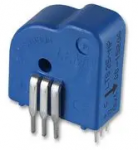
I used one of these in a battery monitor project. It worked quite well though it can't measure very low current accurately. But that was about 15 years ago. There may have been improvements in the technology since then.
 
I used one of these in a battery monitor project. It worked quite well though it can't measure very low current accurately. But that was about 15 years ago. There may have been improvements in the technology since then.
To measure low current, just loop the cable through the hole several times to multiply the output.
I have used these LEM ones which give a calibrated voltage output but they need 28mA to operate and would be useless for a long term battery monitor.
1642539631100.png
 
Top