Battery charger - how much shore power to keep charged

.Afterwards I checked around the boat and found another electric panel in the forward heads which has domestic type breaker switches. These were in the on position but when I closed one of them marked sockets it shut off all power on the boat...

Not sure what you mean there. To me, on = closed. If its already on, you can't close it.
 
To me on means the circuit is energised. If the switch was moved from this position it would then be off. The OP referred to this as closed which is strictly incorrect but he says he's not an electrical bod (like me) but it's obvious what he means. It sounds like the electrical system needs checking out thoroughly.
Not sure what you mean there. To me, on = closed. If its already on, you can't close it.
 
Are you really sure you didn't know what I meant?

I think you probably meant

"I checked around the boat and found another electric panel in the forward heads which has domestic type breaker switches. These were in the on position but when I OPENED one of them marked sockets it shut off all power on the boat.

When switches are CLOSED they are ON. When they are OPEN they are OFF.
 
I definitely meant what I wrote in the first sentence of my OP and I'm grateful for the advice and forbearance of the many helpful posters who replied. I'm conscious these threads run out of steam and a bit of nit picking can creep in. In my defense the verbs used in Turkish to turn on and turn off a light or whatever with a switch are açmak (to open) and kapatmak (to close) respectively.
 
I never leave a charger on when away from the boat, if its switched off if cant go duff & boil the batteries or kill its self
The boat along side us in Leros Marina went away for a month and left his charger on...... the boat went up in flames, and so would we have done if we had not been on board.

It is totally unnecessary to leave a charger on permanently. Just put it on once a month. Thants if the batteries are really switched off.

As for running the engine every week - why? it should be winterised. All that starting wear on a cold engine. Sounds like an unloved boat?
 
The boat along side us in Leros Marina went away for a month and left his charger on...... the boat went up in flames, and so would we have done if we had not been on board.

It is totally unnecessary to leave a charger on permanently. Just put it on once a month. Thants if the batteries are really switched off.

As for running the engine every week - why? it should be winterised. All that starting wear on a cold engine. Sounds like an unloved boat?
I'm not disagreeing with you but surely these intelligent chargers are in fact intended to be left on all the time. I agree about starting the engines but I'll still do as I was asked. What winterizing would you do on a boat afloat in the marina?
 
I'm not disagreeing with you but surely these intelligent chargers are in fact intended to be left on all the time. I agree about starting the engines but I'll still do as I was asked. What winterizing would you do on a boat afloat in the marina?

Things go wrong...... As to winterising - just flush the engine with fresh water - I have a 2 way tap from the boats water tank, so I can flush every time I leave the boat. Finish the flush with a dose of 50/50 antifreeze. Then change the Oil. Leave for winter. Then don't start it till the spring! When I start in spring I turn the engine over with the stop valve pulled out to get the oil moving and pressure up before starting on drained bearings.

The water cooling bits on a boat are very vulnerable to corrosion, and many engine failures are down to lack of this kind of care. My heat exchanger is 30 years old ..... Its been rebuilt twice as maintenance - but no corrosion in it.
 
Things go wrong...... As to winterising - just flush the engine with fresh water - I have a 2 way tap from the boats water tank, so I can flush every time I leave the boat. Finish the flush with a dose of 50/50 antifreeze. Then change the Oil. Leave for winter. Then don't start it till the spring! When I start in spring I turn the engine over with the stop valve pulled out to get the oil moving and pressure up before starting on drained bearings.

The water cooling bits on a boat are very vulnerable to corrosion, and many engine failures are down to lack of this kind of care. My heat exchanger is 30 years old ..... Its been rebuilt twice as maintenance - but no corrosion in it.

I’m not sure winterising in most of the Med is needed.
 
So you would leave the corrosive salt water in the cooling system? early death of many a poorly maintained engine....

In warmer locations, although there may be some, I've not heard of anyone who flushes engines in boats left afloat or ashore in winter.

As for chargers, I don't think it's very sensible to leave them plugged in unattended for long periods due to a fault possibly causing fire. Isolated batteries will maintain charge for long periods without any charging (my disconnected car battery still starts the car after 6 months) but a small small solar panel would keep them topped up if bilge pump likely to be running, which is possible with the wooden hull in the OP's question.
 
In warmer locations, although there may be some, I've not heard of anyone who flushes engines in boats left afloat or ashore in winter.

Even in places with negligible potential for frost damage, I've done it and know others who do the same, including a final flush with antifreeze. (The latter for its corrosion inhibitors rather than its anti-freezing properties.) Equally, exceptional though it was, the Beast from the East demonstrated recently that much of the European Med can suffer prolonged intense cold. I recall a few friends with boats ashore in Greece who were worried about what they might find on their return.

Volvo certainly used to recommend periodically running up un-winterised engines (every three weeks seems dimly to ring a bell.) I've no idea if they still advocate it. I'd certainly agree that just firing up for five minutes would probably do more harm than good.
 
Last edited:
Even in places with negligible potential for frost damage, I've done it and know others who do the same, including a final flush with antifreeze. (The latter for its corrosion inhibitors rather than its anti-freezing properties.) Equally, exceptional though it was, the Beast from the East demonstrated recently that much of the European Med can suffer prolonged intense cold. I recall a few friends with boats ashore in Greece who were worried about what they might find on their return.

Volvo certainly used to recommend periodically running up un-winterised engines (every three weeks seems dimly to ring a bell.) I've no idea if they still advocate it. I'd certainly agree that just firing up for five minutes would probably do more harm than good.

Graham 376 is probably right in that very few people do flush their engines. This might explain the number of diesel engines that die early..... a failed heat exchanger and certainly a failed oil cooler (the demise of many a VP 2003T). A well maintained engine - and that means especially dealing with the consequences of corrosion as a maintenance requirement - not as a "Fix when bust" regime, should last 30 to 40 years.....

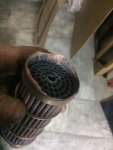
I saw this as evidence on my boat when I just caught my Oil cooler before it buggered my engine..... the tell tale pink look..... corrosion by de-zincing
 

Attachments

  • IMG-20170216-WA0002.jpg
    IMG-20170216-WA0002.jpg
    139.7 KB · Views: 0
Things go wrong...... As to winterising - just flush the engine with fresh water - I have a 2 way tap from the boats water tank, so I can flush every time I leave the boat. Finish the flush with a dose of 50/50 antifreeze. Then change the Oil. Leave for winter. Then don't start it till the spring! When I start in spring I turn the engine over with the stop valve pulled out to get the oil moving and pressure up before starting on drained bearings.

The water cooling bits on a boat are very vulnerable to corrosion, and many engine failures are down to lack of this kind of care. My heat exchanger is 30 years old ..... Its been rebuilt twice as maintenance - but no corrosion in it.

There's not much point in changing the oil after the engine has been shut down for the winter. Usual practice is to change the oil, run the engine, and then carry out whatever water flushing and antifreeze procedures are required. Changing the oil, and then not circulating it, means that old acidic oil is on all the bearing surfaces, while the new fresh oil is just sitting in the sump.
 
There's not much point in changing the oil after the engine has been shut down for the winter. Usual practice is to change the oil, run the engine, and then carry out whatever water flushing and antifreeze procedures are required. Changing the oil, and then not circulating it, means that old acidic oil is on all the bearing surfaces, while the new fresh oil is just sitting in the sump.
Quite - I was talking about flushing - and then added the oils change after - should have inserted it in order of jobs!
 
So you would leave the corrosive salt water in the cooling system? early death of many a poorly maintained engine....

I guess the answer is yes and our engine is 20 years old now, so suppose I might have to eventually change a bit of the cooling system but no signs of trouble yet. I’m not really sure what could be so terrible for an engine keeping it all year in the environment it’s designed for.
 
I guess the answer is yes and our engine is 20 years old now, so suppose I might have to eventually change a bit of the cooling system but no signs of trouble yet. I’m not really sure what could be so terrible for an engine keeping it all year in the environment it’s designed for.

Mine is 40 years old and lives in the water, it did come out this year for anti foul etc, was out for two days.

I don't follow the logic of panicking about having salt water in the ......erm......salt water cooling circuit during the Winter, it's in there for the rest of the year.
 
My 1965 VP MD1 showed no evidence of having been exceptionally well maintained but was still performing well when I sold the boat in 2016. I don't think it makes much difference what you do.
 
Mine is 40 years old and lives in the water, it did come out this year for anti foul etc, was out for two days.

I don't follow the logic of panicking about having salt water in the ......erm......salt water cooling circuit during the Winter, it's in there for the rest of the year.

Ah well - I thought if I was nice to my engine, it would look after me.....:confused:
 
Top