Antenna length

Magnum

RIP
Joined
14 Jan 2004
Messages
2,706
Location
Jersey
Visit site
As per jfm's recommendation I am locating the antennas for new Magnum on the hardtop. There will be 3 - VHF, AM/FM and AIS, so I'll probably copy the layout on Match and have 2 x 2.7m and 2 x 1.2m with one of the 1.2s being a dummy.

Of the 2 longest 1 should be VHF, but should the other be AM/FM or AIS and why? Match uses the remain long as AM/FM, but wouldn't it be better to have a bit more gain for AIS?

I believe there is a 3dB gain difference between the long and short antennas.
 
depending on setup (JFM is Garmin only) the main antenna goes straight into the AIS600 and there's an output port for the VHF.
So one antenna does both.
Of course you may have two one for each, or have a clever cable arrangement to swap the AM/FM back to AIS/VHF if there's a problem.

cheers

V.
 
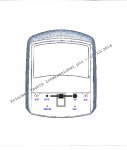
Here is the proposed layout. Antennas in red with short pair outboard.

Feint circles either side of radar/GPS/TV are mounting surfaces for sat domes which I am not fitting but want to leave space for if I change my mind.

antennas.jpg
 
Is it worth having an AM/FM antenna? I'm changing my head to DAB. Not sure what antenna I need for that yet, but will you have AM/FM on a new build?

Yep, the Fusion units fitted have an AM/FM input and probably DAB too. Never been impressed with the sound quality of DAB.
 
Yep, the Fusion units fitted have an AM/FM input and probably DAB too. Never been impressed with the sound quality of DAB.
Interesting. I am much happier with DAB in the car than FM, so much so that I cannot recall the last time I listened to FM. Can't get AM properly at Swanwick, so changing the head unit for DAB. We listen to more MP3 music than radio on board, but I do like to listen to cricket when it is on.
 
The length of an antenna is determined by the wavelength of the radio signal being received or transmitted. Just making antenna longer and longer doesn't necessarily give more gain. VHF and AIS operate on similar wavelengths so the antenna length is basically the same for our boaty purposes. A typical 2m ish antenna gives a VHF range of about 40 miles.
You could use one long VHF antenna for your VHF radio and with a splitter also receive AIS using the same antenna. If you have active AIS and are transmitting as well, it's better to use separate antenna so one transmitter doesn't try and drive power up the other transmitter directly. I think you can get active splitters that detect this but its easier and simpler just to use a separate antenna (and probably a lot cheaper)
The longer antenna will have more gain for your AIS but I would have thought any boat transmitting AIS you could detect with the extra gain would be so far away it wouldn't show up on radar, let alone even see it.
So in effect I don't think it would matter which of your antenna you use for AIS, JFMs solution or the proposed shorter antenna.
With regard to the AM receiver the wavelength is 100 times (approx) longer than the VHF signals so again either antenna would work just as well. The FM signals have a wavelength around 3m so again either the short or long would work. Arguably you would get better reception with the 2.7m antenna but I doubt it would really matter unless you are a long way from your favourite radio station. Contact the VHF and AIS suppliers and see what they think. (Its been a while since I did this at Uni so I wait to be corrected)
 
Last edited:
The length of an antenna is determined by the wavelength of the radio signal being received or transmitted. Just making antenna longer and longer doesn't necessarily give more gain. VHF and AIS operate on similar wavelengths so the antenna length is basically the same for our boaty purposes. A typical 2m ish antenna gives a VHF range of about 40 miles.
You could use one long VHF antenna for your VHF radio and with a splitter also receive AIS using the same antenna. If you have active AIS and are transmitting as well, it's better to use separate antenna so one transmitter doesn't try and drive power up the other transmitter directly. I think you can get active splitters that detect this but its easier and simpler just to use a separate antenna (and probably a lot cheaper)
The longer antenna will have more gain for your AIS but I would have thought any boat transmitting AIS you could detect with the extra gain would be so far away it wouldn't show up on radar, let alone even see it.
So in effect I don't think it would matter which of your antenna you use for AIS, JFMs solution or the proposed shorter antenna.
With regard to the AM receiver the wavelength is 100 times (approx) longer than the VHF signals so again either antenna would work just as well. The FM signals have a wavelength around 3m so again either the short or long would work. Arguably you would get better reception with the 2.7m antenna but I doubt it would really matter unless you are a long way from your favourite radio station. Contact the VHF and AIS suppliers and see what they think. (Its been a while since I did this at Uni so I wait to be corrected)

Interesting re: gain. I got the information from the AC antennas website - http://acantennas.com/Catalogue-Marine/

Yes I'm using an AIS transponder so a separate antenna makes sense.

Here's the final layout. I've decided the mount the VHF and AIS antennas where any satellite domes would be located. I doubt I'll ever fit any but if I do the antennas can always be moved. The VHF and AIS are 2.7m and the other 2 are 1.26m.

I think this is just one of those details that will be forgotten very soon. Still, speccing stuff like this is part of the fun :)

antennas.jpg
 
I don't think any Fusion units have dab support. Wish they'd add internet radio too ie native streaming via wifi.

The following Fusion units Are compatible with the Fusion DAB+ Module with Powered Antenna, MS-DAB100A:-

MS-UD750, MS-AV750, MS-UD650, MS-AV650, MS-RA70, MS-RA70N, MS-BB100, MS-RA205
 
apologies Magnum I have overlooked the fact that AIS transmitters transmit much less power than a 25W VHF, so the extra gain or range of the longer antenna would potentially be worth it. A class B AIS only transmits at 2w so 5 - 7 miles well within sight, radar range.
 
apologies Magnum I have overlooked the fact that AIS transmitters transmit much less power than a 25W VHF, so the extra gain or range of the longer antenna would potentially be worth it. A class B AIS only transmits at 2w so 5 - 7 miles well within sight, radar range.

Thanks. That's good to know :)
 
As per jfm's recommendation I am locating the antennas for new Magnum on the hardtop. There will be 3 - VHF, AM/FM and AIS, so I'll probably copy the layout on Match and have 2 x 2.7m and 2 x 1.2m with one of the 1.2s being a dummy.

Of the 2 longest 1 should be VHF, but should the other be AM/FM or AIS and why? Match uses the remain long as AM/FM, but wouldn't it be better to have a bit more gain for AIS?

I believe there is a 3dB gain difference between the long and short antennas.
Good call - there is a UK based P68 and it has foam held on with cable ties where the antenna meets the hardtop. - Not great.

I fitted Sat TV and used the dummy dome to house the std TV & Cellular antennas and used where the TV aerial was to hold the Active Radar Reflector. I fitted the AIS 100 so it shared the VHF antenna and all seems to be working well.

The P68 is a gem of a boat and I am sure you will be very pleased with her.
 
The VHF and AIS are 2.7m and the other 2 are 1.26m.

2.7m is not a good length for VHF or AIS. Wavelength is 1.9m so you should have a antenna which is that length, or a multiple of it. Good lengths would be 0.95m for short antenna, 1.9m, or 3.8m.

2.7m will be less effective than 1.9m.
 
2.7m is not a good length for VHF or AIS. Wavelength is 1.9m so you should have a antenna which is that length, or a multiple of it. Good lengths would be 0.95m for short antenna, 1.9m, or 3.8m.

2.7m will be less effective than 1.9m.

Interesting. Most manufacturers fit 2.7m although that's overall including mounting so nearer 2.5m.

http://acantennas.com/Catalogue-Marine/#10-11

http://www.icomuk.co.uk/Choosing-the-Right-Antenna-for-your-Icom-VHF-Marine-Radio
 
Last edited:
Top