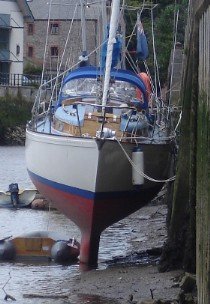
Another lost keel.

NDT = non destructive testing? Can I ask what industry you are in and what qualifications are needed? Interested to know?

Many training agencies can better advise than me. A good friend made an excellent living from MPI and ultrasound with rope access techniques. You have to start at the bottom and work your way through the various skill levels. At the top are guys verifying nuclear power station welds, vessel wall thickness, for example. To sign off they have to be proven competent through independent examination. At the bottom you get idiots spraying contrasting marker directly over paint, instead of bare metal for MPI, very prevalent in certain sectors and countries.

Training Courses - Array Training

NDT Training | Welding Technology Training | Health & Safety Training
 
Last edited:
thankyou.. UK based i see.. I am finding it difficult to find anywhere within the WS or AS rules or recommendations any credentials people must have... OR How often ex or racing boats must be inspected and, by whom. I have found nothing other than a visual inspection every 2 years. Metal fatigue would not show up at all with visual inspection. Do you have any idea of costs associated with MPI? US? and do you have any knowledge of such services within australia? Thankyou..
 
thankyou.. UK based i see.. I am finding it difficult to find anywhere within the WS or AS rules or recommendations any credentials people must have... OR How often ex or racing boats must be inspected and, by whom. I have found nothing other than a visual inspection every 2 years. Metal fatigue would not show up at all with visual inspection. Do you have any idea of costs associated with MPI? US? and do you have any knowledge of such services within australia? Thankyou..

Metal fatigue is a life cycle problem. Today some class of vessels have their structures modelled in FEA programmes and the owner runs annual checks based on cumulative vessel usage and assumed conditions to model cycles and possible deterioration. In fact it can now be performed in real time and is used to determine when and where certain segments of the hull structure should be inspected. Det Norske Veritas (DNV) have developed the digital twin model via their application called "Nerves of Steel" to do exactly this. It is not mandatory, but clients are asking for this type of integrity evidence more and more on critical projects where such vessels are on long term contract, especially if older.

There is no reason why such modelling could not be applied to GRP, keels and foundation bolts, but in a consumer / leisure market, it would not be supported. There are lots of things that industry does to determine if integrity is being compromised through inspection and replacement practises but would not be cost effective for consumers.

The bottom line, is that the consequences, in the larger scheme of things, are insufficient to warrant anything significant. That is not to demean the local impact felt when such loss happens, but the sailing world is not full of keels falling off and killing high numbers of people regularly. I am sure surveyors and classification societies have opinions on what is and what is not possible from a cost perspective in the consumer market.
 
This being, of course, the race boat forum... If you sail a fairly conservative cruiser, sure not much of a worry. But not everyone does.
not necessarily. In my old club with drying moorings I can think of 3 yachts that have lost keels, all of them old fashioned Westerly / Moody type cruisers. A couple were bilgies.

I cannot make out what I am looking at with the photo - what is the black v shape?

Market reality is that making components stronger inevitably means making them heavier assuming you are already using the best materials. Heaviness = slowness. A common branded race boat of the same length as my cruiser is half the weight.
 
Last edited:
Metal fatigue is a life cycle problem. Today some class of vessels have their structures modelled in FEA programmes and the owner runs annual checks based on cumulative vessel usage and assumed conditions to model cycles and possible deterioration. In fact it can now be performed in real time and is used to determine when and where certain segments of the hull structure should be inspected. Det Norske Veritas (DNV) have developed the digital twin model via their application called "Nerves of Steel" to do exactly this. It is not mandatory, but clients are asking for this type of integrity evidence more and more on critical projects where such vessels are on long term contract, especially if older.

There is no reason why such modelling could not be applied to GRP, keels and foundation bolts, but in a consumer / leisure market, it would not be supported. There are lots of things that industry does to determine if integrity is being compromised through inspection and replacement practises but would not be cost effective for consumers.

The bottom line, is that the consequences, in the larger scheme of things, are insufficient to warrant anything significant. That is not to demean the local impact felt when such loss happens, but the sailing world is not full of keels falling off and killing high numbers of people regularly. I am sure surveyors and classification societies have opinions on what is and what is not possible from a cost perspective in the consumer market.
Thank you I gain knowledge from you all. I will now find out what a GRP and FEA is. Love your abbreviations. Makes me find out more.
Do you know of any NDT companies offering services in Australia?
Just trying to make a difference here. Something that is real. Not just a report or investigation. But a practical solution. The leisure craft would prob last 35 years without reaching the cycles of the racing and ex racing boats. They maybe only got 3 to 5 years of life cycle. Thank you
 
GRP Glass Reinforced Plastic
FEA Finite Element Analysis

Australia has many NDT service providers at all levels, and are members of international organisations that regulate quality of service. Therefore, a regulated NDT service provider can be used in Australia to perform services that satisfy regulators, classification societies and insurers. My employer verifies delivery of NDT services for equipment they hire in Australia.

You should easily be able to find out more using a Google search "NDT Services in Australia"
 
GRP Glass Reinforced Plastic
FEA Finite Element Analysis

Australia has many NDT service providers at all levels, and are members of international organisations that regulate quality of service. Therefore, a regulated NDT service provider can be used in Australia to perform services that satisfy regulators, classification societies and insurers. My employer verifies delivery of NDT services for equipment they hire in Australia.

You should easily be able to find out more using a Google search "NDT Services in Australia"
Your information and time spent replying to me is so appreciated. Thank you.. you are right, there are several companies.. I will look into it a lot more. It was my brother that was on Big Hairy /Runaway that died. It was a tragic accident, and no more could have been done to “visually inspect” or prepare a boat.. the 2 rescued were his best mate and best mates son. They were the safety officers at their local club! The report stands with Metal fatigue and it just sheared off at the weld joint, awaiting final metal analysis for the coroners report. Nothing to do with bolts or groundings or hitting something..also a ex racing boat with many cycles used up! I am very sad, he was a good man, but also want to follow thru and make sure the risk is less for the next person.. the reports and documentation are necessary I know - but then nothing real seems to happen to make it right. There have been so many..The cost in leisure crafting I presume, make no one want to go there with legislation, but then leisure craft don’t reach those cycle pressures or numbers, - but offshore racing boats and stresses are a different matter .the cost for that surely must just be the same as a new headsail. Thankyou for your answers to my infinite questions!
 
So sorry to read about your direct connection and loss your brother. A tragedy.

The interim report into the failure the welds is available on line, and David Lyons report, paragraph 25, points a. to j. is exactly what is routine in industry where critical welding needs to be performed, verified and subsequently inspected. For example, on the structures I am involved with, 20% of welds in critical areas are inspected per year, so that over the interval between major surveys, every 5 years, it can be shown that critical integrity is being monitored. That does cost a lot in down time as well as the service costs. It was not always like this, but major incidents and ultimately insurance companies drove the inspection requirements and intervals i.e. show me how you know integrity is being maintained.

I with you well in your endeavours.
 
Last edited:
The reality is that in sporting and extreme activities it is difficult to regulate, not least because the participants resist it. The very nature of competitive activity with machinery means that rules are very open and experimentation encouraged to gain the edge that leads to success.

The current yacht racing scene is not too different from where motor racing (particularly formula 1) was 30 years ago and it was only high profile lobbying and a strong regulatory body that forced through change. However casualty rates, however defined in yacht racing are nowhere near the level experienced in some other forms of extreme sports and I fear that little will change, even though the technology may be there to improve matters.
 
So sorry to read about your direct connection and loss your brother. A tragedy.

The interim report into the failure the welds is available on line, and David Lyons report, paragraph 25, points a. to j. is exactly what is routine in industry where critical welding needs to be performed, verified and subsequently inspected. For example, on the structures I am involved with, 20% of welds in critical areas are inspected per year, so that over the interval between major surveys, every 5 years, it can be shown that critical integrity is being monitored. That does cost a lot in down time as well as the service costs. It was not always like this, but major incidents and ultimately insurance companies drove the inspection requirements and intervals i.e. show me how you know integrity is being maintained.

I with you well in your endeavours.
Thankyou and that is about where we are at. I am in contact with David Lyon’s and know the report well. I am in contact with GS at AS and still trying to determine best use for insurance $ to make a difference. We had to really fight for that too. We don’t want to waste money on reports, investigations etc. It’s all been done. But how can we stop it happening again?. Thankyou so much. Any info is so appreciated coming from a midwife! Who knew nought!! Till she punched into the internet. “Why do keels fall off yachts “!!
Any help is appreciated. Thankyou.
 
The reality is that in sporting and extreme activities it is difficult to regulate, not least because the participants resist it. The very nature of competitive activity with machinery means that rules are very open and experimentation encouraged to gain the edge that leads to success.

The current yacht racing scene is not too different from where motor racing (particularly formula 1) was 30 years ago and it was only high profile lobbying and a strong regulatory body that forced through change. However casualty rates, however defined in yacht racing are nowhere near the level experienced in some other forms of extreme sports and I fear that little will change, even though the technology may be there to improve matters.
Thanks for that. We know it is so. But how many more boats of same era , same cycles, same stressors are out there? Is there a register? Is it compulsory to have a log book? Of all races? Conditions sailed in? Etc etc
It will be a hard mindset to change I know. It does not engage the average leisure sailor! Who will never get to the stressors, cycles or nautical miles sailed.
But it could expose the “ at risk” racing or ex racing boats. At point of sale. It’s worth a try. Thank you. I will keep trying.
 
I'm really sorry for your loss.

The biggest challenge in getting changes enacted in the sport of yachting, especially ones that cost money, is that the sport is in decline. Anything that adds cost, or complexity, to an offshore program is going to start reducing numbers further. Those who would be charged with enacting those changes are also those charged with growing the sport.

Add to that the simple fact that the programs with the highest risk are those that see a bargain of a 20 year old boat that was cutting edge when new, and still good for a lot of fun, and buy it and run it on a fraction of the original owner's budget. At exactly the time where issues like metal fatigue might just be coming to a head. It takes a very particular sort of especially safety conscious owner to commission the sort of test that would show up the issue instead of buying that new sail. And that particular sort of owner is not normally the sort who looks at a 20 year old boat with a big bulb dangling off a skinny fin and thinks "good buy". Are those owners being done a disservice by the new inspection regime? Is it giving them a false sense of security? Quite possibly. But it's also true that really that was brought in to look at the more normal cruiser/racer type of boat. In that sort of boat metal fatigue is not the biggest concern.
If we're being brutally honest owners of boats with big bulbs on skinny foils, especially ones that are not new, should be the ones shouldering the responsibility of ensuring that their boats are seaworthy. That is rule one of sailing and the sea. You are responsible. It's not as if this is the first, or even one of the first dozen, skinny foils to fail. If you don't know how to ensure your skinny foil is safe, it's not the boat for you. Perhaps this will be the incident that wakes people up to the fact that just because the keel has been in place for a long time, and has had no damage, doesn't mean it isn't deteriorating.

Which is also why I think you have the "at point of sale" thing backwards. It's the new owner, new skipper, who should be absolutely certain that the boat is safe for the purpose that they want to put it to. You shouldn't be relying on the old owner's say so, especially if your plans in terms of races etc are wildly different from what the boat has been doing. It's not going to be him in the drink if the keel parts company with the boat a month later, is it? And this is metal fatigue anyway, might have been fine at time of sale. Might not be after a few more busy seasons.

Any doubt and just walk away. But I get that's hard to do when you're looking at a "bargain".
 
I'm really sorry for your loss.

The biggest challenge in getting changes enacted in the sport of yachting, especially ones that cost money, is that the sport is in decline. Anything that adds cost, or complexity, to an offshore program is going to start reducing numbers further. Those who would be charged with enacting those changes are also those charged with growing the sport.

Add to that the simple fact that the programs with the highest risk are those that see a bargain of a 20 year old boat that was cutting edge when new, and still good for a lot of fun, and buy it and run it on a fraction of the original owner's budget. At exactly the time where issues like metal fatigue might just be coming to a head. It takes a very particular sort of especially safety conscious owner to commission the sort of test that would show up the issue instead of buying that new sail. And that particular sort of owner is not normally the sort who looks at a 20 year old boat with a big bulb dangling off a skinny fin and thinks "good buy". Are those owners being done a disservice by the new inspection regime? Is it giving them a false sense of security? Quite possibly. But it's also true that really that was brought in to look at the more normal cruiser/racer type of boat. In that sort of boat metal fatigue is not the biggest concern.
If we're being brutally honest owners of boats with big bulbs on skinny foils, especially ones that are not new, should be the ones shouldering the responsibility of ensuring that their boats are seaworthy. That is rule one of sailing and the sea. You are responsible. It's not as if this is the first, or even one of the first dozen, skinny foils to fail. If you don't know how to ensure your skinny foil is safe, it's not the boat for you. Perhaps this will be the incident that wakes people up to the fact that just because the keel has been in place for a long time, and has had no damage, doesn't mean it isn't deteriorating.

Which is also why I think you have the "at point of sale" thing backwards. It's the new owner, new skipper, who should be absolutely certain that the boat is safe for the purpose that they want to put it to. You shouldn't be relying on the old owner's say so, especially if your plans in terms of races etc are wildly different from what the boat has been doing. It's not going to be him in the drink if the keel parts company with the boat a month later, is it? And this is metal fatigue anyway, might have been fine at time of sale. Might not be after a few more busy seasons.

Any doubt and just walk away. But I get that's hard to do when you're looking at a "bargain".
Thank you. I agree and it is Commonsensical but, in hindsight. And spoken by someone who knows about such things. But can I ask - do you think the average boat owner knows about any of this?
A visual inspection does not detect metal fatigue..so whether it’s the old owner or the new owner, someone should take responsibility with something like a NDT certificate. It could be - at the point of sale- after x amount nautical miles sailed - or at xyz cycles, in abc conditions. The physics is done . It could also be computer modelled to predict the likelihood of wear and tear.

If this is the “one accident that wakes people up” to the fact that keels do faill! If it saves one more life that’s good right?

How would you make the best legacy you could?.. would it be awareness education program, safety legislation, buy equipment to test keels for lower costs, pay for people to train in NDT testing, bulk test boats before a offshore event, media coverage or something in between.
I just can’t accept “if in doubt -walk away” as most people won’t know what they should be in doubt about?
I found out NDT has 4 levels of competence, that companies do exist who have the technology already in place. That the wheel does not have to be reinvented! That technicians charge about $150 per hour. I will keep looking for best options. I found helpful info off this very site. So I Thankyou all.
I know the ISO12215-9 for sail craft appendages is up for review this year.
Thank you.
 
Thank you. I agree and it is Commonsensical but, in hindsight. And spoken by someone who knows about such things. But can I ask - do you think the average boat owner knows about any of this?
A visual inspection does not detect metal fatigue..so whether it’s the old owner or the new owner, someone should take responsibility with something like a NDT certificate. It could be - at the point of sale- after x amount nautical miles sailed - or at xyz cycles, in abc conditions. The physics is done . It could also be computer modelled to predict the likelihood of wear and tear.

If this is the “one accident that wakes people up” to the fact that keels do faill! If it saves one more life that’s good right?

How would you make the best legacy you could?.. would it be awareness education program, safety legislation, buy equipment to test keels for lower costs, pay for people to train in NDT testing, bulk test boats before a offshore event, media coverage or something in between.
I just can’t accept “if in doubt -walk away” as most people won’t know what they should be in doubt about?
I found out NDT has 4 levels of competence, that companies do exist who have the technology already in place. That the wheel does not have to be reinvented! That technicians charge about $150 per hour. I will keep looking for best options. I found helpful info off this very site. So I Thankyou all.
I know the ISO12215-9 for sail craft appendages is up for review this year.
Thank you.
Do I think the average boat owner knows about any of this? When you're talking about the average boat owner of skinny foil bulb keels, then yes.

My view remains that I feel an organising authority would be unwise to mandate NDT tests. I absolutely agree that they are currently the correct tool for testing this sort of keel, but I definitely feel that shifting the responsibility for ensuring the boat is seaworthy from the owner to the organiser in the form of "well I got the certificate" is not a good idea. Principally because it may yet prove to be another "false reassurance" in just the same way the current "tests" may well have been in this case. Encouraging, and enabling, owners to undertake testing of their keels, absolutely agree. Mandating a test I fear could result in unintended consequences.

Maybe a bit of a statement from the authorities along the lines of "look, we all know this is an issue. The next time a keel falls off a boat and we see that the owner hasn't taken all reasonable steps to prevent it, we'll prosecute for manslaughter" might be more effective at concentrating the minds of the right people into ensuring their keels are safe.
 
Do I think the average boat owner knows about any of this? When you're talking about the average boat owner of skinny foil bulb keels, then yes.

jonesy570

Very sorry to hear of your loss. But not sure how familiar you are with sailing boats.
As flaming alludes to, the type of keel which failed in the case you refer to is generally restricted to more extreme race boats.
The vast majority of “average boat owners” will have a very different keel type, which is not subject to metal fatigue or cycle flexing issues.
This sort of accident is very sad - but not at all common amongst the wide range of sailing yachts, outside a subset of pure race boats. Sailing remains generally a safe sport - I would not have precise figures but suspect more people die in their cars travelling to events than during sailing events. And certainly being bit by the boom and/or mainsheet and falling in from a dinghy tender on the way to / from the boat probably cause more fatalities than keel failure.
Still worth seeing what lessons can be learnt and applied, but would only apply to a tiny proportion of sailing yachts.
 
Hi,
As i read this thread, it seems to me that there is one important element missing.
NDT, whether it's dye penitration or magnetic partical inspection or ultrasonic, only detects cracks. By the time cracks begin to form it's almost too late.
By that time the crystal structure of the steel or whatever the keel is made of, has changed, it's in the the transition from a dutile material to a brittle material, and though a repair is possible, grinding out the cracks or a possible weld repair.
The only practical solutions for steel are to either anneal the keel, or srap it.
If you could start from scratch, you do a finite element analysis, build it from material with a mill certificate, or the equivalent. If it's a welded fabrication, you'd have a weld procedure, which may include pre and post heat treatment, and only use coded welder.
You may also wish to strain gauge the part, especially if it is a one-off or a prototype.
As race boats continue to push the limits, the industry has to up its gain, or it will sadly end up in court.
 
… NDT, whether it's dye penitration or magnetic partical inspection or ultrasonic, only detects cracks. By the time cracks begin to form it's almost too late.
By that time the crystal structure of the steel or whatever the keel is made of, has changed, it's in the the transition from a dutile material to a brittle material, and though a repair is possible, grinding out the cracks or a possible weld repair.

It also detects the absence of cracks, wear, deformation and internal issues. It is more or less what NDT is all about, risk reduction, as opposed to only failure detection. NDT is a lot more than MPI or UT e.g. dimensional checks, XRay, phased array, hardness testing, thermographic, load testing, strain monitoring et cetera. All a bit OTT for the majority of boat owners where a competed surveyor is likely the best bet.
 
Yes, I'm well aware of what advanced NDT can do. I was deliberatly limiting the techniques to those which may be practical and affordable to the 3rd owner of a budget race boat, operating out of a boat yard.
Ultra sonics may give some indication of anomalies in the body of the material, if the difference in acoustic impedance is big enough. However, for most owners the first thing they are likely to notice is cracks, when prepping for and applying the annual coat of antifouling paint. That may stimulate them to get some testing done, but there is a likely hood that they will just paint over it.
The most effect preventative action is likely to come from insurance companies. I know from a friend in Australia that when a typical production cruiser get to a certain age they demand a full inspection of the hull around the keel, to check that the boat hasn't had a hard grounding, which pushed the keel up into the hull. To check that there is no damage to the hull or internal grid.
In my friends case the coast was so high, he sold the boat.
I don't think that it'll be long before insurance companies demand a survey of the keels of boats with long slender keel with big ballast weights on the bottom.
 
Last edited:
Top