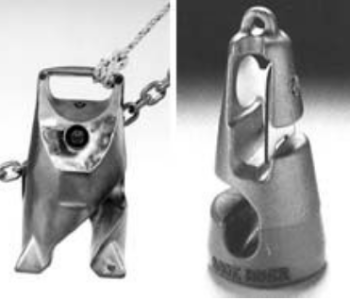
Mark-1
Well-Known Member
Though I suspect that Sumara spent a few bob on his!
True, but it's an appreciating commodity investment.

Though I suspect that Sumara spent a few bob on his!

Yes, that's true. When the engineering shop phoned to give me the price he said "You are not going to want to go ahead with this, bronze seems to be rocketing in price every week" to which I replied "So why won't I want to go ahead!". It's not quite my pension but definately a nice little nest egg.Though I suspect that Sumara spent a few bob on his!

Is it painted to look like concrete to disguise its intrinsic worth?Yes, that's true. When the engineering shop phoned to give me the price he said "You are not going to want to go ahead with this, bronze seems to be rocketing in price every week" to which I replied "So why won't I want to go ahead!". It's not quite my pension but definitely a nice little nest egg.


Is there a name for that saddle shaped shackle, attached to the angel, that slides up and down the chain? Can't help feeling it would make launching and retrieving the angel a lot easier than and ordinary oversize shackle.
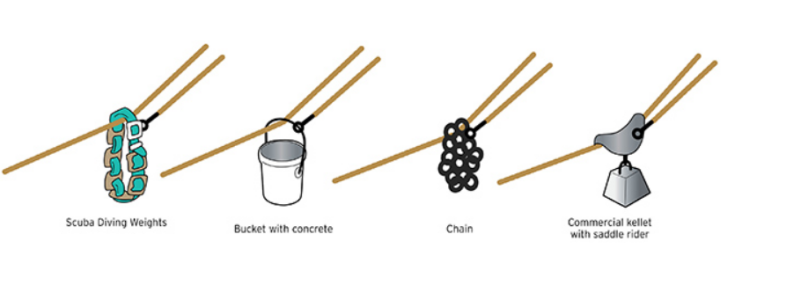
I see Poignard has come up with a name. Sadly my one was from Davey and Co but they stopped supplying them about 10 years ago. Maybe they can resurrect them, although nylon snubbers seem to have cornered the market!Is there a name for that saddle shaped shackle, attached to the angel, that slides up and down the chain? Can't help feeling it would make launching and retrieving the angel a lot easier than and ordinary oversize shackle.
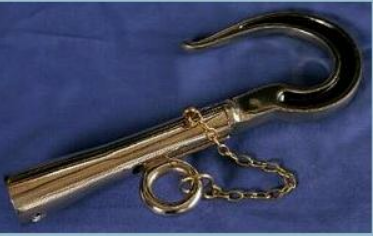
Talking of Davey & Co., your lovely boat ought to have a 'Grabit' boathook.I see Poignard has come up with a name. Sadly my one was from Davey and Co but they stopped supplying them about 10 years ago. Maybe they can resurrect them, although nylon snubbers seem to have cornered the market!
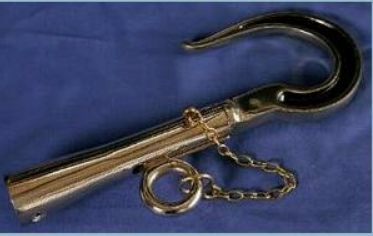
Trouble is if I shipped your valuable boathook or Sumatra’s bronze Angel and then got myself into difficulties somehow, I’d be under pressure and find it very hard to make a decision on which to save first, my crew or the pricey ground tackle.Talking of Davey & Co., your lovely boat ought to have a 'Grabit' boathook.
View attachment 189199
Davey Grabit Boathook Aluminium Bronze
It just so happens that I have one to sell. It appears to be unused.


I can see I'm going to have to go upmarket to find a buyer for this.Trouble is if I shipped your valuable boathook or Sumatra’s bronze Angel and then got myself into difficulties somehow, I’d be under pressure and find it very hard to make a decision on which to save first, my crew or the pricey ground tackle.

Recently been re-reading Hornblower. When Hotspur crept off the Brest blockade into Tor Bay, out of drinkable water and in the middle of a violent storm that had seen a two-decker drag aground in Torquay Roads, they backed the best bower anchor with the launch’s carronade.
So, perhaps all you really need is a spare naval gun and a dozen or so seamen to manoeuvre it into place when you need to be really sure of your anchor.

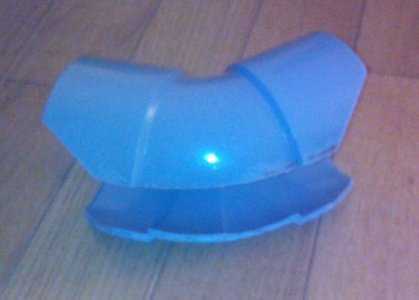
If you do not plan to pass it as heritage for the next few centuries, a couple of quid solution: add a piece of webbing around it and a shackle to attach the weight and it should last quite a number of anchorages before replacementNo-one seems to sell a kellet saddle so it looks like I'll have to make one.

I wonder what the equivalent diameter rope would be today to have the same strength as those rodes that were about 9 to 12 inch diameter.Yeah, but Hornblower had an all rope rode.
I wonder what the equivalent diameter rope would be today to have the same strength as those rodes that were about 9 to 12 inch diameter.
Even had they known it, would they have had on board any means of measuring what strain was being applied in any given situation?Fascinating question. They must have known the typical breaking strain. Wonder if it's recorded anywhere.
Even had they known it, would they have had on board any means of measuring what strain was being applied in any given situation?
The only tools they had were their eyes, ears and experience.