
Anchor snubber hook

Sacrificial in the middle of the night. Is your anchoring technical enough that you have the same section of chain in the same position at 30 m, doesn't the depth alter where you anchor.
So far my snubber has lasted four seasons and I see it every time I anchor, so the chance of sudden unexpected failure is very small. If it does happen, the anchor load will be transferred to the chain, at which point I'll probably wake up because of the noise of the anchor moving on the roller. I guess you're innured to that noise!
I always exercise precision when anchoring ;)
 
By the sound of it you have the warp under tension over the roller causing wear on the snubber line.

Often see people hanging off the bow of their boats in challenging conditions Trying to fix a snubber.
Why? No matter the position you are taking load of the chain and windless
Well something has to be under tension. The snubber should be a nice springy line that, in my case is attached to the transom cleat.

No need to hang off the bow in challenging conditions, the snubber is attached to a point on the chain before goes over and retrieved once it has passes the roller. I was always told never ever have the strain on the windlass. Either use one of those special fittings to jam the chain or a cleat.
 
Where I am in Greece when building a new house they lay a concrete base with renforcment mesh,after it sets they get Skil saws and cut through it to put in drains sometimes right across the base , destroying it integraty .
If you ask them why,the answer comes back .
That's the way my father did it.!
 
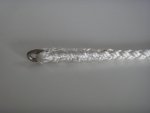
Here's another vote for connecting the chain with a dyneema shackle. This is the chain end of our snubber - backsliced octoplat onto a single anchor link.
 

Attachments

  • Snubber.jpg
    Snubber.jpg
    48.7 KB · Views: 38
So far my snubber has lasted four seasons and I see it every time I anchor, so the chance of sudden unexpected failure is very small. If it does happen, the anchor load will be transferred to the chain, at which point I'll probably wake up because of the noise of the anchor moving on the roller. I guess you're innured to that noise!
I always exercise precision when anchoring ;)

Anchoring in NZ can be a totally different animal to Europe/UK.

We keep a Hartley 32 in steel in Wellington Habour and are members of the Evans Bay club.

Some of the members stories about anchoring in the Marlborough Sounds sound horrifying - katabatic winds and intense willywaws being very common. Plus strong tidal flows.

The pilot book has anchoring methods using two anchors that would perhaps be criticised on here, but have obviously proved effective there.
 
I have three snubbers - doesn't everyone?

1. A short snubber with a hook used always for the initial set and retained if the conditions are light to moderate.
2. A long snubber which replaces #1 if the conditions are moderate to strong. This attaches to the chain with a soft shackle.
3. A spliced continuous dyneema loop about two feet diameter which is always used as a backstop to #1 or # 2 to protect the windlass if 1 slips off or 2 breaks. This is lark's footed through a chain link and hooked over a cleat.
 
Snubbers do occasionally break.

I have snapped half a dozen or more over the years. They usually break with an enormous bang that would wake the dead.

The problem is invariably they snap when under high load, just when the elasticity is most needed and replacement is harder. Crawling along the deck in high wind is no fun.

They do not always break from chafe, but it is worth considering reasonable systems to minimise this . We use 14mm Dyneema where the snubber passes over the bow roller. This has proven reasonably chafe resistant and the high fundamental strength means it can suffer lots of wear before it becomes weaker than the nylon that provides the stretch. Our mark two version has a Dyneema sleeve added over the top. The sleeve has a much tighter weave than the single braid Dyneema which seems to help abrasion resistance further. Probably overkill for most boats, but we anchor over 300 days a year so have more wear than most.

The nylon part seems to suffers a significant loss of strength with time, probably from the repeated stretching cycles and UV exposure. It is worth considering periodic replacement for this part even if looks OK. Two snubbers in very severe conditions are also sometimes used, but at least have a short strop or chain stopper so if the snubber does break, a high load is not placed directly on the windlass.
 
Snubbers do occasionally break.
...

The nylon part seems to suffers a significant loss of strength with time, probably from the repeated stretching cycles and UV exposure. It is worth considering periodic replacement for this part even if looks OK. Two snubbers in very severe conditions are also sometimes used, but at least have a short strop or chain stopper so if the snubber does break, a high load is not placed directly on the windlass.

we have never (yet) anchored in challenging conditions, but this sounds like eminently sound advice.
Plus, we never leave the chain on the windlass, but round a strong point (bow cleat).

If we ever do have to anchor is a serious blow, a couple of snubber lines would definitely be the way to go. If one snaps, I bet you will hear it. You may then be in a position to add another second one. Plus the chain is still there, if all else fails.
 
By the sound of it you have the warp under tension over the roller causing wear on the snubber line.

Yes likely he has .. but careful selection and use ? Nice and quiet though !! Another way is to make off on the chain at desired link .. with the snubber line ends led back to a cleat either side of bow (if you have them). That way no chafe at all. Line can ride over roller when bringing chain in .. and if its a cow hitch to the link - can be removed easily.

Often see people hanging off the bow of their boats in challenging conditions Trying to fix a snubber.
Why? No matter the position you are taking load of the chain and windless

Why hang of the bow ... surely take up the chain and access the snubber then ...
 
Okay, I will try to explain my method. I have about 7 m of 14mm dock line I fasten one end to a mid cleat the other to a 75mm dia docking spring with 2 round turns and 2 hitches from there I have about a metre of the same, tied again to the other side of the spring the other end spliced to a large chain hook, I fasten the chain hook about 20cm from the bow roller in board. Then release a bight of chain into the locker. Thinking about it I could put I 20cm outboard, but this way is easy.
There is no snacking at all, you can see the spring compress and relax without any jerks.
I see some use a black rubber thing that they wind the warp around to gain a similar advantage.
If there any problem the half hitches are easily undone under load to date I have not found this nessasary.

My method means no hanging off the bow no wear on the snubber line.

Sorry if thinking outside of the box offends tradition. I have not owned a yacht under 13m in 20 years and this works for them.
Don't know about smaller boats.
 
Last edited:
Yes likely he has .. but careful selection and use ? Nice and quiet though !! Another way is to make off on the chain at desired link .. with the snubber line ends led back to a cleat either side of bow (if you have them). That way no chafe at all. Line can ride over roller when bringing chain in .. and if its a cow hitch to the link - can be removed easily.


Why hang of the bow ... surely take up the chain and access the snubber then ...
I don't hang off the bow, but, see others do so.
 
Okay, I will try to explain my method. I have about 7 m of 14mm dock line I fasten one end to a mid cleat the other to a 75mm dia docking spring with 2 round turns and 2 hitches from there I have about a metre of the same, tied again to the other side of the spring the other end spliced to a large chain hook, I fasten the chain hook about 20cm from the bow roller in board. Then release a bight of chain into the locker. Thinking about it I could put I 20cm outboard, but this way is easy.
There is no snacking at all, you can see the spring compress and relax without any jerks.
I see some use a black rubber thing that they wind the warp around to gain a similar advantage.
If there any problem the half hitches are easily undone under load to date I have not found this nessasary.

My method means no hanging off the bow no ware on the snubber line.

Sorry if thinking outside of the box offends tradition. I have not owned a yacht under 13m in 20 years and this works for them.
Don't know about smaller boats.
Snubbers fulfil 2 main purposes. The first is as you describe to relieve the anchor loads from the windlass. sensible for this purpose to have one that is short enough to be between the windlass and the roller. However it does not deal with a problem some boats have of noise from the chain over the roller so it may make sense to make it a little longer so that it goes over the roller. Not difficult to attach a chain hook before the chain goes over the roller if there is room between the cheeks.. Keep tension on the rope while letting chain out with the windlass.

The second use is as a damper in more challenging anchoring situations Neeves of this parish explained how in a long article in last month's YM. In this case the snubber is much longer and goes down near the waterlineon the chain then back to the cockpit where it can be adjusted and the "spring" is anything up to 10m depending on the length of the boat.

As ever, there are no hard and fast rules and how you choose to deploy a snubber depends on your boat layout, and what you are trying to achieve. Lots of alternatives suggested here already.
 
Use a tiewrap cut short on the hook to act as a gate that spins on the hook shank - easy to put on - easy to take off, I used to use the same idea on reefing horns to stop the reef euelet failing off while I tensioned the halyard up
 
Then don't, you have an anchor chain to hold the boat.
The chain will not break, but in strong wind, especially very strong wind, a broken snubber results in a reduction in the stretch. This puts some extra peak loads on the anchor. Reducing these potential peak loads is why the snubber is used in first place.
 
Last edited:
The chain will hold the boat, but in strong wind, especially very strong wind, a broken snubber results in a reduction in the stretch. This puts some extra peak loads on the anchor. Reducing these peak loads is why the snubber is used in first place.


Isn't it the 'SNATCH' loads its there to catch ? Peak loads will be same whatever ... its the severity of the snatch that's being catered for ?
 
Top