Neeves
Well-Known Member
Yes I tend to use sheltered anchorages.
Tell that to NormanS.
If you were confident you would remove the anchor completely, sell it and invest in some decent malt.

Jonathan

Yes I tend to use sheltered anchorages.

Sounds as if you’ve had too many already.Tell that to NormanS.
If you were confident you would remove the anchor completely, sell it and invest in some decent malt.
Jonathan

My 28 ft 9 ton boat has a 10kg Delta and 10mm chain.

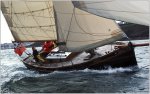
She’s a Heard 28 a Falmouth working boat converted to cruising. No the chain does most of the work not the anchorTwo questions for you:
1. Just out of idle curiosity, what boat do you sail? I sail a 36' IOR One Tonner and she displaces 7.8T - and by todays standards that's on the heavy side. What 28' boat displaces 9T?
2. And for that kind of displacement, isn't the anchor a bit 'undersized'?


I love it!
Someone can be relied upon to come up with this - every time.
Beggars belief.
At 17 knots (is that a bit of a blow?), a 5: 1 scope and 30m of 8mm chain deployed - all the chain is off the seabed. How, precisely is the chain offering any hold - sticky water?
Jonathan
And very attractive she looks too. ?She’s a Heard 28 a Falmouth working boat converted to cruising. No the chain does most of the work not the anchor View attachment 148589
She’s a Heard 28 a Falmouth working boat converted to cruising. No the chain does most of the work not the anchor View attachment 148589
And very attractive she looks too.She’s a Heard 28 a Falmouth working boat converted to cruising. No the chain does most of the work not the anchor View attachment 148589
Well everything is heavy on the boat, apart from the anchor. There’s 5 tons encapsulated lead in the long keel. She does go though !She looks lovely.
Not sure I agree 100% about anchor vs chain weight though.
But if it works for you...

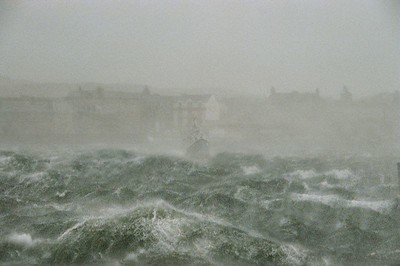
Yes I tend to use sheltered anchorages.17 kts is not sheltered.



I have two bow rollers. I made the one regularly used for the anchor chain with a slot, to try to prevent the chain from rotating. Unfortunately, at times, it still rotates. I made a "Bent Link", which is merely a piece of 1/2" round bar with an eye at each end, and with a bend in it. This is attached a few links from the anchor, between the anchor and the rest of the chain. As soon as the bend reaches the roller, it automatically rotates the anchor to the correct orientation. Because the link is made of round material, the slot in the roller does not prevent rotation. This presupposes that the material of the Bent Link is not of a larger diameter than the width of the slot in the roller. It also requires sufficient distance between the anchor and the windlass gypsy. It works faultlessly.As I think you predicted, a Boomerang does not work with a grooved bow roller.
My anchor used to slide from side to side with an ungrooved roller, so I had one made with a groove to accept the shank of my Rocna. This does not retain my 8 mm chain, with the result that the chain rolls and the anchor can come up reversed. A swivel allows the anchor to rotate before hauling it onto the roller.

I was anchored in the Helford a few years back up past Frenchmans Creek and was holding a good 20 knots. This was sheltered compared to the main mooring area. I've also had nearly 30 knots in Poole harbour but had flat waters due to be close to the land.Yes I tend to use sheltered anchorages.17 kts is not sheltered.
What you are saying is that I many conditions, 1 knot of wind, 2 knots of wind, 3 knots of wind upto, say, 10 knots of wind - the anchor chain is sufficient to hold your vessel. Have you ever seen your anchor, under water, and the hold it might develop? How much chain do you deployAnchor threads on here go back years and are subject to derision, agreement, laughter etc.
My own view FWIW..not a lot on here…is that the chain is more important than the anchor in many conditions.
My 28 ft 9 ton boat has a 10kg Delta and 10mm chain. I have an anchor buoy on a pulley system that always sits above the anchor. I can see where the anchor is and in most cases the boat sits to the chain and only gets to pull on the anchor in a blow.

Occasional strong winds are unfortunately unavoidable when cruising areas around the UK, especially the northern latitudes.
The concept that poor ground tackle is fine because you can always escape these conditions is flawed. Sooner or later this notion will lead to grief.
I have two bow rollers. I made the one regularly used for the anchor chain with a slot, to try to prevent the chain from rotating. Unfortunately, at times, it still rotates. I made a "Bent Link", which is merely a piece of 1/2" round bar with an eye at each end, and with a bend in it. This is attached a few links from the anchor, between the anchor and the rest of the chain. As soon as the bend reaches the roller, it automatically rotates the anchor to the correct orientation. Because the link is made of round material, the slot in the roller does not prevent rotation. This presupposes that the material of the Bent Link is not of a larger diameter than the width of the slot in the roller. It also requires sufficient distance between the anchor and the windlass gypsy. It works faultlessly.

. . . There was a time when the majority using CQR and Bruce anchors and appeared to anchor successfully in strong winds, long before pontoons started to appear.

Yes I can see that a boomerang of round bar would probably work. I was given a flat bar one by Viking to test and that does not rotate.I have two bow rollers. I made the one regularly used for the anchor chain with a slot, to try to prevent the chain from rotating. Unfortunately, at times, it still rotates. I made a "Bent Link", which is merely a piece of 1/2" round bar with an eye at each end, and with a bend in it. This is attached a few links from the anchor, between the anchor and the rest of the chain. As soon as the bend reaches the roller, it automatically rotates the anchor to the correct orientation. Because the link is made of round material, the slot in the roller does not prevent rotation. This presupposes that the material of the Bent Link is not of a larger diameter than the width of the slot in the roller. It also requires sufficient distance between the anchor and the windlass gypsy. It works faultlessly.
I did mention the reason in my earlier post. The groove prevents the anchor from sliding side to side on tacks and holds it far more positively with a shackle attaching the eye of the shank to the deckI am being picky, but not actually wanting to be argumentative but both of you, Norman and Vyv are saying that with a grooved bow roller the anchor can still arrive at the bow roller - inverted.
Can anyone advise what is the benefit of a grooved bow roller?
I confess I've never had a grooved bow roller so my boomerang was based on people with similar equipment to mine - a roller with a gentle 'V' as I assumed, totally erroneously, that the groove returned the anchor as it was deployed - right way round.
Bad research.
Jonathan