
nigelmercier
RIP
- Joined
- 20 Jun 2007
- Messages
- 16,234
- Location
- Live in Kent, boat in Canary Islands
I have always thought DAB radio was a solution looking for a problem.
Digital Radio is the way forward, but DAB version 1.0 is not it.

I have always thought DAB radio was a solution looking for a problem.

Digital Radio is the way forward, but DAB version 1.0 is not it.

IP radio will work fine, until everyone has them and they block up the internet.For fixed - ie home - use I can't see the point of or future in any sort of over-the-air radio receiver. Wifi IP radios are where it's at ... just a shame they are still expensive.
Digital Radio is the way forward, but DAB version 1.0 is not it.
For fixed - ie home - use I can't see the point of or future in any sort of over-the-air radio receiver. Wifi IP radios are where it's at ... just a shame they are still expensive.
IP radio will work fine, until everyone has them and they block up the internet.
As I said earlier. Cost.
Broadcast is one signal feed to a transmitter.
IP is on signal feed per viewer with many intermediate routing points.
The difference is, consumers seem happy to stump up £20 a month for an internet connection, few will pay to subscribe to broadcast, until you get to talking about Sky etc, then you are really paying for the content as much as the channel.As I said earlier. Cost.
Broadcast is one signal feed to a transmitter.
IP is on signal feed per viewer with many intermediate routing points.
The difference is, consumers seem happy to stump up £20 a month for an internet connection, few will pay to subscribe to broadcast, until you get to talking about Sky etc, then you are really paying for the content as much as the channel.As I said earlier. Cost.
Broadcast is one signal feed to a transmitter.
IP is on signal feed per viewer with many intermediate routing points.
Internet seems seriously inefficient, but people want it.
It's not that long since I was regularly paying £100/month for 56k dialup ... now I pay £15/month for 5Mbps, and that's in the back end of nowhere.
Your doing well in our village (Notts) your lucky to get 1.5Mps and that's download forget upload!
Streaming radio doesn't even dent my broadband connection, which in the midst of rural nowhere is 5Mbps. In a world rapidly moving to online video streaming, audio is trivial.
Of course it doesn't. But if everyone was listening to IP radio simultaneously, it would certainly cause a problem. You know how it works, don't you? You don't have your own wire all the way to the broadcaster

>Does anybody know when "normal" boat fm radios will need replacing with DAB ?
The government hasn't set a date DAB coverage isn't national. Car manufacturers are fitting DAB radios.

The question is for how long will LW do that?
The BBC announced 5 years ago that they'd bought the world's supply of valves for the LW transmitter and when they're gone, they're gone (along with LW Radio 4).
I would have thought LW will be around for some time to come, it's used for Economy 7 switchover - the signal is encoded with the Radio 4 LW transmission.
There are plenty of factories still making valves for guitar amplifiers and hi-fi's, and mini valves are used in military applications, so it wouldn't be impossible to make some more....
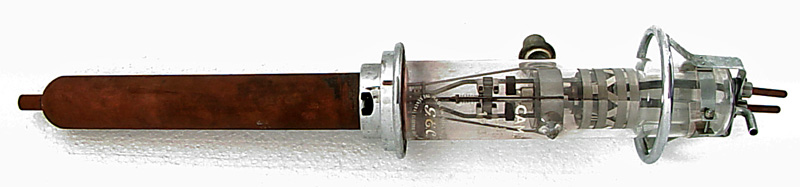
Of course, but all the same it's a tiny part of the internet infrastructure capacity - typically 128kbps. Sure, if everyone listens it adds up, but when everyone does anything on the internet it adds up. BT have well over a million IP TV subscribers now, and they need a heck of a lot more bandwidth than radio listeners.
Ten years ago everybody in the country using IP radio would have been unthinkable. Five years ago, impossible. Today, inconvenient. Five years from now, trivial.
Here's an article about the problem: http://www.theguardian.com/media/2011/oct/09/bbc-radio4-long-wave-goodbye
That's the same vacuous argument that predicts self-driving cars, and nuclear fusion are "just around the corner".
Incidentally, do you know of any IP radio streams that provide half-decent listening quality? (say 160kbs?)
Interesting, but just a little whiff of bullshyte.