Aft mounted anchors/ Boats from Scandinavia

Baltic has little tide if any at all.

Boats have bow ladders.

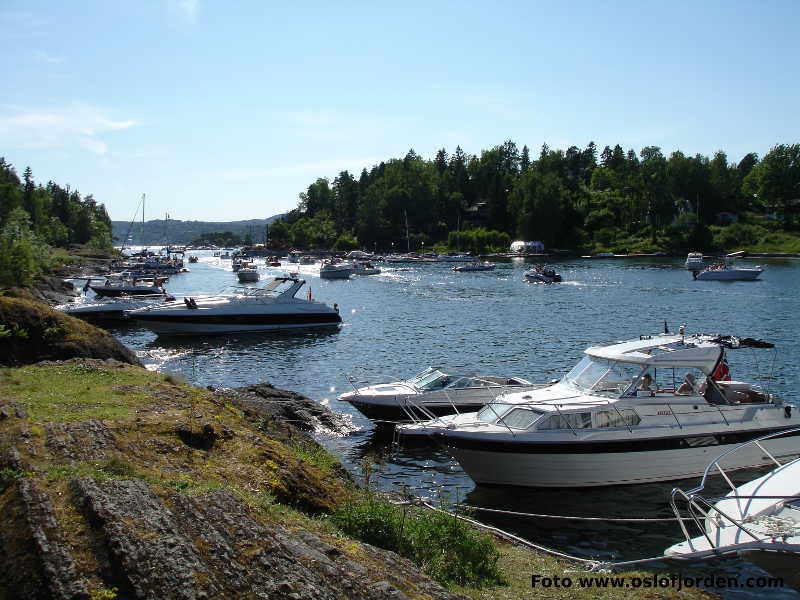
In good weather conditions you drop the anchor from the stern and motor in to a rock ledge or a beach, drop the bow ladder and either tie up to a rock or a conveniently placed tree. Then you tighten up the anchor line.

Not any good for CI with 10m tides.
 
As Bandit says, aft anchors are usually coupled with bow ladders, which also provide added flexibility in marinas. Most smaller marinas around here have a row of buoys a suitable distance away from the pontoon. Bow ladder allows you to park either way to accommodate privacy/sun/wind/etc. requirements. Not sure if this is relevant in your boating area, though.
 
Baltic has little tide if any at all.

Boats have bow ladders.

In good weather conditions you drop the anchor from the stern and motor in to a rock ledge or a beach, drop the bow ladder and either tie up to a rock or a conveniently placed tree. Then you tighten up the anchor line.

Not any good for CI with 10m tides.
That will explain it. Many thanks
 
Baltic has little tide if any at all.

Boats have bow ladders.

In good weather conditions you drop the anchor from the stern and motor in to a rock ledge or a beach, drop the bow ladder and either tie up to a rock or a conveniently placed tree. Then you tighten up the anchor line.

Not any good for CI with 10m tides.

middagsbukta_uthavn_asker_info1.JPG
 
Baltic has little tide if any at all.

...and generally very steep-to coastlines. Even sailyboats with 2m keels can get close enough to the land for people to step ashore over the bow. Ours is a Scandinavian design and has a chain locker and plinth for an electric windlass at the stern, a bow pulpit with a lowered step in the middle, and no good place for a normal bow windlass.

Pete
 
A stern anchor might be a useful addition to my long-keeled low-powered yacht, which is impossible to steer astern. Reversing out of a marina berth with a current from astern stands a good chance of going horribly wrong, with the boat across the sterns of adjacent boats. Running a trackline across to an upstream pontoon solves the problem but takes time to set up. But if I let go a stern anchor as I ran into the berth I would have the means of keeping her straight as I reversed out
 
Yep thats how we do it here in Scandinavia. I have an aft anchor winch and after tying the bow to land with about 2-3 m of line I motor the boat out to take up the slack with the winch remote control and she happily sits there all day as there are no tides to worry about. The only danger is if you are on a taxi boat route as these kick up a steep wake which will make your boat bounce, but if its sheltered you can safely overnight with the boat within jumping distance of land. The local authorities place steel pins along the waterline on every island so you can fasten your bowline which means you can stop in literally thousands of places so never a problem to moor up. I've fitted many aft winches to new Princess's as the factory won' t install one, and more Scandy boats have an aft winch than a bow winch.
 
Actually, in several occasion I would have liked to have a kedge anchor also in the Med - and I did use it in fact (a manual one), when I had a smaller boat.

Typically, down here you drop the hook in bays where the wind blows from inland, which keeps the boat more or less pointing perpendicular to the shore.
In turn, this means that navigation wakes (if any) hit your boat mostly on the stern, hence without making her roll too badly.
So far so good, but in very light wind, and possibly with some current, it can happen that the boat stays parallel to the shore instead (mostly at night, usually).
And in such condition, any sort of wake is bound to make the boat roll more easily - something that could be avoided deploying a kedge anchor from the stern.

Otoh, when the boat size goes above 30' or so, handling manually an anchor+chain substantial enough to be effective becomes difficult.
Therefore, it would take a proper setup (winch, roller, chain locker). And that's bound to be ugly - not to mention hardly compatible with the oh so fashionable hi/low platform.
I suppose that's another good reason why you don't see many Med boats with such rigging...
 
Actually, in several occasion I would have liked to have a kedge anchor also in the Med - and I did use it in fact (a manual one), when I had a smaller boat.

Typically, down here you drop the hook in bays where the wind blows from inland, which keeps the boat more or less pointing perpendicular to the shore.
In turn, this means that navigation wakes (if any) hit your boat mostly on the stern, hence without making her roll too badly.
So far so good, but in very light wind, and possibly with some current, it can happen that the boat stays parallel to the shore instead (mostly at night, usually).
And in such condition, any sort of wake is bound to make the boat roll more easily - something that could be avoided deploying a kedge anchor from the stern.

Otoh, when the boat size goes above 30' or so, handling manually an anchor+chain substantial enough to be effective becomes difficult.
Therefore, it would take a proper setup (winch, roller, chain locker). And that's bound to be ugly - not to mention hardly compatible with the oh so fashionable hi/low platform.
I suppose that's another good reason why you don't see many Med boats with such rigging...

MM, have you ever tried rigging a spring to your bow anchor to achieve the same?
 
Actually, in several occasion I would have liked to have a kedge anchor also in the Med - and I did use it in fact (a manual one), when I had a smaller boat.

Typically, down here you drop the hook in bays where the wind blows from inland, which keeps the boat more or less pointing perpendicular to the shore.
In turn, this means that navigation wakes (if any) hit your boat mostly on the stern, hence without making her roll too badly.
So far so good, but in very light wind, and possibly with some current, it can happen that the boat stays parallel to the shore instead (mostly at night, usually).
And in such condition, any sort of wake is bound to make the boat roll more easily - something that could be avoided deploying a kedge anchor from the stern.

Otoh, when the boat size goes above 30' or so, handling manually an anchor+chain substantial enough to be effective becomes difficult.
Therefore, it would take a proper setup (winch, roller, chain locker). And that's bound to be ugly - not to mention hardly compatible with the oh so fashionable hi/low platform.
I suppose that's another good reason why you don't see many Med boats with such rigging...
It was offered for my SwiftTrawler34, quite expensive with the roller, winch, batteries and locker. Tempted because in the Med you can all be happily at anchor just drifting together when somebody will come in and put down a stern anchor (so the swim platform is always facing the shore) and then complain when other boats start drifting too close. So we all end up with two anchors.
 
MM, have you ever tried rigging a spring to your bow anchor to achieve the same?
Nope, and never thought of it, TBH. I see what you mean, though.
Not as stable as with bow+stern anchors I suspect, but worth keeping in mind for a test on the next occasion...
Thanks! :encouragement:
 
Nope, and never thought of it, TBH. I see what you mean, though.
Not as stable as with bow+stern anchors I suspect, but worth keeping in mind for a test on the next occasion...
Thanks! :encouragement:

It's an old trick which the Royal Navy of Nelson's day used to use. Mind you they had lots of manpower to rig the spring to the anchor cable. Maybe that's why it's not so well-known now.
 
Mind you they had lots of manpower to rig the spring to the anchor cable.
I guess so, in a tall ship... Doesn't sound too complicated at pleasure boat size, though.
I suppose a spring line roughly as long as the boat and attached to a stern cleat should do the trick, or am I missing something?
 
I guess so, in a tall ship... Doesn't sound too complicated at pleasure boat size, though.
I suppose a spring line roughly as long as the boat and attached to a stern cleat should do the trick, or am I missing something?

I think that would do it. It would, of course, only be useful whilst the set of the tide or, absent tide, the breeze remained in a constant direction.

As it would also not be suitable in a crowded anchorage where other boats are moving freely around their anchors, I would suggest the easiest approach to rigging the spring would be by setting the anchor to a minimum satisfactory scope and then attaching the spring to the chain in a similar manner to a bridle and then veering out another 20 meters or so of chain so that the spring, chain and boat form an approximately equal-sided triangle.
 
Last edited:
There are a couple of people on the Sealine forum from Sweden with the same stern anchor and step at the bow. A said the stern anchor requirement is driven by the rocky shore line.
Sweden seems to get fantastic summers but they will almost certainly be frozen up by now and no more boating until the end od April.
 
As it would also not be suitable in a crowded anchorage where other boats are moving freely around their anchors
Actually, I don't think that would be an issue.
I mean, in theory the spring (assuming as you said to attach it to the chain, forming an equilateral triangle - or at least an isosceles, chain and spring being the two equal sides) should not change the way the boat moves around the anchor.
It's just the direction she's pointing to that is affected - i.e. perpendicular to the anchor, rather than pointing to it with the bow.
But if the wind rotates say 180°, she should still swing together with all other boats, I reckon...

And coming to think of it, by shortening the spring line and letting down some loose chain, it should be possible also to keep the stern rather than the bow pointing towards the anchor - which in some cases could be nice, depending on the landscape and sun orientation.

Next season, I will definitely give it a try! :encouragement:
 
Top
