Advice for fixing bodgy repair to chainplate mounting! : /

Matt--H

New Member
Joined
29 Aug 2021
Messages
17
Visit site
Hi folks, hope you can help

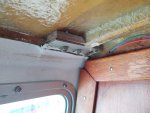
I have a colvic watson motorsailer (23.6) - so not a racing yacht before anyone is aghast at the design etc. Its got three mounts either side on the saloon roof for the shrouds/stays. These are bolted through and have a bit of hardwood (so I have discovered) and a steel plate about 5" x 1.5" acting as a spreader/washer underneath. Here's one of the better ones (albeit there is room for improvement here too!) :
IMG_20220529_151258193.jpg

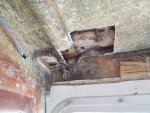
The problem I have is that one of them started lifting when the shroud was being tensioned, so I removed the headlining and found this:
IMG_20220529_150654382.jpg

...don't ask - I think the green is some sort of epoxy filler.

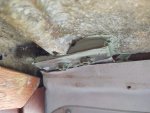
Anyway, now on to the question. I've got some good hardwood that I'm going to sort this mess out with - I'll get rid of the filler and cut an oversized bit of hardwood to fit (and I'll go quite a bit larger than the steel plate (unlike the other side pictured 1st) so the load is better distributed. My ask therefore is, should I glass it in? Part of me says thats a great idea as it will further help strengthen the area and distribute the load, but another part says that if there is any leak in the future, then the hardwood will be entombed in epoxy resin, and would potentially just rot away. What do you all think on that, and indeed any other pearls of wisdom on this?

Many thanks in advance,
Matt.
 
Hi folks, hope you can help

I have a colvic watson motorsailer (23.6) - so not a racing yacht before anyone is aghast at the design etc. Its got three mounts either side on the saloon roof for the shrouds/stays. These are bolted through and have a bit of hardwood (so I have discovered) and a steel plate about 5" x 1.5" acting as a spreader/washer underneath. Here's one of the better ones (albeit there is room for improvement here too!) :

View attachment 136109

The problem I have is that one of them started lifting when the shroud was being tensioned, so I removed the headlining and found this:

View attachment 136111

...don't ask - I think the green is some sort of epoxy filler.

Anyway, now on to the question. I've got some good hardwood that I'm going to sort this mess out with - I'll get rid of the filler and cut an oversized bit of hardwood to fit (and I'll go quite a bit larger than the steel plate (unlike the other side pictured 1st) so the load is better distributed. My ask therefore is, should I glass it in? Part of me says thats a great idea as it will further help strengthen the area and distribute the load, but another part says that if there is any leak in the future, then the hardwood will be entombed in epoxy resin, and would potentially just rot away. What do you all think on that, and indeed any other pearls of wisdom on this?

Many thanks in advance,
Matt.
To make the steel plates spread the load add two flanges to make them channel section - even as little as a 12mm upstand will make a big difference - then bed your new hardwood on epoxy bog
Jim
 
It looks like your chainplate bridges a stringer. You could grind the stringer flat then lay up several layers of heavy glass to say 12mm so effectively maintaining the stiffness of the stringer but providing you with a flat surface for your backing pad. Proper job with no wood to rot and far stronger
 
It looks like your chainplate bridges a stringer. You could grind the stringer flat then lay up several layers of heavy glass to say 12mm so effectively maintaining the stiffness of the stringer but providing you with a flat surface for your backing pad. Proper job with no wood to rot and far stronger
Thank you. That stringer is a strip of wood (I'd call it a bearer?) added between the initial glass finishing lays for the roof and then with more glass over. which sadly has gone pretty soft at the end so I'm going to have to cut the wood back and splice something on/off it somehow - I like the idea of a large glass surface but I'm quite new to the process, so not sure how long or number of layers it would take to build up 12-15mm ! (I'd need fast setting resin for that one I reckon :D )
 
To make the steel plates spread the load add two flanges to make them channel section - even as little as a 12mm upstand will make a big difference - then bed your new hardwood on epoxy bog
Jim
Thank you Jim, I'd have to cut and weld it as its a bit thick to bend, but I do appreciate the idea : )
 
Thank you. That stringer is a strip of wood (I'd call it a bearer?) added between the initial glass finishing lays for the roof and then with more glass over. which sadly has gone pretty soft at the end so I'm going to have to cut the wood back and splice something on/off it somehow - I like the idea of a large glass surface but I'm quite new to the process, so not sure how long or number of layers it would take to build up 12-15mm ! (I'd need fast setting resin for that one I reckon :D )
If you have a stringer (a glassed over strip of wood or foam) then you're unlikely to have core so you may get away with less additional pad thickness. A glass supplier should be able to advise you on how many layers of glass/thickness. You are unlikely to need more than 10/12mm I think
 
I like Geem's suggestion - but, or and, I might make up the glass 'panel', you are going to introduce, as a big bit of glass/resin, cut off pieces to size until you arrive at the recommended thickness, bond them to gather and then instal. The installation as seen is going to allow gravity to release all the resin but making the piece separately will be much easier, and cleaner.

You can buy stainless off the shelf as 90 degree long strips of various dimension - you may be able to also buy channel sections.

Jonathan
 
Presumably there are air spaces there and the whole lot was covered by headlining boards?
I think the metal backing pads are acceptable as they are —- IF you patiently laminate 10 or 12mm of new glass fibre matting and resin spreading out onto the surrounding area to say 200x200mm and up in thickness to the height of the stringer moulding
I wouldn’t go cutting things out .

I don’t like the proximity of the window much. Or the meanness of the metal backing plates but extending and reinforcing the grp across all the angles and joints will really tie the rig load into the cabin top structure correctly and progressively without all those point loadings that I see in your photos
Good luck
 
The pads did their job in the past, "so why do they need enlarging now?", would be my first query.
Before making alterations one should ask why it has started lifting .
For example--has the deck become delaminated from a bulkhead nearby? In that case it is not the area of the pad that is at fault, but the bulkhead/deck joint. Do you have a failure in the deck in some way? Have you looked around above for surface crazing at the point where it turns down to the window? It may be that some movement has caused the fibres in the GRP to start to break & the angle between deck & vertical now needs reinforcing. ( someone has mentioned proximity to the window)
Has the stringer failed due to rot or compression of its core & in need of re construction?
Has the stringer/deck joint failed, but not be visible when not under load
All the possibilities need to be considered once the old pad has been removed. THEN decide on a plan for remedial work.
 
Last edited:
The pads did their job in the past, "so why do they need enlarging now?", would be my first query.
My thought too, but maybe the OP has given the answer in his comment that the wood in the stringer has become soft, though a properly built stringer should be plenty strong enough from just the GRP.
All the possibilities need to be considered once the old pad has been removed. THEN decide on a plan for remedial work.
Big +1. It's eminently repairable, but first find the cause of the problem. If you do end up building up a GRP pad, make it out of different sized pieces of cloth, biggest against the existing GRP and tapering down so the last is the smallest. That way you avoid point loads.
 
Thank you Jim, I'd have to cut and weld it as its a bit thick to bend, but I do appreciate the idea : )
Just add (weld) strips to both sides to form a channel section - at the moment you have just large washers & the load is not spread.Once you have spread the load then the need for heavy reinforcement is reduced. How thick is the deck at that point ?.
Jim
 
The pads did their job in the past, "so why do they need enlarging now?", would be my first query.
Before making alterations one should ask why it has started lifting .
For example--has the deck become delaminated from a bulkhead nearby? In that case it is not the area of the pad that is at fault, but the bulkhead/deck joint. Do you have a failure in the deck in some way? Have you looked around above for surface crazing at the point where it turns down to the window? It may be that some movement has caused the fibres in the GRP to start to break & the angle between deck & vertical now needs reinforcing. ( someone has mentioned proximity to the window)
Has the stringer failed due to rot or compression of its core & in need of re construction?
Has the stringer/deck joint failed, but not be visible when not under load
All the possibilities need to be considered once the old pad has been removed. THEN decide on a plan for remedial work.

Totally agree.

1. Find out why there is a problem.
2. Identify the real cuplrit
3. Decide how to remedy

The CW Motorsailer is a sturdy seagoing vessel that despite its 23ft - is a serious passage maker. It was designed and built in the days of solid construction ... a battle tank. But like many Colvic's ... and others at the time - subject to home completion.

Question : Is that stringer directly below the mast step ? Providing the compression resistance against mast ? If so - that puts those chainplates as the main shrouds ... so makes me ask why the shroud fitting doesn't bridge the stringer .... why offset ?

The second photo - if that is a full on epoxy bed - should be solid - so question goes back to why its 'failed' or as DDB / Stemar say - has the surrounding actually failed ? Looking at the photo - I see no obvious signs of the epoxy bed failed.

On the subject of 'encapsulating' hardwood block ? I would not - that way you can always replace / service without difficult surgery.

IMHO - the Hardwood block with stainless plate is a perfectly satisfactory way - as long as the underdeck and stringer are in good condition.

Its fine suggesting extra plates / grind this ... bed this ... but first is to really ascertain the root cause / failure.
 
Watsons have balsa cored decks and these can rot when there is water ingress. Also, Colvic did not put in a solid ply core at points of loading, this was/is poor practice.

Having chain plates attached to a deck without direct downward transfer of loads is not a good idea and the compressive strength of endgrain balsa has it's limitations; the one over the window is a prime example of how not to do it. Watsons were frequently home completed and the builders were not always up on their engineering skills.

I would transfer the chain plates to the cabin sides using SS strapping and, if need be bridge that window with the chain plate. The cabin sides are not cored and the through bolting will be much more secure, the loads will be distributed more evenly over the directionally stiff panel of the cabin side. The backing plate can run the entire length of the chain plate.

I would not give the idea that it lasted well enough until now much credit, unless you actually know whether the boat was ever, properly and repeatedly put to the test during it's life.

For what its worth, I own one of these "battle tanks" and the shirtsy, roll up yer sleeves attitude of the builders did not always yield the best results.
 
Presumably there are air spaces there and the whole lot was covered by headlining boards?
I think the metal backing pads are acceptable as they are —- IF you patiently laminate 10 or 12mm of new glass fibre matting and resin spreading out onto the surrounding area to say 200x200mm and up in thickness to the height of the stringer moulding
I wouldn’t go cutting things out .

I don’t like the proximity of the window much. Or the meanness of the metal backing plates but extending and reinforcing the grp across all the angles and joints will really tie the rig load into the cabin top structure correctly and progressively without all those point loadings that I see in your photos
Good luck
You don't need a build up anything like the depth of the stringer. Far easier to remove the necessary section of stringer to make the built up section. There will be no loss of stiffness when a built up section is incorporated where the stringer was. The job will be far easier. If you do as Neeves suggests and make up a thick piece of GRP you simpy need to glass it in place with extra layers of cloth. Very strong and rot proof
 
Hi folks, many thanks for all the comments and suggestions. ?

So, out looks like prolonged water ingress has rotted out the end of the stringer, and the roof balsa layer in this area - this is the root cause of the problem. I've had to cut quite a bit back to get back to something I can work off, and may yet take some more.

Will add some photos later.

M.
 
Hi folks, many thanks for all the comments and suggestions. ?

So, out looks like prolonged water ingress has rotted out the end of the stringer, and the roof balsa layer in this area - this is the root cause of the problem. I've had to cut quite a bit back to get back to something I can work off, and may yet take some more.

Will add some photos later.

M.

Your post now is what I expected to hear that water ingress had 'killed the core and stringer' .....

The need now is to recreate strength and support of that stringer and to fill that core void to allow another 40 odd years of use !!
 
Agreed Refueler. and striking the balance between a good quality repair, and opening the whole roof up is something I'd appreciate thoughts from all on. I've got back to this at present:
index.php


...does anyone know the typical thickness of the Core in a CW ?
 

Attachments

  • IMG_20220601_165006198.jpg
    IMG_20220601_165006198.jpg
    284.1 KB · Views: 142
Before anything else - a decision must be made as to the wood stringer and its scarfing in to give continuity of support. Its no good just butting in a piece.

Personally I would not resin fill that stringer area either. I would be looking for suitable wood beam to fashion to fit and with a decent length scarf joint. Once that's done - then the subject of core and infill can be sorted.

I would be looking at high % resin and low % micro balloon filling in where chainplate is going - this will create a light but strong pressure area ... the resin / MB fill extending out. Then using a lighter mix of resin and MB to fill the rest. A finishing cloth then to cover all.

Drill and mount stainless plate spreading load.

But others may suggest better alternative ?
 
Your post now is what I expected to hear that water ingress had 'killed the core and stringer' .....

The need now is to recreate strength and support of that stringer and to fill that core void to allow another 40 odd years of use !!
The core material adds very little to the strength of the stringer. It's really just a former for the GRP wrapped around it. The stringer only adds longitudinal stiffness in most cases. A bit like the difference between a sheet of thin steel and the same sheet turned into corrugated sheets.
 

Other threads that may be of interest

Top