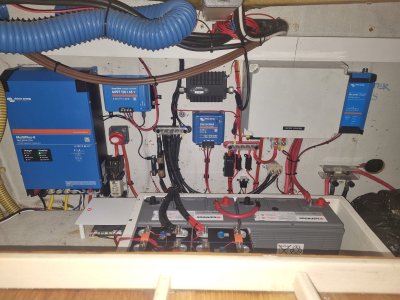
Adding fuses to my batteries

Do you get many fuses blowing for no reason? What about inductive loads, start up surge, higher current flow when battery volts low eg if your resistive device is drawing 20 amps at 13.5v, then it will draw 25 amps when the batteries are at 10.8v.

What sort of fuses? Fast acting, ultra rapid, slow blow? A slow blow fuse might tolerate an overcurrent of 2 or 3 times as much until it blew. There are lots of reasons not to use fuses in this way. You may well find delicate electronics has it's own methods of protection, inc physical fuses, inside the box.
Another book reader......why make it more complicated than it actually is. DC comes out one end, goes through the equipment and goes back in the other end. Have you never owned a DC torch with 3 x 1.5 volt batteries. Thats DC. Not really very complicated is it.
 
Another book reader......why make it more complicated than it actually is. DC comes out one end, goes through the equipment and goes back in the other end. Have you never owned a DC torch with 3 x 1.5 volt batteries. Thats DC. Not really very complicated is it.
Charming. I'm a qualified electronics engineer with time served engineering apprenticeship and decades of experience. You?

In life it's generally accepted a "good thing" if one can accept constructive critiscm and it's a great way to learn. Your advice is considered poor by a couple of engineers here and you rebuke them with insults.

Your Ladybird Book explanation fails to explain where the fuse (subject of this discussion) is in my torch. I've just changed the batteries in my Maglite, there were 4 AAA cells, not 3. Should I be worried?
 
Last edited:
Another book reader......why make it more complicated than it actually is. DC comes out one end, goes through the equipment and goes back in the other end. Have you never owned a DC torch with 3 x 1.5 volt batteries. Thats DC. Not really very complicated is it.
Does this look like the inside of your torch ?

You would not have the faintest idea where to start and you never will, because you're too smart to learn.

20251006_174631.jpg
 
Sad all you experts and engineers have to make it sound so complicated. Electricity is simple as long as you have base knowledge. My dad showed me how to wire up a 13amp socket at about 6 years old. Every one wants to be an Einstein. Very few are. Dont forget most electricity we use in the home and industry is steam generated. Think about that.....Yes steam generated. Hardly high tec 21st Century stuff.
 
.... if your resistive device is drawing 20 amps at 13.5v, then it will draw 25 amps when the batteries are at 10.8v.

What sort of fuses? Fast acting, ultra rapid, slow blow? A slow blow fuse might tolerate an overcurrent of 2 or 3 times as much until it blew. There are lots of reasons not to use fuses in this way. You may well find delicate electronics has it's own methods of protection, inc physical fuses, inside the box.
Wonky Ohms Law?
 
Sad all you experts and engineers have to make it sound so complicated. Electricity is simple as long as you have base knowledge. My dad showed me how to wire up a 13amp socket at about 6 years old. Every one wants to be an Einstein. Very few are. Dont forget most electricity we use in the home and industry is steam generated. Think about that.....Yes steam generated. Hardly high tec 21st Century stuff.
Ignorance is bliss! Or do we just have a wind up merchant on the premises :unsure: No body could seriously spout so much ball ox, could they?
 
Sad all you experts and engineers have to make it sound so complicated. Electricity is simple as long as you have base knowledge. My dad showed me how to wire up a 13amp socket at about 6 years old. Every one wants to be an Einstein. Very few are. Dont forget most electricity we use in the home and industry is steam generated. Think about that.....Yes steam generated. Hardly high tec 21st Century stuff.
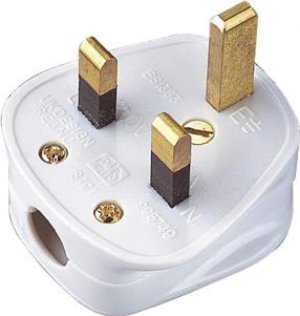
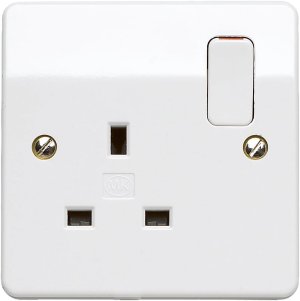
I think you mean a plug. Ever heard the phrase "a little knowledge is a dangerous thing"?

Plug

plug.jpg

Socket

socket.jpg
 
Last edited:
Sad all you experts and engineers have to make it sound so complicated. Electricity is simple as long as you have base knowledge.
Which you don't have.
My dad showed me how to wire up a 13amp socket at about 6 years old.
And here endeth your knowledge regarding electricity.
Every one wants to be an Einstein. Very few are.
No need to be Einstein, but one does need a bot more knowledge than how to fit a plug (it's called a plug, not a socket).
Dont forget most electricity we use in the home and industry is steam generated. Think about that.....Yes steam generated. Hardly high tec 21st Century stuff.
Really, mostly steam ? How does that work ?
 
Last edited:
Sad all you experts and engineers have to make it sound so complicated. Electricity is simple as long as you have base knowledge. My dad showed me how to wire up a 13amp socket at about 6 years old. Every one wants to be an Einstein. Very few are. Dont forget most electricity we use in the home and industry is steam generated. Think about that.....Yes steam generated. Hardly high tec 21st Century stuff.
Perhaps worth noting that electricity itself was pre 20th century.
Electricity was first used in the UK for private lighting in 1878 at Cragside in Northumberland, while the first public electricity supply to a town was in Godalming, Surrey, in 1881. Public lighting of the streets occurred in several places before 1881, including the British Library reading room in 1879, but Godalming was the first to have a central station that supplied power for both public street lighting and to individual members of the public.
Also Nuclear steam power generation is relatively recent, No?
 
W4e43dw.jpeg
A mix of lead acid and lithium? Is this a hybrid system, please?
 
Top