A question of thrust

Sorry I bought a high thrust FT25 yamaha which has a 2.42 gear ratio and a 13" prop....

Must be a previous model. The latest one has a 2.08:1 reduction ratio as per the manufacturers spec sheet.

There is another "runner" in this race, Honda 15hp Power thrust. 350 cc block, 2.08:1 ratio and a 9 1/2 inch prop. Haven't worked out what exactly do they mean by "power"thrust???
 
There is another "runner" in this race, Honda 15hp Power thrust. 350 cc block, 2.08:1 ratio and a 9 1/2 inch prop. Haven't worked out what exactly do they mean by "power"thrust???

My Johnson / Evinrude 15hp is a 351 cc block and standard prop is 9x11. I wanted to put a 9x8 on it for towing toys and planing 4 up but the dealer discouraged it saying the 9x8 was for pushing displacement boats about. The jury is out on that score because I can fit an 11x7 which would seem more appropriate for that purpose.
 
The more I read about prop size/reduction ratio/hp configurations the more certain I become that all this is a true rocket science:oops:
 
It is!

But a larger, shallower pitch prop, turning slowly will give most thrust

A smaller, higher pitched prop turning fast gives most speed


After that - not a damn clue
 
There may be a lot more to a high thrust engine than just the prop. A true high thrust should easily swing a far larger prop at way less RPM to get low speed thrust. So is it possible for a 9.9 HT to outperform a regular 20 in certain conditions, pushing into wind and waves for instance???
 
I have just fitted a 25hp Yamaha long shaft hi thrust model and it is very large and about 100kg. I have not had the opportunity to use it properly as running in and then lockdown.
Why would you then go for the 9.9
 
There may be a lot more to a high thrust engine than just the prop. A true high thrust should easily swing a far larger prop at way less RPM to get low speed thrust. So is it possible for a 9.9 HT to outperform a regular 20 in certain conditions, pushing into wind and waves for instance???

Conceivable.

A 20hp is propped and geared to run an inflatable boat at planing speeds. So if you pop one on a heavy displacement boat, it won’t be producing 20hp, as it won’t be revving properly and will be slipping and bogging down.

So if a high thrust 9.9 provides the same thrust as a standard 15hp, I can see how a 20hp, overloaded, running at 75% revs might only produce 40% of its thrust, so say 8hp......

There is a lot of guessing in that lot, but yes, I can see it...
 
Why would you then go for the 9.9

For my particular application I need the lightest trolling motor capable of pushing my fairly heavy, high windage 25 ft boat at about 6 knots and stay steadily on course in calm to slightly choppy conditions with not too much head wind. The Yam T25 high thrust is out of the question because its weight will seriously hurt the performance of the boat at planing speeds. I am thinking 50 kg is the max weight I should add to the transom without sacrificing to much when the boat is on the plane. Another must have is a 25-inch shaft since not much thrust is possible with the prop intermittently out of the water.
 
For my particular application I need the lightest trolling motor capable of pushing my fairly heavy, high windage 25 ft boat at about 6 knots and stay steadily on course in calm to slightly choppy conditions with not too much head wind. The Yam T25 high thrust is out of the question because its weight will seriously hurt the performance of the boat at planing speeds. I am thinking 50 kg is the max weight I should add to the transom without sacrificing to much when the boat is on the plane. Another must have is a 25-inch shaft since not much thrust is possible with the prop intermittently out of the water.
I feel that the 9.9 will do the job for you. Speed may be nearer 5 knots and the engine will be 'working'. Trying to compare high thrust outboard engines with normal ones for planing boats is a science with no real answer.
I currently run a Honda 30 with a yamaha duel thrust prop with pitch for a displacement boat. I can't find out whether the yamaha 25 high thrust will develop the same if not more power at the prop for pushing a displacement boat. If it was a simple engine swap I would know by now but I have to alter the complete engine mounting so a lot of work for unknown gain.
 
Sadly I too cannot add much science to the whole thing - it is all a lot of witchcraft really.

My fourpenneth is that you'll waste a lot of the potential power of the 20hp as it won't be able to run "Properly" - unless you can get a much larger diameter, 4 blade much lower pitch that would allow you to get the engine to rev "properly" when in use.

Do you know anyone who has a 20hp you could try on the back?

If it was me - and again I stress not much science to this - I'd go 9.9HT engine - it's the role it was designed for - and it's gearcase / ratio and prop are all designed for max thrust low speed whereas the 20 is designed for mid thrust at planing speeds.... I don't know that I can add much more to the equation than that.
 
A bigger displacement engine is going to deliver more torque period. Yes you can alter valve timing etc to increace torque at certain revs, yes you can introduce reed valves to boost low end torque, you can alter stoke length to alter torque but their is no real subsistute for displacement. What you have is gearbox reduction vs size of wheel (or prop in this instance)

If your car is geared for a 16 inch wheel and you put on a 21 (ignoring wind resistance and road friction etc) we all know what will happen and the same in reverse. HP is a rubbish metric for this application unless you are laying it all down. If you can prop a 350cc engine so it makes 3k of it's 5k rpm at 70% throttle is not the same as saying it's only delivering 12 hp so roughly equal to a 210cc engine at 9.9hp. The makers are implying that 9.9 has the thrust (torque) of a 16. But that is marketing hyperbole. Across the range and averaged out it will be much less. It's not rocket science and it's not witchcraft. If you can prop the 20 correctly you will get a bigger more efficient prop than on a 10, and it will lay down more power.
 
A bigger displacement engine is going to deliver more torque period. Yes you can alter valve timing etc to increace torque at certain revs, yes you can introduce reed valves to boost low end torque, you can alter stoke length to alter torque but their is no real subsistute for displacement. What you have is gearbox reduction vs size of wheel (or prop in this instance)

If your car is geared for a 16 inch wheel and you put on a 21 (ignoring wind resistance and road friction etc) we all know what will happen and the same in reverse. HP is a rubbish metric for this application unless you are laying it all down. If you can prop a 350cc engine so it makes 3k of it's 5k rpm at 70% throttle is not the same as saying it's only delivering 12 hp so roughly equal to a 210cc engine at 9.9hp. The makers are implying that 9.9 has the thrust (torque) of a 16. But that is marketing hyperbole. Across the range and averaged out it will be much less. It's not rocket science and it's not witchcraft. If you can prop the 20 correctly you will get a bigger more efficient prop than on a 10, and it will lay down more power.
I agree with much of what you say but most outboards are limited how big a diameter prop you can fit without fouling the cavitation plate, regardless of the pitch reduction to go with it. So yes the bigger engine with an increased prop size and smaller pitch is a sound concept-except that you cannot fit a much bigger prop, only maybe 1" diameter more. Regardless of what the maker clain about the HT 9.9, these engine have a legendary following and reputation for punching well above their weight. In a conversation about outboards my outboard main agent remarked that in his opinion on a dispacement hull the 9.9HT was about the same as a normal 20hp with its small prop, which is more or less is in line with my experience.
 
Whats the Df20 normally propped with 9 / 9.5 x 12 3blade?

How about 10x5 4 blade

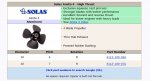
solas.jpg

I agree your 9.9 punches above it's weight but lets be realistic for a moment.
 
I agree with much of what you say but most outboards are limited how big a diameter prop you can fit without fouling the cavitation plate, regardless of the pitch reduction to go with it. So yes the bigger engine with an increased prop size and smaller pitch is a sound concept-except that you cannot fit a much bigger prop, only maybe 1" diameter more. Regardless of what the maker clain about the HT 9.9, these engine have a legendary following and reputation for punching well above their weight. In a conversation about outboards my outboard main agent remarked that in his opinion on a dispacement hull the 9.9HT was about the same as a normal 20hp with its small prop, which is more or less is in line with my experience.

Maybe the logic in fitting a larger lower unit (gear case) to a smaller displacement block is to reduce overall weight while gaining the trust (low end torque) of a much bigger (and quite heavier) displacement block. Point in case is the latest Suzuki DF50/60AV high thrust model which is fitted with the lower unit of the DF140!!! normal model. The outward appearance is a bit grotesque but if one can achieve the same thrust/torque at low speeds with a lot lighter weight 941 cc engine of the 50/60AV, I don't see the point in wasting money on the twice as big (2044 cc) displacement much heavier and a lot more expensive 140A model.
 
Whats the Df20 normally propped with 9 / 9.5 x 12 3blade?

How about 10x5 4 blade

View attachment 110461

I agree your 9.9 punches above it's weight but lets be realistic for a moment.
I replaced a 9x9.25 prop for a 10x 7. The new prop was correctly pitched as it achieved peak revs ok but there seemed little benefit apart from much better thrust in astern. This was on a 20HP extra long shaft engine. Mine was a Solas Amita as above.
 
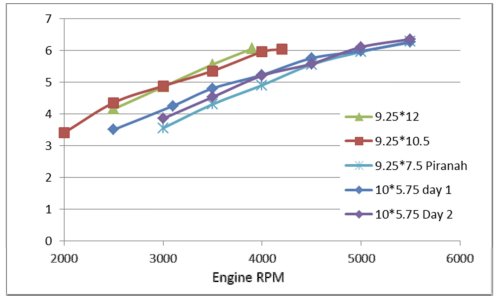
Sorry for late entry, I did some measurements with different props on my Yam 20 when I got it. I have a Catalac 8m, and was hoping the Yam 20 would eventually have a HT gearbox.. I wrote them up for the Catalac Association webpages.. Summary below..
I eventually (later!) selected a 4 blade 10*7 as the best compromise. I still think I would get. HT 9.9 yamaha if I needed a new one!
I was doing research on possibly changing to an EFI when I found this topic..
- but (2023) have not found a suitable long-shaft-high thrust-electric tilt modern equivalent! to the Yamaha
Also FYI: I have seen questions on consumption. At about 4k I get 3l/hr with the 10*7 on the Yam 20. (4 if I run faster!)
Many friends tell me this is extravagant and they get nearer 2l/hr with a Yamaha 9.9 (high thrust).
IMG_0201.jpeg
 

Attachments

Last edited:
Sorry for late entry, I did some measurements with different props on my Yam 20 when I got it. I have a Catalac 8m, and was hoping the Yam 20 would eventually have a HT gearbox.. I wrote them up for the Catalac Association webpages.. Summary below..
I eventually (later!) selected a 4 blade 10*7 as the best compromise. I still think I would get. HT 9.9 yamaha if I needed a new one!
(In fact I was doing research
View attachment 157246
First that’s what I say to swimbo and although thrust is good , the big question , how long can it last.
 
Top