A clean engine vs a corrosion free engine?

MagicalArmchair

Well-Known Member
Joined
11 Jan 2013
Messages
1,540
Location
Kings Hill, Chatham Marina
Visit site
The previous owner had clearly sprayed lots of light oil on the engine (WD40 or the like) to keep the engine corrosion free. This has built up over the years and the engine is pretty grimy now in some places.

I am cleaning it up as I maintain various parts of the engine, touching up the paint also. I'm more in favour of keeping the engine light oil free and the boat dry - with a spotless engine it is immediately apparent when something starts leaking or looks amiss.

How do you look after your engine?
 
The previous owner had clearly sprayed lots of light oil on the engine (WD40 or the like) to keep the engine corrosion free. This has built up over the years and the engine is pretty grimy now in some places.

I am cleaning it up as I maintain various parts of the engine, touching up the paint also. I'm more in favour of keeping the engine light oil free and the boat dry - with a spotless engine it is immediately apparent when something starts leaking or looks amiss.

How do you look after your engine?
I spray WD40 on it after every trip. Not a huge amount, but enough to mist it all over. I got the idea after seeing pictures of an immaculate classic Citroën engine bay which had be treated that way since new.
 
I go with the clean style. Never use WD40 or similar, only a wee bit of Duck Oil on a couple of specific bits.
 
....with a spotless engine it is immediately apparent when something starts leaking or looks amiss.
I agree absolutely .

The lightest smear of oil is sufficient without need to allow any product to build up. However other products such as wax polish and the like may be used together with a paint brush to get into this difficult to reach places to create water repellent surface.
I have recently been using Demon Shine
https://www.therange.co.uk/leisure/motoring/valeting/shampoo-and-polishes/demon-shine-spray/#888692
On bright plated items I use petroleum jelly
https://www.therange.co.uk/health-a...otion-and-cream/nuage-petroleum-jelly/#158102

It works for me but I would add that my boat is on fresh water
 
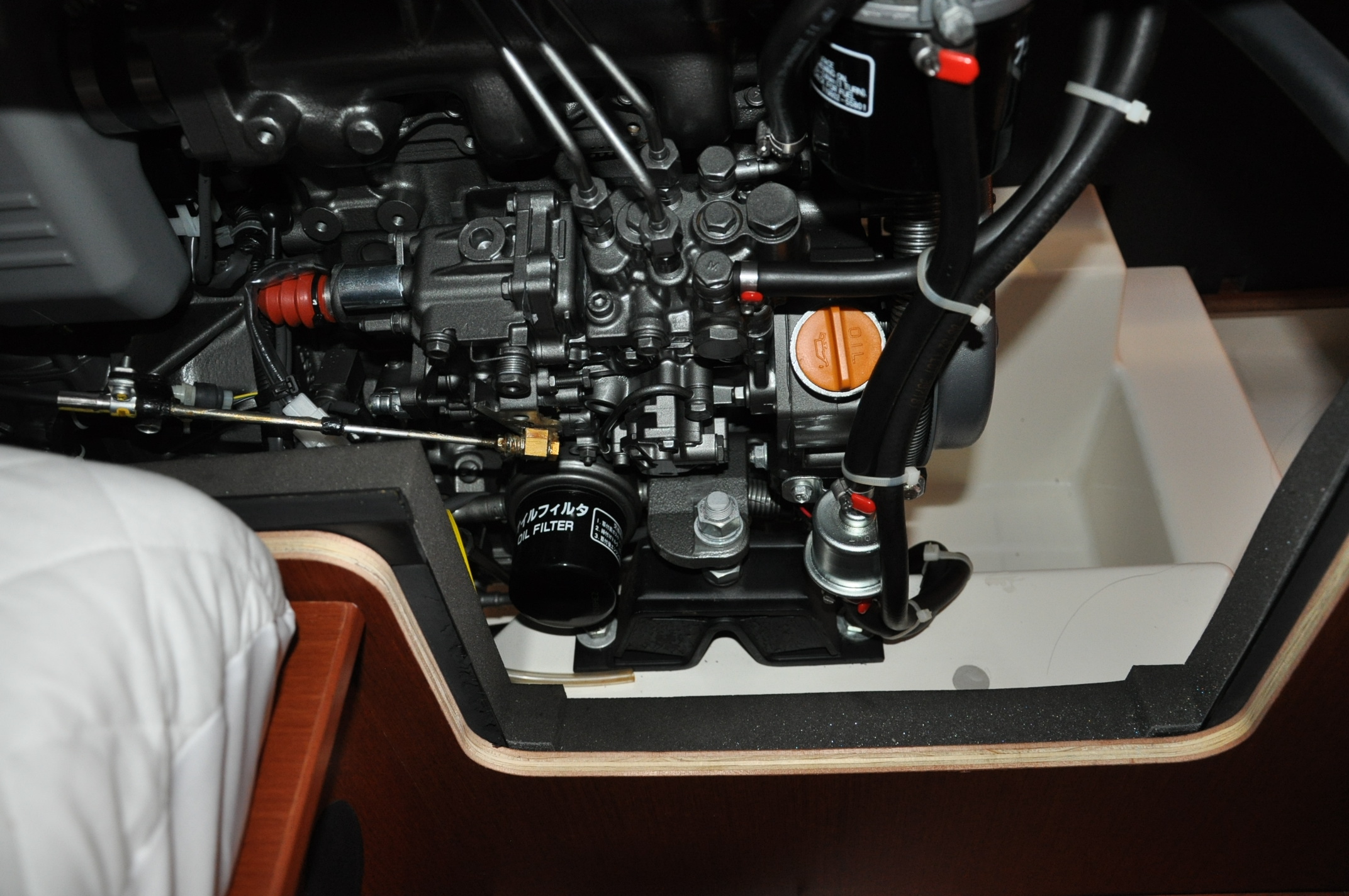
The key is to keep the boat dry and not spray anything on it that will attract damp and dirt. Apart from a little furriness around the edge of the water pump cover (which will be cleaned off when I check the impeller) my engine is as clean as it was when new - after 5 years.

Of course it is easier to keep clean when starting from new than cleaning up an existing engine, but once you have it clean just pay attention to not dribbling oil or fuel when you change filters, or even when dipping the sump, and keeping all water connections clean and tight.
 
How do you look after your engine?
Meticulously
DSC_0012.JPG

Now in her eight year and still looking like new. I spray WD40 around electrical connections at haul-out but clean and dry the bay area it during the spring, prior to launch.
 
Someone told me ages ago not to use wd40 at sea as it attracts salt . Use duck oil instead . Is that right ?
One of my early memories of life at sea was an event that answers this. The old traditional way of preserving large machined parts such as the 2" dia prop shaft bolts etc was to coat them in white lead and tallow paste. A wonderful product for this purpose but who knows the long term effect on people dealing with this and red lead paste.. A young second engineer joined the ship and decided this was old hat and we should use modern technology which included this new amazing product WD 40 . The watch engineers were instructed to clean polish and coat all 12 spare coupling flange bolts with a generous coat of WD 40 and put them back in their storage location clamped to the wall of the shaft tunnel.

In no time at all we saw these bolts go from a nice shiny finish to brown surface surface rust. They were soon repolished and recoated with a heavy grease. The poor second engineer was frequently reminded of this event for years to come.

WD 40 has enjoyed some amazing marketing over the years and for some things it is the Bee's Knees. If you have an elderly mini then in this typical winter weather I would not be without it for spraying on the ignition when the engine fails to start. This is what it was formulated for and WD stands for water displacement and 40 indicates it was the 40th attempt at the formula. However one thing it is not is a protective product as what oil it does contain evaporates PDQ and any protection soon disappears and as a penetrating oil it is no match for Plus Gas or even a 50/50 mixture of paraffin or diesel and lubricating oil however in recent years WD have addressed this and do now produce a penetrating oil type product.

An oily rag will give much more protection to your engine long term. :). ;).


GDARFC.
 
Last edited:
My car engine is stuck in a cold damp hole in the front of my car, there is a big hole in the front of the car where air comes in to cool the radiator and there is an even bigger hole underneath it where water/dirt/salt from the road can splash up on it. I don't feel a need to spray it with anything, it's an engine, not an ornament on my mantle piece.

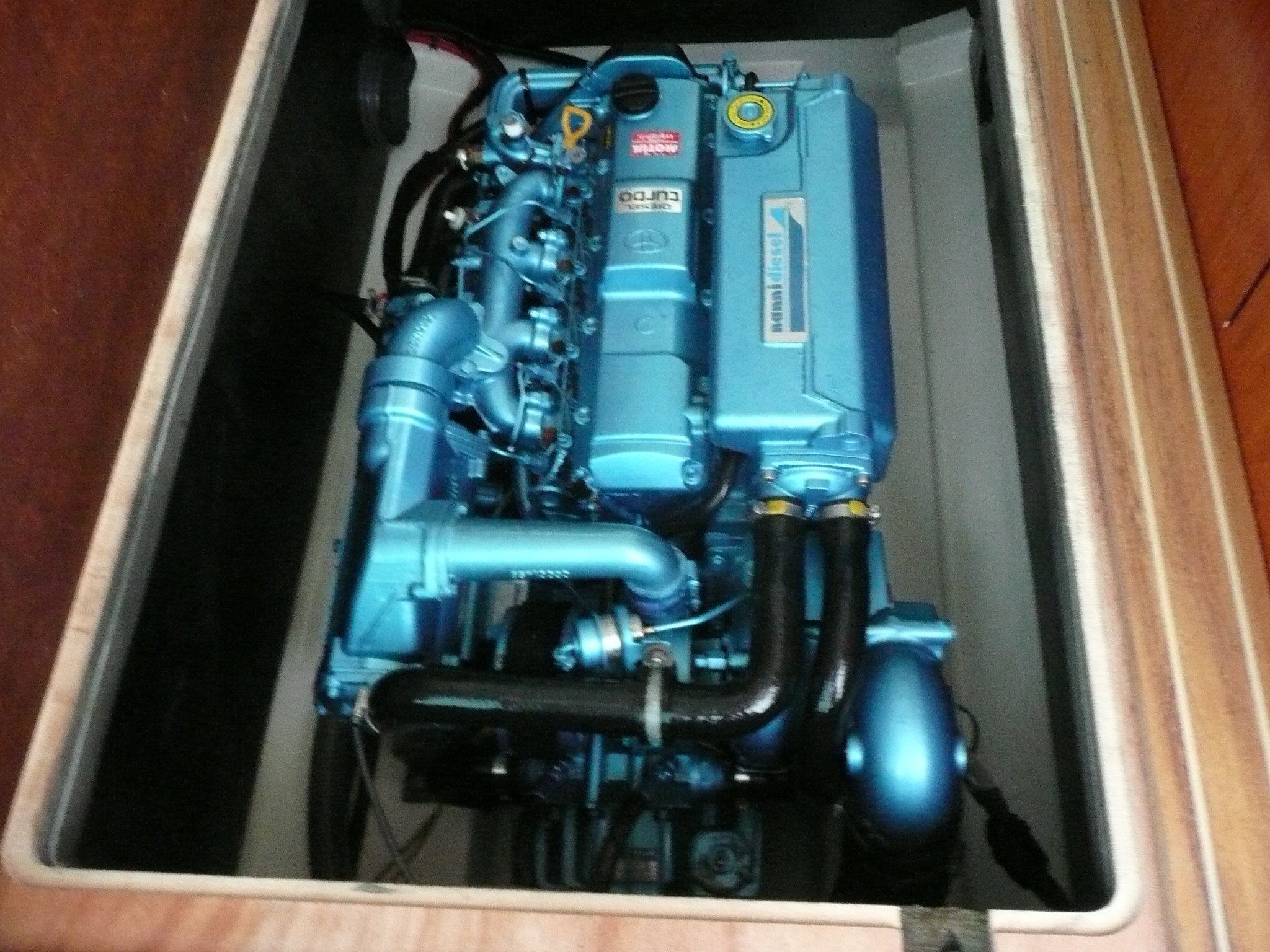
My boat engine is in a nice dry compartment, it doesn't have a hole in it for the radiator to cool, or one in the bottom. It doesn't get sprayed with water, dirt or road salt. I often see references to what a harsh environment boat engines live in, what a load of old cobblers ! I do like to keep it nice and clean though, because i can and because it isn't getting showered with water, dirt etc.

Previous boat engine:

engine-2.jpg
 
I try to keep my engine clean, but after 5000 hours there are the usual minor leaks. I have recently purchased some volvo paint for an area where the paint has peeled. Generally , at the end of the season I get a brush & a mix of turps & oil & wash it all over. I lightly grease or oil the cables & push rods. In the bilge I have an oil absorbent mat to clear away the excess when finished
 
Back in the day my father had a friend who was a travelling salesman for WD40. His sales pitch involved a Mini. He would start the engine and then flood it with water so that the engine stopped. At this point he would spray WD40 over the electrics and then the engine was restarted. This worked well for quite a time until on one demonstration the car failed to stop when it was flooded. So much WD40 had built up over the years that it dispersed water as it landed. He had to buy a new car.
 
… This is what it was formulated for and WD stands for water placement and 40 indicates it was the 40th attempt at the formula.
I thought it stood for water displacement, which is what I spray it on my engine for - when I've dripped water on the engine from bailing out the bilge beneath it, refilling the coolant or mucking with the raw water system.
 
Top