
Rhylsailer99
Well-Known Member
Is this ok to add to 6mm chopped strands to west system epoxy resin to fill in some small areas that would need more strength or should I just stick with colloidal silicon.



West actually produce such a product. I think that they called it 'milled fibreglass'.Is this ok to add to 6mm chopped strands to west system epoxy resin to fill in some small areas that would need more strength or should I just stick with colloidal silicon.

It's a good way to go for some things like chips in Laser centreboards.Is this ok to add to 6mm chopped strands to west system epoxy resin to fill in some small areas that would need more strength or should I just stick with colloidal silicon.
I've found microballoons or similar still hold up best with some silica added - it seems to prevent the epoxy from sagging at a comparatively thinner consistency than with microballoons (or indeed milled/chopped fibres) alone. This is especially useful when you want a thin consistency for final fairing.If you don't want the strength of glass, glass bubbles or microballoons may be better than silica for many jobs.


Its at the top of an encapsulated keel where it joins to the boat a big chunk of gelcoat has come away exposing fiberglass strands and there is a gap like a void . I'll take a pic today of it.If you need structural strength, go for the glass threads. It'll be seriously tough (impossible?) to get a really good finish on, but use it for the strength and a bit of epoxy filler to finish, which could be the same epoxy with microballoons, and you can get it as perfect as you need.
Really doubt you need to add any strength there then - gelcoat provided almost none. Go for microballoons for easy fairing. Colloidal silica is hard work.Its at the top of an encapsulated keel where it joins to the boat a big chunk of gelcoat has come away exposing fiberglass strands and there is a gap like a void . I'll take a pic today of it.
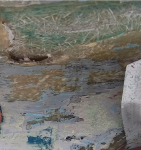
Right on top of where the keel joins to the boat it's encapsulated keel Cobra 850
That looks like a void in the laminate itself, and that you've lost a layer - as well as some gelcoat. I'd chop it out back to solid/tidy, taper the edges and fill it with patches of chopped strand mat.Right on top of where the keel joins to the boat it's encapsulated keel Cobra 850

i have not got any micro balloons but have west system collodial silca ,micro fibres and fairing compound, i think maybe the silica would be best option.I would clean the old mat up with a flap sander on a grinder. If you cant get in to the void maybe use sanding discs on a Dremel. Vacuum the glass when done. Wet out the glass with unthickened epoxy. Mix in some micro-balloons and apply that to the hole. Sand back when hard and apply some epoxy primer ready for antifouling
Use the fairing compound, it's lovely to sand.i have not got any micro balloons but have west system collodial silca ,micro fibres and fairing compound, i think maybe the silica would be best option.