
12v Lead Acid Car battery rejuvenation ?? Myth or fact ??

Refueler

Well-Known Member
Joined
13 Sep 2008
Messages
24,064
Location
Far away from hooray henrys
Visit site
OK ... om another Forum - a trusted member has tried out a few 'De-Sulphators' and they reckoned they had good results from one unit .... (they have no commercial of monetary interest in the product).

www.ebay.com/itm/Auto-Pulse-Golf-Car-Battery-Desulfator-Lead-Acid-12V-to-72V-AGM-GEL-400AH/153302998489?hash=item23b1921dd9:g:JGMAAOSwY3BZN7ZK
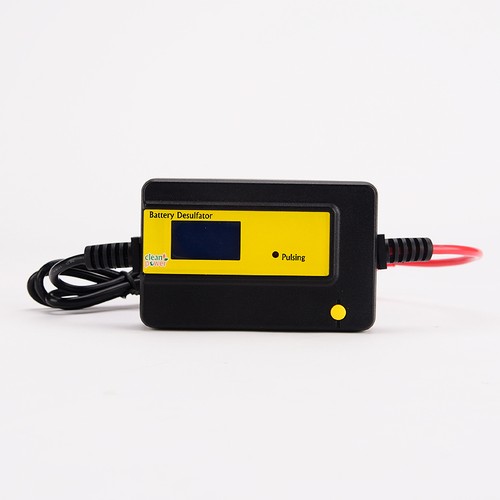


So for the price - thought why not .... could be worth a try ... I have a whole bench load of crap batterys .....

At present its pulsing away on one of my Lawn Tractor batterys that's 'lazy' .......

I'm not a believer in these things normally ... but "Chellie" who recc'd it on an RC forum - says she's sorted out a couple of batterys with it ... and she has no connection whatsoever with the unit other than as a buyer.
 
I remember years ago claims about Baking Soda and all sorts of fluids / powders etc. to throw into batterys ........... some of them downright lethal !!

I can say this though .... after approx 4hrs ... that lawn tractor battery has shown more life than it has for a while !! Few days ago - charged it up ...... after about 20mins it would not start ...
Today charged it ... stood for an hour ... started fine. Remains to be seen if it sits overnight and still starts tomorrow !!
 
'Desulfators' get talked about from time to time.
There was a kit you could build.
I built one about 10 or 15 years ago.
It put big voltage spikes onto the battery I tried it on. Over time, these spikes got smaller, allegedly due to the battery losing some sulphate.
The battery did become more usable, but nowhere near original spec. I recall definitely measuring more capacity from a previously pretty dead battery.
Some off-grid people say good things about them.

But of course, sometimes dead looking batteries revive a little just by being left on float for a week.

I think essentially, they have some use for people trying to get the last bit of work out of old batteries. Worth a look if you are an off-grid experimenter with a shed full of batteries you've got from the junkyard.
Or maybe if you just want some functionality from a battery, like on a kick start motorbike where it only need to run the lights for a few minutes.
If you want to rely on a battery as I do on a yacht, when these things become relevant you probably ought to buy a new battery.

I think my kit paid for itself, because I didn't need to buy that battery for a kick start motorbike.

A lot of high-end chargers do some voodoo pulsing stuff, but the makers are not keen to share details.
Battery makers would rather you bought a new battery.
 
Don't get me wrong .... I'm not a believer ........ but 'Chellie' was so knocked out about her battery in her 350 Chevy ... I thought I'd have to give it a try. (Yes she's a Southern California lass .... and flies models superbly ....)
 
I think the 'pulse' feature is built into some of the modern battery chargers - the Tronic T4X I bought for not much in Lidls certainly does a much better charging job than the simple rectified AC one I used previously. It's not 100%, though - my 'emergency' battery did not recover after being allowed to go down to 10v!
 
I think the 'pulse' feature is built into some of the modern battery chargers - the Tronic T4X I bought for not much in Lidls certainly does a much better charging job than the simple rectified AC one I used previously. It's not 100%, though - my 'emergency' battery did not recover after being allowed to go down to 10v!
There is a body of opinion that batteries 'like' being charged with pulsed or 'dirty DC'.
Most battery manufacturers seem to disagree. At least in literature intended for the general public.
AIUI, some battery chargers also use pulses to determine the state of charge of the battery.

If you put a scope on a modern car's battery (and I mean Lead -Acid), there can be a lot going on.

The old simple rectifier type of battery charger suffers from the current dropping as the volts rise and generally will only get near its nominal current when the battery is pretty flat.
I inherited one which also suffered from being designed for 240V instead of 230V that we actually have these days. Half a volt less output makes a big difference!

Discharging a battery to 10V or lower, mostly you can get away with it if the battery is recharged same day.
 
Trouble is usually a plate or two buckle when discharged too low or too high a rate .......... so no matter what you do - the plates are knacked and that's it.

As to dirty DC - it is more than likely it does affect charging as it can effectively do what the fancy pulse type do ... jolting the plates and causing crystals to break off.

I have a basic 4A non smart charger on the boat ... it gets my batterys to slightly higher charge than my expensive fancy auto job does ... in fact that fancy charger is only any good if the battery is good in the first place as it : Automatically rejects low voltage battery ... even if I click the Regen mode ...
The current dropping off - agreed with the basic charger because its CV not CC ... but never had a problem with that as the charger effectively drops to trickle and stays there ... unlike the auto machine that charges and then switches off and stays off.
 
Don't mess about with the gizmo, do it properly, oh and I want to see them do a LifePO4 next, that has to be a booming business in the future

 
I had a couple of leisure batteries, 2x110AH that were so knackered from use and abuse that they barely had say 10AH capacity even after prolonged charging. I connected up the de-sulphater and over about a week they regained what appeared to be about 70% of their rated capacity, from crude calculations but the same discharge regime as before. The make was a well known boat power mgt company, the name escapes me at the moment. I was totally sceptical but I saw the device in a chandler that was closing and well marked down and worth a try.
I talked with a battery supplier and he did not sell them but said his customers with golf trolleys used them as a matter of routine.
 
I have a 25 amp Black & Decker charger with a "Recondition" function. Where I am there are loads of "bad" batteries every year, people leave their boats for 6 months and wonder why nothing works when they return or leave them on charge or lightening strikes. I reckon we have recovered about 40% of the ones we tried. The reconditioning cycle runs for about 24 hours then shuts off to float, sometime we have had to use more than 1 cycle to get it reconditioned, we test the batteries before and after on a load tester to see if it has worked, Have read about desulators but never used one.
 
Don't mess about with the gizmo, do it properly, oh and I want to see them do a LifePO4 next, that has to be a booming business in the future


Pete

I've seen that one before...... unbelievable!

I have to laugh at the way he sits on his haunches and does all the restoration on the concrete floor.
I wonder whether they will be any good at restoring L ion batteries?

When I worked on Nauru Island many years ago the Workshop Foreman said he got some Chinese mechanics from Taiwan and they used to work on motors while they sat on their haunches on the floor. He felt sorry for them so he had a whole lot of benches made up. But he said it was only a matter of days before they were working again on their haunches but this time on top of the benches!
 
Last edited:
I have 2 Sterling Ultra battery chargers. They have a programmable desulpation setting which I have just started using. The program 'charges' lead acid open cell at 15.5 A for 4 hrs. The recommendation is to use the program every month (we live aboard 50% of the year - it's a bit more now with a covid lockdown thrown in). 6x 6V (=3x12V) 230AH golf cart batteries 2 years old. The program seems to improve performance, but no hard data to report. 'Mr Sterling' seems to be a strong advocate. In a previous life I ran a fleet of electric milk floats. The chargers were huge - as were the batteries. They were worked hard and I cannot recall having a set of batteries replaced. No de-sulphation programs then. Go figure!
 
I have small smart charger which pulses and goes to a higher voltage than my in board charger but doesn't have much power .
I have just removed/replaced batteries that show a good voltage but have much reduced Ah capacity.
The small smart charger doesn't seem to restore the removed 4 year old batteries.
Perhaps the trick is to treat the new batteries to the pulse charge treatment before they reduce in capacity.

I noticed this
Ring 12A Smart Charger - Charge and Diagnose | Halfords UK
Which might be worth the expense if it can be used to extend battery life.
 
The modern pulse chargers can bring batteries back to life and with classic cars work best if you battery is connected to them all through the winter. I have two cars on them.
 
From what I understand is that the pulsing is supposed to break off any sulphate from the plates but this could/would fall to the battom of the plates and short out the plates in that cell so that cell will not provide voltage.

I had this happen long time ago and my has external cell links so I inserted a cell from another battery that had the same issue.
 
Top