10 year old boat

powerskipper

Well-Known Member
Joined
18 Sep 2003
Messages
12,287
Location
Dorset/ Hampshire. south coast
www.facebook.com
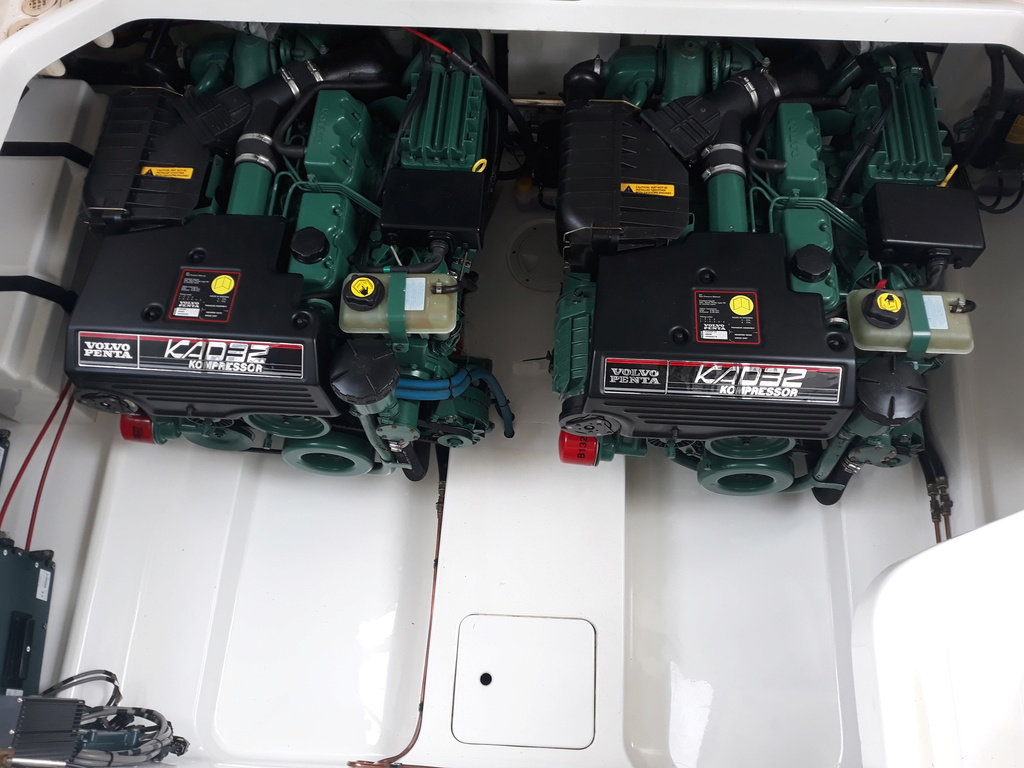
Be wary of a 10 year old boats or any older boat with very low engine hours, unless there is a very good reason for the low hours.
I have come across yet another boat , 10 years old with under 200 hr on it, that is now costing the new owner more money, this time the steering, the engineer has said the fault is though lack of use. Unit has basically rotted with lack of use.
So if your looking for a boat , its worth looking for something with average hours for it age.
 
Interesting.
It is quite frustrating to hear Brokers extolling the virtues of low hours on diesel engined boats and basically exploiting the ignorance of some buyers, particularly throse new to boating who often equate low hours on a boat with low miles on a car. I much prefer to see some hours together with a good maintenance record.
 
Interesting.
It is quite frustrating to hear Brokers extolling the virtues of low hours on diesel engined boats and basically exploiting the ignorance of some buyers, particularly throse new to boating who often equate low hours on a boat with low miles on a car. I much prefer to see some hours together with a good maintenance record.

I think many on here have discussed this challenge of a low use boat ( low use and low hour will probably go hand in hand - but something that has not been used for 2 years but is high hours will probably have similar issues).

Boats like anything mechanical thrive on use. Leave them long enough and stuff starts to stick, corrode etc.

The best example of this is Mallorca at Easter. The boat companies work like slaves as a huge volume of owners turn of the the easter weekend. The boats are lifted, fouled, polished etc but there is nothing that even the best guardniage service can really do to simulate a family living on board.

Suddenly the phones start ringing. and ringing. AC not working. WC not working. Shower flooding. Engine wont start or warning going off, steering out of fluid, electric tripping and so on and on and on. They have all sat in the relatively warm med since September and when asked to perform your average floating house of a boat with 3 / 4 bedrooms, 2/3 bathrooms, a kitchen utility, umpteen fridges, ice maker, water maker, generator, engines , tenders and pumps for water, stage and more .... well something wont work !

This year my casualties ( and i was on it every month but it did not necessarily move) tender speedo and RPM, anchor winch seised, broke and replaced. It would have been more I am sure but bear in mind literally the whole boat has been in pieces!
 
Thats me bu@@ered then. I bought a 14 year old boat with just 106 hours on it, but someone had looked after the important part, anodes, oil etc
Its not perfect (except the interior) however it has the same issues as similarly aged boat with 1000 hours.
bit of diesel bug, few electrical and electronic issues, the faryman diesel engine in the generator had a blocked cooling system (no surprise there) and incredibly a tired turbo on one engine (Volvo Quality - so impressive)

Lack of use is generally not always a good thing so I did buy this boat eyes wide open. However on the plus side it hasn't been bu@@ered up by ham-fisted muppets pretending to be engineers.

First boat was a very unloved 30 year old princess 37 that had had the engine bay 2 feet deep in water (I only found out about that 6 months later when someone in the marina told me a few tales). After a good service and despite my ignorance it was a great boat.
Previous boat was 7 years old with 1000 hours and full service history - it was a total nightmare.

Some people are very wary of boats that have lived on lakes and rivers as they may have blocked up heat exchangers or glazed bores. All heat exchangers bung up eventually and need cleaning regardless. Bore glazing only really forms if you run a brand new engine at low loads. Once run in the engines should be fine. On the plus side the boat is not sitting in sea water/ salty atmosphere corroding everything away.

I think you have to take every boat on its own merits.
except one thing - you can guarantee the float switch in the shower pump out box will fail when you have a boat full of people.
 
Last edited:
Interestingly at the other end of the hrs spectrum there’s something like this
2420 hrs on the mains and one geny has 2 hrs - assume new .
One owner and crew maintained .

http://breezeyachting.swiss/sunseeker-86-yacht-for-sale/

Again dropping into used car mode it’s a bit leggy on the miles , sorry hrs .
Even though it’s probably a minter physically , there’s 10 y old teak and 10 y old Med baked coloured gel coat for the 2nd owner to tackle .
If during the 2nd owners ownership its hrs end up N of 3K , then say in 5 y at 15 y old it’s gonna be hard to shift .
Despite new teak / paint job etc recently by the 2nd .

When I was hunting a few years ago I visited a few hangers where boats were stored .
I initially thought for the winter ,but some had been laid up years .
I had my reservations,one guy said they regularly turn over the engines , I could not see any water hoses in the places or shore power so just assumed the batts were knackered.
Talked a bit about commissioning, asked does my accepted offer mean everything works - key in hand .
Was given vague numbers - actually written in the dust on the hulls of €3 K / engine for recommissioning etc .
In the end after two diferent hanger visits I did not commit for the very reasons discussed here - just too risky re ceased , dryed seals , leaks , stiff stuck motors etc .
What the hanger visits did do , if there was anything positive was be able to walk from one to another ( well wheel a step ladder about , ie compare easily .
We went to view a Pershing , they had 3 hangered and saw two Itama, a magnum and a pair of Baias and a few Rivas all under one roof each stored from 2- 7 years .There were also some , Ducati’s , Harley’s and a couple of helicopters .
Stuff folks were not using but prepared to take an offer on .

As things turned out the boat I have now had relatively low hrs 515 for a 12 y old .
It too had spent winters and the summer previous to my purchase 3 y in a hanger in Naples .
How ever one has to be pragmatic, it was “ commissioned “ in June , had done 20 hrs since and for sale in Oct - end od season .Rare modal .
I could see a few new bits - stuff / parts on the engines / gearboxes and saw the paperwork from the same MAN agents that looked after it from new .

From memory although everything seemed to work at the test drive , within a short space of time after my ownership,the Passerelle pump motor packed in - broker actually sent a guy to replace it ,
A new water pump last year , the ganesschi packed up , and only one thus far bilge pump switch .

I’ve obviously spent on it maintaining it ,over and above annual service of engines / geny - new seacocks , new gearbox hydraulic pipes ( one split ) new coolant pipes and new fire extinguisher etc , retro fit Aircon , new glass all round .new geny water pump- leaky seal ,micro wave packed up , then telly became out of date in Fr , charger output decayed - so replaced , new racor 900,s - just fancied newer ones and finally New tender last week .
But apart from the split gearbox hydraulic pipe it’s all basically discretionary or wear n tear .

You just need to make sure in the budget there’s a big enough contingency to cover things like or similar to the above stuff when buying a boat over 10 years .
 
Last edited:
Interesting.
It is quite frustrating to hear Brokers extolling the virtues of low hours on diesel engined boats and basically exploiting the ignorance of some buyers, particularly throse new to boating who often equate low hours on a boat with low miles on a car. I much prefer to see some hours together with a good maintenance record.

It’s a broker’s job to sell a boat on behalf of his client (the owner). Of course he’s going to highlight something that makes the boat attractive to many buyers, that’s his job.

If you were paying a broker to sell your low hours boat, I suspect you’d be pretty annoyed if he were talking it down for that, given he’s working for you.

For the record I totally agree that regularly used boats tend to be more reliable and a better bet.
 
It’s a broker’s job to sell a boat on behalf of his client (the owner). Of course he’s going to highlight something that makes the boat attractive to many buyers, that’s his job.

If you were paying a broker to sell your low hours boat, I suspect you’d be pretty annoyed if he were talking it down for that, given he’s working for you.

For the record I totally agree that regularly used boats tend to be more reliable and a better bet.

Take your point but it isn’t a Brokers job to mislead people. I know some who are very balanced and present a rounded picture with the pros and cons - these are the type I feel more comfortable doing business with.

To be fair, I don’t blame Brokers per se and would describe it as ‘the market’ favouring low use/low hours. As Portofino says, an older boat with lots of hours is going it be difficult to shift. This despite that fact that the engines may be good for thousands of hours if looked after properly.

Agree with outer points made that each boat should be treated on its own merits and with eyes wide open. Rarely will there be absolutely nothing wrong :)
 
Last edited:
Take your point but it isn’t a Brokers job to mislead people. I know some who are very balanced and present a rounded picture with the pros and cons - these are the type I feel more comfortable doing business with.

To be fair, I don’t blame Brokers per se and would describe it as ‘the market’ favouring low use/low hours. As Portofino says, an older boat with lots of hours is going it be difficult to shift. This despite that fact that the engines may be good for thousands of hours if looked after properly.

Agree with outer points made that each boat should be treated on its own merits and with eyes wide open. Rarely will there be absolutely nothing wrong :)

I work on the basis that the broker and/or owner know what's wrong and rarely disclose it. Or, they will state something that is obvious on inspection and say that it needs fixing or will be fixed. In my 6 months of looking I have learned not to trust until you see the survey and even then, parts of the survey might be total crap. None of this means that it isn't a good boat but only a fool would assume that they are being told the whole truth and if you are then - BONUS.

Don't trust- assume the worst and hope for the best, although, as my old Ma used to say, "you live in ope if yuh die a despair del".

Caveat emptor!
 
Last edited:
This is a subject that comes up regularly on the forum and as a serial buyer of secondhand boats, I have a slightly different view to what has been expressed so far and I dont entirely subscribe to this high hours = good/low hours = bad mantra. Yes boats benefit from regular use but all engines have a finite life span before they need a major rebuild and all other things being equal, a high hours engine is closer to the end of its life span than a low hours boat. The other consideration is that high hours boats generally mean that all the other stuff on board like gennies, aircon, pumps, chargers, fridges etc etc are also well used and nearer the end of their life span, not to mention the interior furnishings which are often shabby on high hours boats. I have had low hours and high hours boats and the high hours boats often had regular and niggling problems with domestic and ancillary equipment which the low hours boats didnt or at least not to the same extent

Far more important than hours is condition and in particular how rigorous previous owners have been about servicing and maintenance. Personally speaking, providing a boat appears to be in good condition and has been given a clean bill of health by a surveyor and an engine technician, I'll take the low hours boat over the high hours one every time for the reasons above. And a lot of buyers feel the same which is why low hours boats command a higher price

After all, if the high hours=good/low hours=bad mantra was actually true, we'd all be buying ex charter boats because those boats generally have the highest hours of all
 
The car analogy is interesting. A friend recently completed a bare metal rebuild of a Lancia Delta Integrale and observed that people still comment on the mileage shown on the odometer... :cool:
 
In buying our latest boat, we considered a wide range of different things - lowest engine hours 114. Highest 3000.

The lowest was a Rodman 41 in the South of France (Saint Cyprien): the low hours were due to it having been flooded shortly after the current/2nd owner bought her (the yard apparently left a lid off a raw water strainer). The boat got lifted, a court case ensued, owner lost heart/got divorced and they've been trying to sell it for 3 years. The interior is imacculate, but outside it still looks like a 10 year old med boat and I would have no doubt that lots of bits failed in short order due to lack of use. The engines/electrics were also a huge potential bill for the future and I'm only too pleased that our offer was rejected.

The 3000 hour boat was a Jeanneau Prestige 46 from a med sailing school. Despite what appeared on the face of it to be an attractive price (£130k) I had no interest in going to see it because, as pointed out above, even if the engines are sweet and could be rebuilt for £50k or so if it came to it, everything else has been well used. All sailing schools run to a scale of economy, so even though I'm sure the important stuff will have been kept on top of, it won't have been cared for as well as a good private owner would have done.

The one we have ended up with has approx 650 hours on it. We saw another identical boat at the same time (we are hull #1, it is #2 or #3) with about the same hours (possibly a touch lower, but negligble). I heard from the owner what the other sold for, which makes the difference between them in cost terms to be £40k (in our favour). Ours needs a good refit internally - new carpets, new upholstery, new mattresses. I doubt it will cost more than £20k to make it look excellent. The other was faultless inside, but the decks were badly badly worn (we even found the hard blue nylon bristled deck brush that had done the damage) and would need replacing in short order - the edges of the teak on the foredeck are already lifting at the edges. I obtained three quotes for replacing it, all were approx £1000 per foot of boat, so a near £50k bill for someone.

Back to engine hours - when I was considering the two SeaRangers, I thought (and had been told by the brokers) that ours had 1200 hours. Given the sea trial, engineer's inspection and receipt of invoices for regular start-of-season servicing for the whole of the current ownership, I was happy even at that.

Not sure what my conclusion is - buy based on history probably. Don't rely just on numbers, but try to keep it somewhere in the middle - used frequently, but neither too much nor too little. There you go, just think "Goldilocks's porridge" next time you go out boat buying.
 
I agree. Scaremongering. Mine is a 2009 D4 engined boat with very low hours indeeed. All anodes changed every year since it was first commissioned, the filters and engine oil and outdrive oil changed every season. Very low risk for a potential buyer should I ever decide to sell it.
 
I don’t think is is scaremongering per se. It is simply reality. Most of the things that stop working are ( in the scheme of things ) relatively cheap.

Given 2 boats what would I buy. The low hours one all things being equal - just realise it will still likely have issues

A Deleted User says mechanical stuff has a finite life and high hours mean it is closer to the end.

At the end of the day most people by on condition I suspect - but is is always a balance of condition , extras , history , location and price.
 
Some things are just age related and others a combo and wear .
So @ 10 , I read somewhere that all hydraulic pipes should be replaced .
What about the seacocks ? What about the various spaghetti of black water pipes carrying sea water in the engine room . Risers don,t go on for ever and those infrequently used will rot out faster .

So a low hrs boat like Graham’s on inspection may be immaculate cosmetically ( bringing in Deleted User point low foot fall ) and have a nice history file , but the high hrs boat like the 2420 hrs Sunseeker I linked earlier hisory file will be extensive too , inc replaced carpets bedding etc because of the 10 years of charter footfall .
Stuff like shower sumps etc go anyhow and as JRudge infers are cheap , just annoying in the fettle stage .

I guess it’s the main machinery that’s been sat unused .
At 10 y you are in the lap of the gods re gaskets / seals , and as said pipe work .

To be frank even with a nice history file outdrives at 10 y ,you are entering no mans land with the potential to pick up unexpected big bills , if there are,t any “other stuff “ like U/ J ,s or leaky seals etc I would suspicious .

In the Ferrari used car world we have this phrase “ deferred maintenance “
Low mileage “ garage queens “ end up with £1000 spending.

A boat that’s been unused for long periods may suffer from exhaust valve corrosion unless properly decommissioned.

Starting to think it’s a balance as allready said , not too low ,not too high

Anyhow it’s not that simple , as all other things with boats are never equal .

It’s not like Avis are releasing 300 - 3 month old Hyundai per month and you are in the market to buy one for a daughter - then it’s plane low mileage simple .
 
Last edited:
A supplementary thought to my post above - regarding teak decks and gelcoat generally - a boat sitting in a hot sun (i.e. the Med) will generally suffer more than one that is in more temperate climes. The two SeaRangers we saw definitely bore testimony to this - the Scottish boat's gelcoat is a lot less weathered and the teak much better as said above. Maintenance during life will have an even bigger impact, but location perhaps also contributes something.

A holistic approach is the best one. Just relying on engine hours alone doesn't tell you much.
 
I looked at a P42 in the SOF, it looked a bargain but someone beat me to it . Similar age and hours and the interior was ok . I ended up buying one from scotland for 90k more. Coinsidently they both arrived by truck at a yard in Hamble at the same time .
I'm glad i spent the extra 90k !.
 
My boat was very low 200 hours at 11 years old and had issues found at the pre purchase survey that were time related and some were lack of use related.

One fault developed afterwards, a turbocharger issue, and was probably also associated with former lack of use.

Four years after my purchase it is now just over 600 hours at 15 years, so still low mileage. The interior is still smart with little signs of its age.

I would buy a low hours and little used boat again but I would not expect it to be fault free.

I think most things mechanical or electrical can be put right or replaced. The challenge, which is almost impossible, is the discovery of the items needing repair at the time of purchase. You cannot expect to buy a little used 10 year sold boat and discover no faults nor can you expect fault free boating in the longer term.

However I do think running a boat regularly helps prevent some issues from developing.

A little used boat may reward you with an unworn interior.

Having started with an only slightly used and only slightly dirty engine bay it is not difficult to keep the engines looking almost as good as new.
 
Top