Yet another DS practical question

The course should be a cruise, staying at different places each night, weather permitting. Ideally there will be one or two nights at anchor, or on a buoy rather than going to a marina each night. The dinghy will have to come out and be used, as that's part of comp crew, and one night will be very late, as there needs to be ~4 hrs night sailing. As you're well prepared there shouldn't be the need to cover lots of theory in the evenings, so there should be some shore time. I don't know of any school boats which carry paddle boards, but I've been out of the game for a few years...
excellent, thanks for the insight, I know the place hires them which is something my daughter wants to try so have asked if this is doable. im also hoping there will be a night or so on anchor and dinghy use.
 
Who are you doing the course with?

I doubt there will be any down time at all, there is a lot to cram in, and certainly not enough time for the instructor to drum in anything that you are expected to have known from the shore based course, eg colregs, position fixes, calculating course to steer etc. The week is more to consolidate and put into practise what you've only seen on paper until now. It isn't time to teach those topics you don't know.

Yes, you are most likely to do a tour of the local sailing area with nights at anchor, on a buoy and in another marina or two.

You also need 4 hours of night sailing as part of the course. In the summer, that does mean one very late night. Generally expect 10 hour days, the instructors I've met, in this respect, offer incredibly good value but the course will stress test your relationship. For that reason, my partner and I did our courses completely separately from each other (albeit with the same instructor who was a personal friend).

Most chandlers sells the flip cards. Colregs are a very useful skill for any of your crew whether qualified or not. Eg, 6 year old says "Dad, there is another yacht over there but it's OK, we're on a starboard tack".
I get that, however i would expect there's more time considering there isnt 5-6 people to go through the course. from everything i have seen and read, the course is supposed to be enjoyable and not mental hellscape for 5 days, you learn and are assessed. ill certainly report back how i personally find it.
 
I get that, however i would expect there's more time considering there isnt 5-6 people to go through the course. from everything i have seen and read, the course is supposed to be enjoyable and not mental hellscape for 5 days, you learn and are assessed. ill certainly report back how i personally find it.
I hope I haven't suggested it is a "mental hellscape for 5 days", it's supposed to be fun and enjoyable but it is a course with a specific syllabus to squeeze in a commercially driven timescale.

There is a disadvantage with fewer people since you won't have the opportunity to learn from others mistakes and see demonstrations of the manuoevres before it's your turn. The advantage is you'll get more goes yourself.

Let us know how you get on.
 
I hope I haven't suggested it is a "mental hellscape for 5 days", it's supposed to be fun and enjoyable but it is a course with a specific syllabus to squeeze in a commercially driven timescale.

There is a disadvantage with fewer people since you won't have the opportunity to learn from others mistakes and see demonstrations of the manuoevres before it's your turn. The advantage is you'll get more goes yourself.

Let us know how you get on.
it is indeed a double edged sword, but one of the reasons for doing the the course privately was also to see how we enjoyed being on a boat for 5 days as a family
 
On our night passage we had a ship creap up behind us and lit up our white sail with a huge great search light. The instructor who rarely used the engine soon had it started.
 
Another tip. For the night passage you'll need to prepare and then execute a pilotage plan, which will need to be written down and read in the dark with the assistance of eg a red head torch. So my tip is to have a format for pilotage plans that you like, and that you can write in big letters and high contrast, and ideally needs to be waterproof if you're in an open cockpit boat. Example, black sharpie on stiff white plastic.
 
Another tip. For the night passage you'll need to prepare and then execute a pilotage plan, which will need to be written down and read in the dark with the assistance of eg a red head torch. So my tip is to have a format for pilotage plans that you like, and that you can write in big letters and high contrast, and ideally needs to be waterproof if you're in an open cockpit boat. Example, black sharpie on stiff white plastic.
Not at all my experience, and an a bit surprised it was anyone's experience. DS isn't about planning to sail at night (that's why it's called Day Skipper) - it's about how to manage the situation if you find yourself arriving at night. We didn't do night time pilotage, just about how to generally sail at night.
 
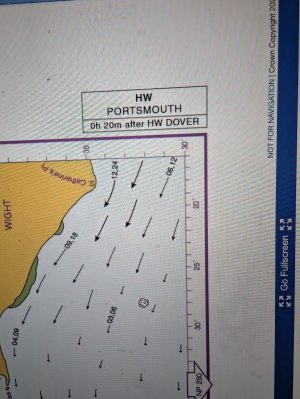
To be honest im at the point where if i don't know something because its not in the theory then i can be taught. im getting tired of trying to figure crap out that wasn't in the course, and its stupid little things, for example, im looking at the tidal atlas for west solent, states that HW Portsmouth is +20 mins from HW Dover....but HW Portsmouth is 38 minutes from HW Dover....well it is on Monday at least

This may be the time to put all this to bed and wing it rather than causing more self inflicted stress
 
Not at all my experience, and an a bit surprised it was anyone's experience. DS isn't about planning to sail at night (that's why it's called Day Skipper) - it's about how to manage the situation if you find yourself arriving at night. We didn't do night time pilotage, just about how to generally sail at night.
Well, I've done my own DS sail 10 years ago, which required a night pilotage exercise, and I've crewed for three friends doing DS sail on three separate occasions, all of whom also had to do this. So whilst I don't know whether it's technically a "requirement", in my own experience that's definitely what's being requested of the candidates.

All of these pilotage exercises started at a known spot and ended up at a marina, so all about arrival at night. One in Carrick Roads ending at Falmouth Marina, one in the R Orwell ending at Ipswich, and two in the Solent, ending East Cowes and Port Hamble Marina respectively.

NB in all cases these exercises were done under power (in a yacht), not sail. So not 'sailing at night' technically.
 
Last edited:
To be honest im at the point where if i don't know something because its not in the theory then i can be taught. im getting tired of trying to figure crap out that wasn't in the course, and its stupid little things, for example, im looking at the tidal atlas for west solent, states that HW Portsmouth is +20 mins from HW Dover....but HW Portsmouth is 38 minutes from HW Dover....well it is on Monday at least

This may be the time to put all this to bed and wing it rather than causing more self inflicted stress
Yes don't overthink this. It's not a pass/fail exam, if you have a reasonable grasp of the theory, can read a chart and a tide table, know the basic colregs, and can organise yourself and crew to make way under sail safely, then you'll be fine.

What you can't do is expect to be successful if you have big gaps in the basics.
 
Oh?
Not something that was included in my DS package. Now feeling a bit short changed!

Just finishing the theory and DS Motor practical is booked for end of September at Rhu with You & Sea.
i say comes with it, i had to pay an extra tenner for it. i just meant i dont have it now but will when i get on the course
 
To be honest im at the point where if i don't know something because its not in the theory then i can be taught. im getting tired of trying to figure crap out that wasn't in the course, and its stupid little things, for example, im looking at the tidal atlas for west solent, states that HW Portsmouth is +20 mins from HW Dover....but HW Portsmouth is 38 minutes from HW Dover....well it is on Monday at least

This may be the time to put all this to bed and wing it rather than causing more self inflicted stress
The differences in HW times from port to port will vary from springs to neaps, so on average HW Portsmouth is 20 mins after Dover, but as you've seen there can be big differences from this average, depending on where in the tidal cycle you are. All the Solent tidal stream data that I've seen has been based on HW Portsmouth, so I'd use that.

Also note that tidal predictions are just that. Different sources will use sightly different models, and the actual time and height of high water will depend on atmospheric pressure and recent wind conditions, as well as the moon and sun.
 
Yes don't overthink this. It's not a pass/fail exam, if you have a reasonable grasp of the theory, can read a chart and a tide table, know the basic colregs, and can organise yourself and crew to make way under sail safely, then you'll be fine.

What you can't do is expect to be successful if you have big gaps in the basics.
i reckon i have the basics covered, presumably things will come from the dark pits in my brain when asked.
 
The differences in HW times from port to port will vary from springs to neaps, so on average HW Portsmouth is 20 mins after Dover, but as you've seen there can be big differences from this average, depending on where in the tidal cycle you are. All the Solent tidal stream data that I've seen has been based on HW Portsmouth, so I'd use that.
....


Yes, some of the tidal curves use low water for that reason as the base, not high water, eg Southampton.
 
It's the course handbook which has a few pages for passage logs in the back.
Never even got that Hmmm, I did get access to the RYA eBook of the DS Sail, and I got myself the physical book of DS motor handbook.

Also bought the ebooks of the course notes and DS practical, the physical Navigation exercise book which I am using for extra practice on chart work, so now have 3 sets of training charts 3 and 4 plus other training charts from my son who started the Belgian vaarbewijs course and didn't complete it.
 
The differences in HW times from port to port will vary from springs to neaps, so on average HW Portsmouth is 20 mins after Dover, but as you've seen there can be big differences from this average, depending on where in the tidal cycle you are. All the Solent tidal stream data that I've seen has been based on HW Portsmouth, so I'd use that.

Also note that tidal predictions are just that. Different sources will use sightly different models, and the actual time and height of high water will depend on atmospheric pressure and recent wind conditions, as well as the moon and sun.

So taking this example, the port to take HW from is Portsmouth, it just mentions that Portsmouth is +20 minutes from Dover
 
Top