
Yanmar SD20 saildrive diaphragm seal ... service interval

Tomahawk

Well-Known Member
Joined
5 Sep 2010
Messages
19,168
Location
Where life is good
Visit site
Does anyone know the practical situation regarding the diaphragm seal (between the drive leg and the hull) on a SD20 saildrive? From what I am told, they have a short service life of about 6 years. Yet everyone seems to say, ignore it until the water alarm between the top and bottom seal goes off and only replace it then.

If they do only last six years there must be a lot of boats sailing about with out of date seals that should be at the bottom of the sea but seem to float.
 
Does anyone know the practical situation regarding the diaphragm seal (between the drive leg and the hull) on a SD20 saildrive? From what I am told, they have a short service life of about 6 years. Yet everyone seems to say, ignore it until the water alarm between the top and bottom seal goes off and only replace it then.

If they do only last six years there must be a lot of boats sailing about with out of date seals that should be at the bottom of the sea but seem to float.
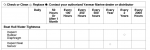
Your manual for the sail drive says to inspect the diaphragm every 2 years and the sensor every year: There is no recommended replacement interval.

1651834403710.png
 
Last edited:
Replaced mine in 2011 at which point I could not see any sign of aging, so kept it as a spare.
Took it apart last winter, again, no sign of aging, so I put it back.
 
The recommended change interval is 5 years. This was put in place a few years ago. Everyone I have come across who has changed them says they found the seals to be in perfect condition. I found this also. If you work out the full cost of changing every 5 years it is probably costing about £7 per week for SD20 seals which is silly money and a reason to avoid sail drives.
I have not heard of any boat problems due to seal failure. Personally I think it is very bad situation that reflects badly on Yanmar.
I suggest talking to your insurance company and see what they say.
 
I spoke with the local Yanmar agents. They advised that it used to be indefinite and only replace the diaphragm if it failed. But a short while ago they followed Volvo And advised a five year replacement interval.

This means that potentially there are a lot of boats which are uninsured!
 
The recommended change interval is 5 years. This was put in place a few years ago. Everyone I have come across who has changed them says they found the seals to be in perfect condition. I found this also. If you work out the full cost of changing every 5 years it is probably costing about £7 per week for SD20 seals which is silly money and a reason to avoid sail drives.
I have not heard of any boat problems due to seal failure. Personally I think it is very bad situation that reflects badly on Yanmar.
I suggest talking to your insurance company and see what they say.
Mine is SD50 but same 5 year change interval.
Shortly after buying my boat, when the implication of the interval finally dawned upon me, I tried to engage in correspondence with Yanmar Europe and my boat builder. I asked them to share life cycle info and/or any objective information or a risk assessment to support their stance. Neither was in the slightest interested. It would appear to be totally arbitrary and not supported by evidence. On the contrary, evidence of failure (interweb searches) is exceptionally rare; evidence of life well beyond the interval seems commonplace.
I agree with Halo, it reflects badly upon Yanmar.
 
Yanmar covering their backsides (other words are available) because Volvo have a service replacement.Also forces people to buy spares.,, and persuade people to not buy saildrive units any more. Own goal?
 
When Volvo started to sell sail drives yanmar had a range of low profile engines that suited the flat bottomed boats that were around at the but did not have a suitable sail drive option and we’re scathing about the safety aspect and this has been an albatross round their neck and is why they covered their blushes with dual diaphragm and water sensors
there have been several instances of the retaining flange corroding severely
when I retired about 12 years ago the only diaphragm that had failed through natural causes rather than caused through negligence in sling that I had heard of was one in the Middle East that had fail through UV reflection to an underused boat moored over sand and as recall the outer flap was missing
I have seen diaphragms after boats have been lifted with strops round the drive and broken the engine mounts as not destroying the diaphragm and also boats lifted with strops round shafts resulting in serious water damage
I am not aware of any actual research in diaphragm life experience
In fact it was some years before they were dated and initially only inkmarked
 
Top