
Yanmar 3YM20 - Need for Flexible Coupling on Shaft?

101chugger

Active Member
Joined
2 Dec 2013
Messages
48
Visit site
Hi,
Do I need to include a flexible coupling on the drivetrain of a Yanmar 3YM20? I'm upgrading from a Yanmar 2GM20 to a 3YM20. The existing 2GM20 has an R&D flexible coupling between the gearbox and the shaft and standard Yanmar engine mounts. The yard who'll fit the replacement engine says the new setup shouldn't have a coupling since the Yanmar engine mounts are designed to take all the vibration. Both the ASAP and the T Norris websites indicate that flexible couplings are used with Yanmar engines. I trust the experience of the yard but ... Grateful for advice from the more experienced forumites. 1629213709408.png
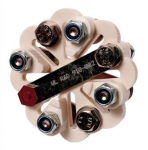
 
It depends on the shaft and bearings more than the engine. The rule of thumb is that if you have only one bearing/support for the shaft then there should not be a flexible coupling. So a typical modern flexible inboard shaft seal and a P bracket should not have a flexible coupling. However the R&D is not actually very flexible so is commonly fitted as it does seem to reduce vibration and noise transmission, particularly on bouncy old engines like a 2GM. The 3YM is inherently smoother and may be OK without a flexible coupling. However other engine makers such as Beta and Nanni use Centaflex couplings as standard.

Where flexible couplings are useful, or indeed essential is if there is a fixed inboard bearing as in older style stern tubes when a more flexible coupling is needed if the engine is on flexible mounts.

Think I would be guided by the installer as it is his responsibility if it is not right. You can always add the R&D later although it may require shortening the prop shaft to fit it in if there is a shortage of clearance aft of the prop.
 
The yard who'll fit the replacement engine says the new setup shouldn't have a coupling since the Yanmar engine mounts are designed to take all the vibration. View attachment 120822
I don't think that's a very convincing argument. The mountings isolate the engine from the hull, but there's still a transmission path for vibration via the prop. shaft.
A couple of points though.
i) Your new 3 cyl. engine will be a whole lot smoother than the 2GM20.
ii) The R&D coupling design is rather rigid and isn't the best vibration isolator IMHO, but it might take up very minor misalignment. I don't see a downside to fitting one however.
 
I replaced a 2GM20 with a Beta16, it came with the R&D flex coupling, while the Yanmar had the simple rigid flange. Volvo shaft seal. The Yanmar used to rock & roll a bit at low rpm, but the Beta just sat there, wthout any real movement; The supplied mountings were more rigid than Yanmar ones, but?
One thing, the idea of using feeler guages to line up with the R&D was laughable. I had to make up some ally blocks to do it. And, the bolt holes on the R&D did not match the shaft flange, so had to re-drill it.

Oh, basicly sounds like you don't need one, but it can't hurt.
 
Last edited:
Many thanks for all the advice. The boat is a Plymouth Pilot 18 with a conventional cutless bearing and stuffing box. As you can imagine the shaft isn't very long which will mitigate the effects of vibration passing aft from the engine/gearbox. I'll go with the yard's recommendation, bolstered by the knowledge gained here and leave out the R&D. And as some of you have pointed out, I can always fit one later.
 
Is the stuffing box on a flexible hose, or part of the stern tube? If the latter it will probably have a bearing inside. In this case a flexible coupling makes sense. I fitted a 1GM in place of a Stuart Turner which was rigidly mounted and the ST stern tube has bearings either end. I replaced the inboard white metal one with a cutless bearing and the stuffing box with a Volvo seal then used a flexible Bullflex coupling. So the shaft was essentially fixed and the Yanmar could bounce away with the movement taken up by the coupling. Worked very well.
 
Stern gear explains the idea. Just check that there is no inside bearing on the stern tube. However, a rigid mount stuffing box could count as a bearing. Most likely your yard has checked that out.
 
One thing, the idea of using feeler guages to line up with the R&D was laughable. I had to make up some ally blocks to do it. And, the bolt holes on the R&D did not match the shaft flange, so had to re-drill it.

I have a newly installed Beta16 I will need to check the alignment of shortly, and it has one of these couplings.

Could you explain what you mean by the above please? (Making up ally blocks) ?

- W
 
I have a newly installed Beta16 I will need to check the alignment of shortly, and it has one of these couplings.

Could you explain what you mean by the above please? (Making up ally blocks) ?

- W
I used a couple of ally blocks to replace the flex coupling when lining up the g/box and propshaft flanges. The blocks were exactly the same thickness (turned on lathe) so I could judge the gaps accurately. Think of it as a fat washer in two bits
Since you had a 2GM20, did you also have to re-drill the prop-shaft flange?
The shaft only had an aft bearing, so , I chocked it in a central position to the available movement in the log tube., then set to with the engine mts.
 
I replaced a 2GM20 with a Beta16, it came with the R&D flex coupling, while the Yanmar had the simple rigid flange. Volvo shaft seal. The Yanmar used to rock & roll a bit at low rpm, but the Beta just sat there, wthout any real movement; The supplied mountings were more rigid than Yanmar ones, but?
One thing, the idea of using feeler guages to line up with the R&D was laughable. I had to make up some ally blocks to do it. And, the bolt holes on the R&D did not match the shaft flange, so had to re-drill it.

Oh, basicly sounds like you don't need one, but it can't hurt.
Sure you had the correct R&D as they come in different sizes and are matched to coupling did you check if the original shaft coupling actually matched the gearbox
 
Sure you had the correct R&D as they come in different sizes and are matched to coupling did you check if the original shaft coupling actually matched the gearbox
The R&D came with the engine. I didn't order it and the missmatch only became apparent after I had fitted the engine. It was far easier to re-drill the shaft flange than do anything else. Esp as I was fitting it here. The g/box flange and the shaft flange were different PCD. I assumed a foul up in the ordering.
 
Top