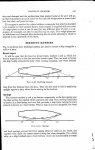
Yachtmaster snippet - anybody explain why?

I think the confusion in this is that ships have 2 breast lines and bow and stern lines whereas boats such as most users here have will use bow and stern lines and a midships breast line if preffered. On finger pontoons what we are calling bow/stern lines are actually breast lines.
 
I think the confusion in this is that ships have 2 breast lines and bow and stern lines whereas boats such as most users here have will use bow and stern lines and a midships breast line if preffered. On finger pontoons what we are calling bow/stern lines are actually breast lines.

Exactly:

Most of us use a bow breast and a stern breast. Properly speaking, a bow line (or head line) runs away forward of the vessel and a stern line runs away aft of it.

...but speaking casually I'd just say "bow line" and "stern line" for any line coming from the respective end that isn't obviously a spring. So maybe some people only ever use the term "breast" for a midships breast, and others have come to think that that's the only kind - and hence that "breast = midships" rather than "breast=90°".

This is not the sort of pedantry I'd usually indulge in, but if somebody's going to rudely insist that everybody else is wrong and he's right just because he says so... :)

Pete
 
Last edited:
I suspect you happy sailors don't understand what a breast rope is. The bow rope is the bow rope and the stern rope is the stern rope. Neither are breast ropes. Breast ropes are rarely used by small boaters, they run from amidships direct to the shore. So there!

Nonsense.
 
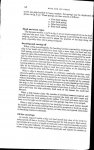
This from the 1964 Admiralty Manual of Seamanship as issued to me many many years ago. Agrees with prv and Jimmy Green, though a midships breast could also be used.

ropes.jpg
 
Last edited:
At one time, I was involved with berthing ships. They were normally made fast 3, 2, 2. which was three head ropes, two breast ropes, and two springs, from BOTH bow and stern. Sometimes, if heavy weather was expected, extra lines were run in addition. Yes, breast ropes run at approximately right angles to the ship's centreline, but I have never heard of a breast rope coming from midships.
 
At one time, I was involved with berthing ships. They were normally made fast 3, 2, 2. which was three head ropes, two breast ropes, and two springs, from BOTH bow and stern. Sometimes, if heavy weather was expected, extra lines were run in addition. Yes, breast ropes run at approximately right angles to the ship's centreline, but I have never heard of a breast rope coming from midships.

I accept that the word 'Midships' in my post was too vague and now that a kind chap has produced the diagram in the more modern Admiralty Manual of Seamanship I hope some members of this forum can see what I mean. Breast ropes in their true sense are not normally used on small yachts, although I have used them once in a serious storm when alongside. Not that I expect to convince prv and some!
 
Well I guess I would fail.

I frequently use both ends of my lines. And see nothing wrong with it. As long as the line is long enough.
I prefer a round turn with figure 8’s.
May use anything from a round turn to a fisherman’s bend a clove hitch or better yet a rolling hitch.
as the mood takes me and circumstances demand.

Bottom line as long as it is not unsafe why would you fail anything.
If I was examining someone and I saw them do something which I thought had disadvantages I would explain why and show them what I thought would work better and what the advantages were.

Not at all, failure is not an option, the skipper is in charge and if that's the way he wants it done and there is no mishap during the test then a wee chat and advise may be given but this would not constitute a fail in anyones book. besides, you've paid you'll pass.
 
One warp for one job makes lots of sense if you like to moor your boat neatly and parallel to the wall/pontoon/yacht next door. Of course you'd also need each warp on a separate cleat to adjust one at a time whatever the weather/situation but this isn't usually a hardship at the bow, at the stern it might mean employing a sheet winch for a spring. And as long as the neighbours moor correctly (decent sized bowlines under the warps on my cleats) I can tweak the position of my boat at any state of tide or wind direction.

If you don't give a stuff how your boat looks, that's fine. But I like to take a little pride in the way my boat looks :)

Yes it takes about 5 minutes longer to sort out, but should anyone come along side I know my boat is moored correctly.

If you're using a bow line that instantly becomes a spring and you need to adjust the bow line (say you need to move further up a pontoon, or you're on a wall and the tide is going out) then you have to undo the spring first, and if the tide has changed and that spring is under load it can be a nightmare.

If however you have the ends on the pontoon/wall etc and load of slack on deck, this is better and more or less the same as using two separate warps, as long as there is enough slack to adjust and lengthen boat lines without affecting the other.
 
I accept that the word 'Midships' in my post was too vague and now that a kind chap has produced the diagram in the more modern Admiralty Manual of Seamanship I hope some members of this forum can see what I mean.

Nope. You were completely wrong and the authority you claimed would support you said precisely the same as the Jimmy Green and wikipedia articles about which you were so scornful.
 
At one time, I was involved with berthing ships. They were normally made fast 3, 2, 2. which was three head ropes, two breast ropes, and two springs, from BOTH bow and stern. Sometimes, if heavy weather was expected, extra lines were run in addition. Yes, breast ropes run at approximately right angles to the ship's centreline, but I have never heard of a breast rope coming from midships.

I think Saint Cunliffe disagrees with you.
 
Am I bovvered?
I'm sure it was in one of his tomes I read that breast lines and springs should be parallel.
Personally I think blindly following a formula is less likely to work well than observing what is required to do the job in the particular circumstances.

But breast lines at 90deg to the quayside or pontoon are very short, therefore prone to violence if the boat should go up and down with a bit of wash.
Midships breast lines are often bad news for this, but very handy as a temporary first line ashore IMHO.
 
I think Saint Cunliffe disagrees with you.

Saint Cunliffe saith, in "Hand Reef and Steer", that on a gaff cutter there is no need to mouse the hooks of the peak halyard blocks.

So I tried it, and in a mere F6 my docile, ladylike, 12 ton gaff cutter hurled one block off the gaff and frapped it round the topmast rigging in such a way that the reefed mainsail would neither set nor come down, requiring a trip up the mast as she did her darnedest to shake me off.

I wished he was on board.

I have taken my Cunliffe with a pinch of salt, since then.
 
Top