
Simple answer is, Yes. More than adequate for that 14 AWG is 2.5mm cross Sectional Area (CSA) 16 AWG is 1.5 and would also be suitable for a bilge pump.Hi all
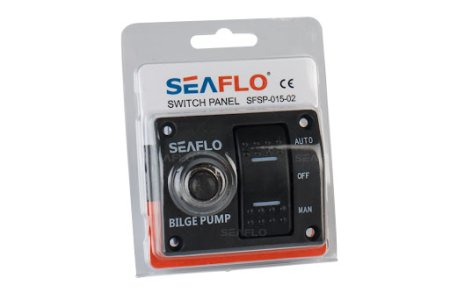
I'm planning to wire up a bilge pump and float switch they are both separate. They will be wired into a sea flo 3 way bilge pump switch. I have 14awg 12v 20amp cable. Would this cable be suitable for what I'm planning to do
Thanks View attachment 177782
It's tinnedI'd have thought tinned cable would be all but essential for wiring to a bilge pump. It really should be used in all marine applications.
As for the amperage rating, the minimum is dictated by the current draw of the pump which we don't know. While undersizing cable isn't wise overspecifying that rating substantially has no benefit whatsoever but increases cable costs - though that probably aren't a consideration here.
For instance, Seaflo make a 1100gph pump which draws max 6 amps (probably momentary starting current) and suggest it is fused at 5a. A very pessimistic 6a at 12v as you know is 72watts. Your 20a cable is rated to draw 240w and that'll have a decent mnargin built in. Thus even this big pump draws only about a quarter of the capacity of your wire so unless your pump is unusually big or you plan to run four off the same cable it will be more than well able to cope.
About 4 or 5 meters maybe less the terminals are fine. Do you reckon I put a 5amp fuse on as well or would the seaflo trip switch just doAre the terminals large enough? 1mmsq cable would be sufficient if the run is not over say 8m.
Maybe 4 or 5 meters or lessSimple answer is, Yes. More than adequate for that 14 AWG is 2.5mm cross Sectional Area (CSA) 16 AWG is 1.5 and would also be suitable for a bilge pump.
All that is assuming you have reasonably short runs and little or no volt drop. The purists will be along to explain it all![]()
It's a 1100gph blige pumpI'd have thought tinned cable would be all but essential for wiring to a bilge pump. It really should be used in all marine applications.
As for the amperage rating, the minimum is dictated by the current draw of the pump which we don't know. While undersizing cable isn't wise overspecifying that rating substantially has no benefit whatsoever but increases cable costs - though that probably aren't a consideration here.
For instance, Seaflo make a 1100gph pump which draws max 6 amps (probably momentary starting current) and suggest it is fused at 5a. A very pessimistic 6a at 12v as you know is 72watts. Your 20a cable is rated to draw 240w and that'll have a decent mnargin built in. Thus even this big pump draws only about a quarter of the capacity of your wire so unless your pump is unusually big or you plan to run four off the same cable it will be more than well able to cope.
Good ideaPurist? Arh... not been accused of that before. Like in ever.
The pump consumption (Amps - not water), the wire length and potential physical impact would be part of my considerations.
Unless the wires are really long, the price doesn't mean much, so rather more than too little. The connections should of course be adequate and it's a good idea to give them a shot of protective spray (not WD40 IMO) after assembly & test. For lack of better, rust body protection (car!) can be used.
And 14 AWG will be fine for both the pump and switch1100 gph sounds plenty unless you break a seacock in which case it wont cope anyway.
Guessing: Rated consumption 4.1 A, required fuse 7.5 A
14 AWG is 2.5mm cross Sectional Area (CSA) will do fine over 4-5 metres. Personally have 4 mm on the shelf so use that for most unless space requirements dictate differently.
Do consider power supply to be constant, not switching off when you leave the boat.
Yes. I presume the power to the pump goes through the switch so it will be under the same load.And 14 AWG will be fine for both the pump and switch
Yes thank youYes. I presume the power to the pump goes through the switch so it will be under the same load.
Different if the switch controls a (low power) relay witch then sends the (higher) working power to the pump.
There tinned at the pumpContrary to all the experts ... I use cable usually intended for such as bedside lights etc. Tinned ? No. I have such wiring on my SR25 and its been in place for about 15yrs ... the only bit that has had to be replaced a few times - the choc block connectors.
Pump is an 1100GPH with auto float built in ... up to 6A @ 12V.
I have a suspicion that the cables fitted to the pumps may not be tinned anyway .. maybe ???
Your 14awg cable is rated at 32a, the breaker on the switch panel is rated at 15a, so no need for an additional fuse between the switch and the pump.Hi all
I'm planning to wire up a bilge pump and float switch they are both separate. They will be wired into a sea flo 3 way bilge pump switch. I have 14awg 12v 20amp cable. Would this cable be suitable for what I'm planning to do
Thanks View attachment 177782
Sorry, but this isn't "contrary to all the experts", it's contrary to all standards, good practice and common sense, it's just a bodge.Contrary to all the experts ... I use cable usually intended for such as bedside lights etc. Tinned ? No. I have such wiring on my SR25 and its been in place for about 15yrs ... the only bit that has had to be replaced a few times - the choc block connectors.
Pump is an 1100GPH with auto float built in ... up to 6A @ 12V.
I have a suspicion that the cables fitted to the pumps may not be tinned anyway .. maybe ???
ThanksYour 14awg cable is rated at 32a, the breaker on the switch panel is rated at 15a, so no need for an additional fuse between the switch and the pump.
If you intend (as would be typical) to wire this all directly to the battery, so it's always on, you should fit a fuse as lose to the battery as possible, to protect the wiring between the battery and the switch panel. A 20a fuse here would be big enough to protect the wiring if it shorts before the switch and should ensure that is there is a short after the switch the breaker at the switch trips, rather than blowing the fuse.
Sorry, but this isn't "contrary to all the experts", it's contrary to all standards, good practice and common sense, it's just a bodge.
Domestic cable ? Untinned cable in bilges, chock block connectors in bilges (or anywhere else for that matter, especially non-stainless, with leaves) ?
Very poor.