Windlass controller. Fore or aft? Or both?

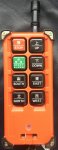
I have installed one if these industrial wireless remote units for my anchor windlass.

Is was about £60 from memory. I have been very impressed. Great range (even with the receiver installed inside on an aluminium boat it works everywhere. The range was listed as 100m) and battery life (takes standard AA bateries). A short press only retrieves a few inches of chain.

Dearer than the £10 units, which I think are often a good solution, but this industrial controller fixes most of the drawbacks of the less expensive wireless controllers, and in terms of marine equipment prices it is still a bargain.

A wired remote is an important backup, but since fitting I have used nothing other than this wireless unit.

The extra buttons are configured to launch an Exocet missile at any boat that anchors too close using lousy ground tackle :).
 

Attachments

  • E7FCD66D-D14B-4581-8C25-064D903BA012.jpg
    E7FCD66D-D14B-4581-8C25-064D903BA012.jpg
    394.9 KB · Views: 0
Last edited:
Quite happy with the eBay remotes which arrived a couple of days ago. Range is 100' as promised and I could operate it through a house wall, metal garage door, and about 30-40m of driveway. I gave up at that point and initial worries about range were unfounded.

I haven't installed it yet but response from the remote seems to be as rapid as a wired switch. Not waterproof but I can live with that to see if I find it useful. Not much risk for only £11.
 
£11 Fleabay jobbie fitted today and works fine from one end of the boat to the other.

Delivery was vaguely tardy and it came without no wiring diagram but, luckily for me, knowledgeable technician who did all the wiring, sorted it without problem.

So there we have it - control, fore and aft. Now just need to launch and play with it.
 
£11 Fleabay jobbie fitted today and works fine from one end of the boat to the other.

Delivery was vaguely tardy and it came without no wiring diagram but, luckily for me, knowledgeable technician who did all the wiring, sorted it without problem.

So there we have it - control, fore and aft. Now just need to launch and play with it.

How is it wired?. The black is -ve, red is +ve to battery; the short wire is the antenna; how do you connect the white and yellow cables?
 
The yellow and white wires go to the windlass solenoid.

The solenoid will have three small electrical tabs with some thin wires attached (not the large lugs with the thick wire).

The yellow wire goes to one of these tabs (usually on one end) the white wire goes to one of the other tabs (usually the other end). The third small tab (usually the middle one) is negative supply to the solenoid. This can be left as is. If you are lucky the thin wires that are already attached will have the same colour code.


Normally yellow is up and white is down, but if the windlass is moving the wrong way just change the position of the yellow and white wires.
 
The yellow and white wires go to the windlass solenoid.

The solenoid will have three small electrical tabs with some thin wires attached (not the large lugs with the thick wire).

The yellow wire goes to one of these tabs (usually on one end) the white wire goes to one of the other tabs (usually the other end). The third small tab (usually the middle one) is negative supply to the solenoid. This can be left as is. If you are lucky the thin wires that are already attached will have the same colour code.


Normally yellow is up and white is down, but if the windlass is moving the wrong way just change the position of the yellow and white wires.

Great, many thanks
 
hi sailed many years single hand if you can have 2 stations cockpit and bow both hand held this lets you move around on deck or look over the side .regards andy Maggie 2
 
Different scenarios, best place different. Anchoring and then backing up to a quay, or adjusting scope once anchored, obviously at cockpit. Last few feet retrieving an anchor you want to be at the bow, even if it is meant to self-stow. Apart from anything else, you don't want to be trying to pull the bow roller back into the windlass, straining the gearbox and stalling the motor.
 
Top
