Daydream believer
Well-Known Member
Do you think that they would let you even try?Don’t fancy parking that under sail

But I bet if it came to it, they could manage it though


Do you think that they would let you even try?Don’t fancy parking that under sail
That would be worth watching tooI bet if it came to it, they could

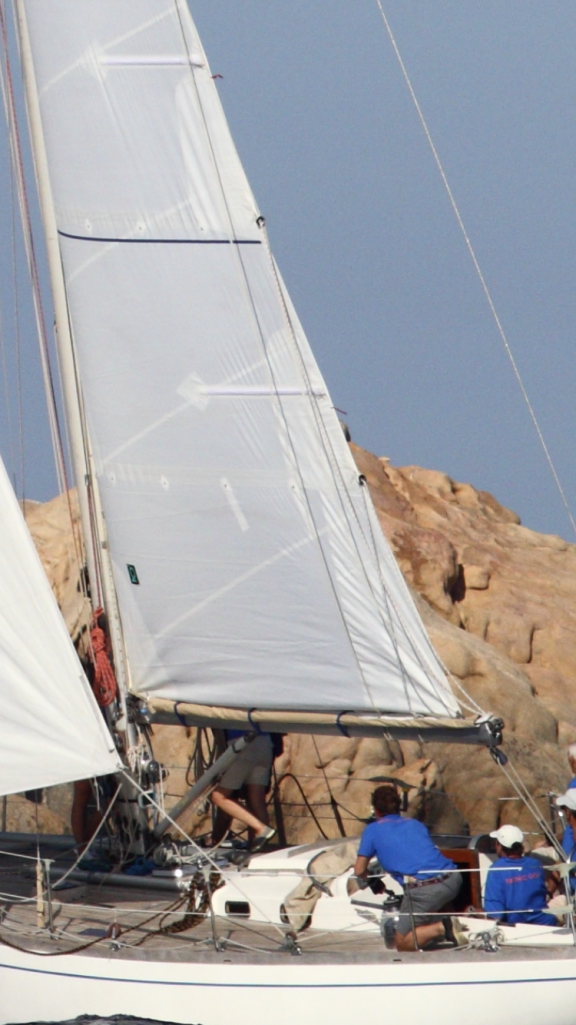
I don’t get the criticism of stackpacks. You can fold them and associated cordage away when sailing. We always do.
Yes . Tucker Brown used to hold them from the Crouch sailing club at Burnham. Start all below on mooring with hatches closed. Include towing dinghy, dropping dinghy & picking it up later. trick was always to know where to drop it. drop too soon sometimes meant a long trip to go & get it because the next mark was deliberately positioned to catch us out ( & it did the first timeThat would be worth watching too
Have you ever done one of those races starting from sail down , anchor down ?
 ) Great fun for all though. Still won by the usual fast boats, so they applied "special" one off handicaps for the races
Yes, the coupe de Porquerolles is on that basis. As it can involve as many as 100 boats, the start requires a very calm person at the helm.That would be worth watching too
Have you ever done one of those races starting from sail down , anchor down ?

I understand your point and appreciate your concerns in regards to safety. However, with full battens lazy jacks do the same for us. We head up into the wind, drop the sail and if required I put on a single tie until we are anchored or alongside. Works out pretty much the same as far as I am concerned.With all due respect it is not just that.
I sail SH and after a long sail, I often find myself arriving at a port tired & on a rolling sea. (I never anchor) I have to get lines & fenders out, dodge pots & sometimes other boats. I start the engine, furl the jib & drop the main. I do not have the time to catch a swinging boom & try to control lots of stiff laminate cloth with sail ties whilst standing on the cabin top or the cockpit seats. Made more difficult by my lifelong difficulty with balance.
With my stackpack I can gather the sail at the mast & have some inbuilt straps to hold the sail until I am ready to start zipping up.
I do not get sections of sail dropping down in front of me when entering port. The lazy lines on their own are insufficient to retain the reef lines etc & I do not intend to fit more.
The effect on the sail is negligible & can be more than offset by being at the helm rather than being a greenhouse relying on an autopilot
To me a stack pack is an essential part of safe sailing.
Fair enough, though a few notes to consider: foiled, rotating mast, gap to deck closed for end plate effect and not a triangular plan form that renders the top third behind the mast ineffectual.
Unless I were (still) in marketing, I would not put too much stake in the wisdom of popularity or the choice of consumers.A feature like a stackpack is totally consumer choice and therefore popularity is indeed a measure of its value. Alternatives are available, but still consumers make the choice. Are you saying they are wrong and don't know what they are doing? Smacks of arrogance to me as does your "appreciation" of my contributions. I shall treasure that.
Consumer choice rules OK.


The point about stack-packs is only that they save time and a bit of effort. They are not 'better' or worse in any way. One point in their favour is that they encourage sailors to get the main covered at times when I might possibly leave it uncovered, as when arriving somewhere late in the day with the intention of leaving in the morning. Once up and sailing there is not much to choose, except the visual aspect that we had fun with. I do like the fold-down idea though, and I could be converted.I note that all the Vendee Globe boats use stack packs. Someone ought to give them a call.
Stackpacks come in all flavours. You have the 3' tall (or more) at the mast ridgid triangles that do not require the extra flap to cover the front end or the more low profile variety which can be strapped or rolled to the boom, but need too have the extra cover to take care of the exposed bit a t the mast.I note that all the Vendee Globe boats use stack packs. Someone ought to give them a call.
Quite. Stack packs were first developed for the Carribean charter trade because customers couldn't be arsed to cut into pinacolada time on arrival to fiddle with the covers and protect the precious sails from the tropical sun.The point about stack-packs is only that they save time and a bit of effort. They are not 'better' or worse in any way. One point in their favour is that they encourage sailors to get the main covered at times when I might possibly leave it uncovered, as when arriving somewhere late in the day with the intention of leaving in the morning. Once up and sailing there is not much to choose, except the visual aspect that we had fun with. I do like the fold-down idea though, and I could be converted.
I note that all the Vendee Globe boats use stack packs. Someone ought to give them a call.
Yes but loops from my single line reefing lines from the leech would drop into the cockpit so I can flip them up into the stack pack out of the way to avoid getting throttled by them as the boom swings over my head. Another advantage. The 3 points on the lazyjacks do not hold all the sail. If one has them too far aft they catch on the leech of the sail during the hoist so keeping them forward a little avoids this. However the last bit of the sail would hang down off the boom. The stackpack catches this because it is battened.I understand your point and appreciate your concerns in regards to safety. However, with full battens lazy jacks do the same for us. We head up into the wind, drop the sail and if required I put on a single tie until we are anchored or alongside. Works out pretty much the same as far as I am concerned.
We all figure out what works for us.Yes but loops from my single line reefing lines from the leech would drop into the cockpit so I can flip them up into the stack pack out of the way to avoid getting throttled by them as the boom swings over my head. Another advantage. The 3 points on the lazyjacks do not hold all the sail. If one has them too far aft they catch on the leech of the sail during the hoist so keeping them forward a little avoids this. However the last bit of the sail would hang down off the boom. The stackpack catches this because it is battened.
My stackpack has a loop & ball system inside to quickly hold it together so if I do not have time to zip it I can hold the sail in it withoput resorting to ties
I have considered moving the lazyjack attachment points out along the spreaders but I don't want to run into problems with varying tension as the boom moves. I seldom have a problem hoisting with the jack in place. I stand astride the tiller and with the engine at idle raise the sail head to wind, pausing to be more careful at the critical points. I do nothing with the stray reefing lines, leaving them tucked into sail folds. When lowering sail, the spare lines are tucked as soon as convenient.We all figure out what works for us.
As we raise the sail at the mast (main/mizzen), I take a moment to release and hook back the lazy jacks to a cleat on the mast. It is sufficient to release the lee side only, if not straight into the wind, and this solves the prob of battens getting caught.
The reef lines not garotting the helmsman/woman is a wheelhouse benefit I have as yet not considered, to be honest.
Our jacks attach at about the midway way point of the spreaders, about where you would have your flag halyards. At the boom the spider fingers run through eyelets on the boom so that each set may run freely, port to starboard, and no additional stress is put on the spreader as the boom shifts. Essentially, each webb finger is simply a loop.I have considered moving the lazyjack attachment points out along the spreaders but I don't want to run into problems with varying tension as the boom moves. I seldom have a problem hoisting with the jack in place. I stand astride the tiller and with the engine at idle raise the sail head to wind, pausing to be more careful at the critical points. I do nothing with the stray reefing lines, leaving them tucked into sail folds. When lowering sail, the spare lines are tucked as soon as convenient.
Yes, mine run through eyes too. I'm not sure how freely they would run in something like a gybe though. I don't think I will chance it as It is not really essential.Our jacks attach at about the midway way point of the spreaders, about where you would have your flag halyards. At the boom the spider fingers run through eyelets on the boom so that each set may run freely, port to starboard, and no additional stress is put on the spreader as the boom shifts. Essentially, each webb finger is simply a loop.
