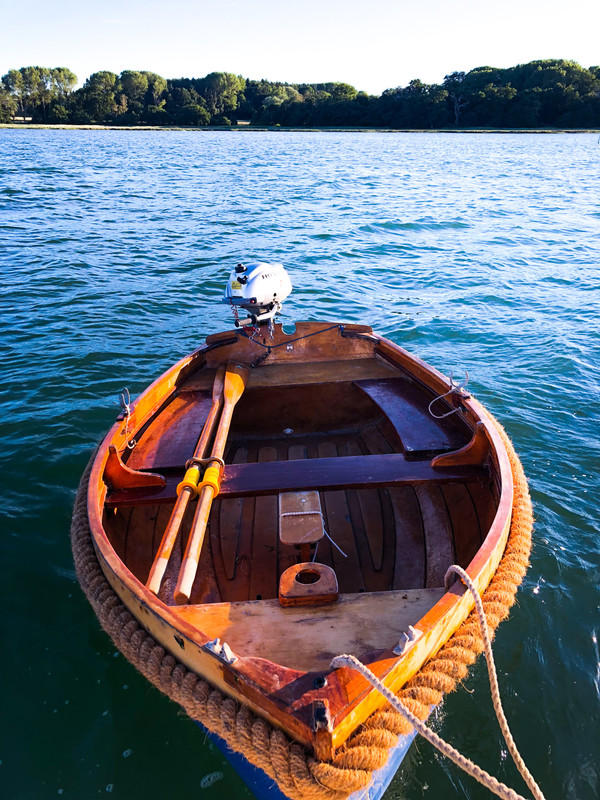
Why is there so few people towing a solid dinghy? (rather than rolled up inflatabubbles)

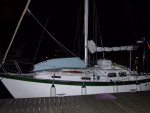
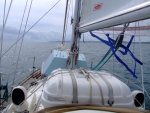
On my 27 foot sailing boat I could fit a two man custom built dinghy before the mast.There was access to the anchour and the upturned dinghy allowed for the fore hatch to be opened at sea or in the rain plus when left allowed good ventilation.The oblong shaped craft was good to row and better sculled.A slightly crappy finish although painted bright yellow could be left without worry and could take knocks and biffs and all you need was to carry the sculling oar to the pub or hide.It was useful as well at running out a kedge,so hard dinghies do have a future !
 
I think one could add
9) boats used to be less shiny and the odd scuff mark from getting rammed by your tender was more acceptable
10) boats used to have narrower transoms affording the dinghy a smaller target
 
I think a number of factors, mostly inter-related, have contributed to the decline in towing rigid dinghies, including -
1) yachts are generally MUCH larger now than in days of yore, so the potential for carrying a dinghy on deck or on davits, or an inflatable in a locker, is greater;
2) few rigid dinghies sold as tenders these days are well shaped and suited to towing (or even rowing!) - they're generally too flat bottomed and with insufficient freeboard and/or rise to the bow (designed for economic manufacture and transport, rather than use?) to keep enough waves and spray out;
3) more yachts are kept in marinas, where a dinghy is in the way and/or will add to mooring costs;
4) yacht's topsides are now more generally gel coated and shiny, so aren't regularly repainted and owners are less tolerant of the knocks and scuffs that may come from a rigid dinghy;
5) inflatables have probably reduced significantly in price, relatively speaking;
6) the former vast stock of cheap wooden dinghies of fishing/workboat, military and leisure origins have now largely rotted away due to age, the decline in skills and people's preparedness to undertake ongoing maintenance;
7) few people row far these days, and use of outboards much more common, so the disadvantages of an inflatable for rowing are significantly mitigated;
8) sailors these days are wusses. ;)

Another tip I recall for dissuading a towed dinghy from catching up with the towing yacht is to thread a funnel point forward on the painter, nearer the dinghy than the yacht and kept in place by a knot either side of it. If the dinghy overtakes the funnel it will be held mouth forward and the drag will tend to pull the dinghy back to its place.

I agree with all that! My late father went in for the backward facing funnel on the painter trick - you need quite a strong funnel but it works.
 
I used to have a cheap 5th hand plywood box 8ft long dinghy, which I only towed in calm inshore waters but which for passage-making I hoiked (using the spinnaker halyard) onto the foredeck of my 27 footer and lashed capsized between the mast and the inner forestay, and could still open the forehatch without it fouling the thwart. Being boxy it motored better than it rowed... but it certainly rowed better than an inflatable! I fitted a wheel at the end of the keel which made dragging up a beach or slipway much easier. It eventually rotted, but proved the concept.

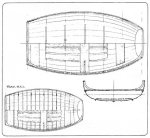
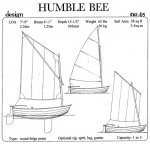
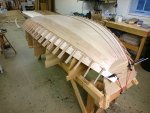
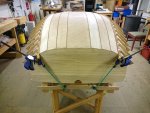
So currently building a proper traditionally-shaped clinker pram tender, just under 8ft, from a design by Iain Oughtred. Using 5mm marine ply and epoxy it'll surely be much lighter than the old 8mm box version (in light blue below at the end of my West Country cruise), and should row better too! Will make oars but not trouble with a sailing-rig, so no centre-board case or all that malarkey!

1a.JPG

1b.JPG

2.jpg

3.jpg

4.JPG

5.JPG

6.JPG
 
I think the biggest factor against is fear, and most of that is unfounded. I've been towing rigid dinghies since I started sailing in the 80s and I have had problems precisely twice:

(1) The towing eye on my Jack Holt Dittyboat (7'6" GRP stem dinghy) broke going round the Mull of Oa singlehanded and I had to tow with a rope round a thwart until I could make a repair in Bowmore.

(2) We tried using my son's Heyland Swift as tender for a couple of years recently. It was generally fine, but is too low in the transom and as a result filled with water when we were going fast with Sanda Sound. Easily cured by reverting to my usual 7'6" GRP pram.

I have never had a dinghy hit the stern at sea or even come close, because I tow with a 10m painter. It's not a problem in marinas, locks or among moorings because we pull it close in , snug against a fender if necessary. It's much better for landing on islands on the West Coast of Scotland because there are no worries about it getting punctured. It rows so well that there is no need to faff about with an outboard or carry petrol.

It does require a little more skill and agility when transferring to and from the mothership and it probably slows us down a wee bit some of the time. All in all, though, it's very little bother and has lots of advantages. Most dire warnings about towing rigid dinghies seem to come from people who have never done so.
 
...I have never had a dinghy hit the stern at sea or even come close, because I tow with a 10m painter...

I have.

Towing an 8ft hard chine ply pram on a ten metre painter round the North Foreland in August 1973, the dinghy surged down the face of a swell and hit the teak rudder stock, snapping it instantly. Tried all the recommended ways of steering without a rudder. None worked. Red flare. Got a tow from a friendly Seadog into Margate. Spent August Bank Holiday having a new rudder made. Claimed on Navigators and General.

There was a very slight mark on the top of the bow transom of the dinghy.

Don’t think it won’t happen.
 
We've had both. On our current boat we started out with a GRP lapstrake which towed well and rowed ok. It was fairly tippy, rowing ability with two bodies in it was much reduced. It was relatively heavy and inconvenient in port. On long passages I lifted it on board with a halyard where it lived on the foredeck and was in the way; it also diminished the view from the wheelhouse. The proper way of dealing with a solid dinghy are davits, IMHO.
We now have an 8' inflatable which is light weight, much more stable and lives in its bag on the foredeck behind the bulwarks where it doubles as a, relatively, comfortable seat. We have towed it, but you have to keep the painter very short as it has a nasty habit of getting airborne. We have an old 2.5 outboard to drive it, which is handy, if it starts.
Not all hardbottoms are good; my father used to have one of these 6' sport yak plastic jobs. Their best feature was that they floated, are unsinkable and towed well. They did not stand up well to hard beaches where you tended to drag them because they are relatively heavy and awkward to carry. They guarantee you a wet ar$e, are ugly to boot and I think the designer should be drowned in one of his contraptions, which would, admittedly, be difficult, since they are unsinkable.

We also had a Sabot pram of 7.5', which sailed very well, rowed fine, but would roll itself up on it's chine and capsize when being towed; retrieval was tricky and dangerous in a seaway.
 
Last edited:
Not all rigid dinghies are the same. We moved from a 9ft Caribe Rib to a 12’5” hard dinghy. I couldnt go back to a deflatable.
Ours is also a nesting dinghy. When we sail any distance the dinghy stows on the foredeck in the same way our 9’ rib used to do. The only difference is the hard dinghy takes up less room. Its narrower and only 7’ long when nested on deck. The construction is polyester and carbon reinforced with core bulkheads, locker and built in buoyancy so its unsinkable. It rows perfectly. It has a sailing rig with unstayed mast and engines far better than the 9’ rib. It also has a perspex panel in the bottom so you can check the anchor or watch the fish?
On short trips say 8 or 10 miles we tend to tow it. It has a lot less drag than towing the old rib. It does like to overtake us if we are going down the waves so we tow warps when going down hill. I just have a 20ft loop of 8mm line attached to each cleat on the transom. Works perfectly to keep it towing straight. Have done this when its been gusting35 kts with 2.5m seas with no problems. The sides of the dinghy have grp tubing gunnels. These are covered in 1.25” sanitation hose that is split and slid on. Its nice and soft so doesnt mark the yacht hull. The sanitation hose bumper is sleeved with blue sunbrella that keeps it looking smart. We use either a 15hp or 10hp two strokes outboard that pushes two of us along at up to 20kts . Going in to a chop its far drier than the old rib due to the hull shape and ability to set the speed to exactly what you want. With a rib you have two choices when the sea is bumpy. On the plane or off. Not so with a hard dinghy. It doesn't have to climb the hump like a rib, it just goes.
We have since changed the ugly bow fender for a custom made nappy that looks far nicer and works better.
This 12.5’ dinghy weighs just 54kg. Its a light as our old grp Caribe rib. It will carry two people and two full sets of diving gear or as I did a few days ago two people a load of shopping and 60 metres of new 10mm chain a couple of miles. It will happily take four adults and keep them dry in calm conditions or two adults in bumpy conditions. We love our hard dinghyC9D55E96-A985-4377-812F-4136D1899F2C.jpeg2AE82E23-F2E2-4125-B7C0-5B4D1399EB18.jpeg
 
My previous boat, a 23' Snapdragon, was kept on a swinging mooring. I had a 10' solid grp tender which I used to tow up and down the east coast to get ashore and explore creeks. Absurd really, as the Snappie drew only 9'' with the keel up. But the tender rowed a treat and when the outboard died I didn't bother replacing it.

I've not evolved much with my 34' liveaboard in the Med. Before we left England I owned an Avon Redseal and a 8' Seahopper plywood folding dinghy plus a 3hp outboard and I had to choose which to bring as our tender. We decided on the Seahopper and after two years I don't regret that decision. It rows well and sails tolerably. It behaves when being towed but is so easy to hoist on deck that we rarely do (2 person job though using a halyard and winch). It takes us 10 to 15 minutes to launch from being folded up in a bag on deck to stepping onboard.

Its a bit flimsy for dragging around on shingle and rock beaches but we two can carry it a few metres up a beach and we've also learned how to anchor it off with a line to shore. And its nothing like as stable as an inflatable. My only regret is bringing the outboard with me. I haven't used it in 2 years.

Interesting though, how so many of us hard tender fans have either nesting or folding tenders. I've done my fair share of towing and know that it costs me about 10% extra passage time. OK on short trips but two hours extra on a 24 hour passage is worth saving. And I, for one, always feel a bit uncomfortable that the tender could fill or catch up with my transom, the painter could wrap around the prop or rudder, or break. Getting the tender out of the water means one less thing to worry about ?
 
A catamaran sterned inflatable with a reliable outboard is a remarkably seaworthy small boat. Far, far in excess of any solid dinghy, unless about 5 + meters long.
 
Weight, stowage, capacity, stability, cost, ease of inflating / deflating, good rowing ability (try an airdeck with inflatable keel)...
 
Sailors are, on the whole, logical people, and they choose the best option for themselves. Even towing an inflatable is tiresome and most of us avoid it in open water, so carting a solid dinghy around just spoils the fun of sailing and adds the extra dimension of anxiety.
 
I have.

Towing an 8ft hard chine ply pram on a ten metre painter round the North Foreland in August 1973, the dinghy surged down the face of a swell and hit the teak rudder stock, snapping it instantly. Tried all the recommended ways of steering without a rudder. None worked. Red flare. Got a tow from a friendly Seadog into Margate. Spent August Bank Holiday having a new rudder made. Claimed on Navigators and General.

There was a very slight mark on the top of the bow transom of the dinghy.

Don’t think it won’t happen.
Moral. If the waves get big, use an even longer painter. 10m has been big enough for anything I meet.
 
Same reason you don't see many old traditional boats like Hilyards etc. around now ...

The Marina based Step On - Step Off brigade have taken over boating ...

Come to Baltics and see the split pulpits designed so no longer having to climb over the rail ... you now walk THROUGH a centre section onto the pontoon ...
 
Top