Who to insure with?

Yes quite thought provoking, here is the Navigators & General Policy - http://www.navandgen.co.uk/NR/rdonlyres/F8F61AAF-EEDF-455E-AE4A-A211DD0C8946/0/NG87909YachtMotorboatPolicy.pdf

Some clauses I definately don't like the look of:-

• loss or damage resulting from electrolysis, osmosis or like conditions.

2 Motors and Electrical Machinery

What is covered: Loss or damage to motors, electrical machinery and equipment, batteries and their connections resulting from:
• sudden accidental incursion of water into the Vessel , directly caused by an identifiable and unexpected occurrence.
• frost, providing manufacturers recommendations have been followed.

What you are not covered for:
• gradual incursion of water into the Vessel as a result of the Vessel not being watertight.
• loss or damage resulting from water gradually escaping from any fixed appliance or pipe.

Looks to me as though if I suffer any kind of flooding / sinking that is not 'sudden' i.e. any issue with skin fittings [ or hoses connected thereto] stern glands, outdrive bellows, blocked deck drains, etc. that arent cleared by a bilge pump [I am on a trot mooring so battery capacity is limited] then I have no cover. And as we all know from recent threads about leaking stern glands etc those kinds of things are a definate possibility.

I think I will seek an alternative insurer with more comprehensive cover.

Do you know what the very worst of this issue is? - I now have a nagging doubt in my head that I am fully covered other than for a catastrophic event, therefore perhaps if there is any kind of issue when I am out on the boat I had bloody well better be sure it's a full on sinking event before we abandon ship - and that kind of doubt could lead to my reckless endangerment of myself and family... which is not a comfortable thought!
 
Yes quite thought provoking, here is the Navigators & General Policy - http://www.navandgen.co.uk/NR/rdonlyres/F8F61AAF-EEDF-455E-AE4A-A211DD0C8946/0/NG87909YachtMotorboatPolicy.pdf

Some clauses I definately don't like the look of:-

• loss or damage resulting from electrolysis, osmosis or like conditions.

2 Motors and Electrical Machinery

What is covered: Loss or damage to motors, electrical machinery and equipment, batteries and their connections resulting from:
• sudden accidental incursion of water into the Vessel , directly caused by an identifiable and unexpected occurrence.
• frost, providing manufacturers recommendations have been followed.

What you are not covered for:
• gradual incursion of water into the Vessel as a result of the Vessel not being watertight.
• loss or damage resulting from water gradually escaping from any fixed appliance or pipe.

Looks to me as though if I suffer any kind of flooding / sinking that is not 'sudden' i.e. any issue with skin fittings [ or hoses connected thereto] stern glands, outdrive bellows, blocked deck drains, etc. that arent cleared by a bilge pump [I am on a trot mooring so battery capacity is limited] then I have no cover. And as we all know from recent threads about leaking stern glands etc those kinds of things are a definate possibility.

I think I will seek an alternative insurer with more comprehensive cover.

Do you know what the very worst of this issue is? - I now have a nagging doubt in my head that I am fully covered other than for a catastrophic event, therefore perhaps if there is any kind of issue when I am out on the boat I had bloody well better be sure it's a full on sinking event before we abandon ship - and that kind of doubt could lead to my reckless endangerment of myself and family... which is not a comfortable thought!

You need to be careful here because you cannot expect any insurer you to cover you for the direct damage caused by electrolysis or you'd be expecting them to cover your anodes! It's the liability that is indirectly caused as a result of electrolysis (e.g. the boat sinking) that you need to be wary of.

Also, if your boat gradually sinks, presumable because you haven't checked it, then also it's not something you can expect to be covered. Therein lies the danger of trot / swinging mooring (where you are relying on batteries) which by their nature are far riskier.
 
We had a surge tide that coincided with a spring tide about 4 yrs ago in Ipswich.
I decided that i would loose a days pay & travel 70 mls x 2 as i had a "duty of care",when i arrived, the marina staff were busy adding lengths of RSJ to some of the pontoon piles to stop the pontoons rising above those piles. in the event of problems i would have taken the boat out into the Orwell.
all was well in the event but i did my bit in looking after my & my insurers interests

IMGP1899.jpg

IMGP1901.jpg
 
Last edited:
That would be an excellent article. 10 scenarios, and then a table saying who pays and who doesn't. With each insurer being allowed to check his own scoresheet, but under cross examination, before publication. Hugo?

Yep, great idea Jimmy, and any providers who don't come out of it too well could make a public commitment in the article to improving their policy terms, so they don't have to lose any customers, the magazines don't lose their advertisers, but there'd be a real benefit to the boating public (the magazine's readers)

Hugo, seriously, is there any good reason why you couldn't do this? You only have to read this thread to know it's a subject of great interest and importance to your readers.
 
Yep, great idea Jimmy, and any providers who don't come out of it too well could make a public commitment in the article to improving their policy terms, so they don't have to lose any customers, the magazines don't lose their advertisers, but there'd be a real benefit to the boating public (the magazine's readers)

Hugo, seriously, is there any good reason why you couldn't do this? You only have to read this thread to know it's a subject of great interest and importance to your readers.

I am already looking into it with the help of a few well informed individuals from this forum!
 
OK, an update following what I thought was a reasonable discussion Coleman's

1. Their exclusion if there is inadequate maintenance, even if you didn't know the thing in question needed maintenance. This exclusion doesn't exist with Pantaenius.

Their need is for the boat to be maintained to the manufacturers std. If it is, then it is deemed to be seaworthy. I don't really have a problem with this.

2. Their zero cover for water in your engine room and damage to machinery/electrics unless the hull is damaged or freak weather. If a pipe failed, shaft pulled out, rudder or shaft seal failed, etc, you're not covered even if you maintained it well and can prove that. This exclusion doesn't exist with Pantaenius and at least several others

Full cover for accidental or sudden water incursion. They will exclude damage caused by gradual incursion that the owner should deal with. No question of cover only if the hull breached, any accidental damage included.

3. They seem to have plenty of protection for them with mark downs of furnishing and other repairs due to betterment

I can't find any mention of this is the cover or clauses, so cover OK for me.

4. Double excess for underwater gear. In my case this meant no insurance, basically. This exclusion doesn't exist with Pantaenius and at least several others Not the case with my cover.

My policy excess is £300 excess for machinary. Seems reasonable.

5. Their limited 3P cover. This was the dealbreaker for me as I have warranty guys and boat fixers on my boat all the time, including today for that matter, and if any of them is injured I'd potentially on the hook with no insurance. This exclusion doesn't exist with Pantaenius and at least several others.

This bit I am not sure about. I would normally assume that the techie has cover with his own business. Clearly any problems actually caused by me would be an issue.

6. Their definition of Seaworthy, which is a really scary definition. Despite a protest to contrary by Macauley on scuttbutt which would be useful if you were in a courtroom on this one, the language makes no allowance for faults that you didn't know about and didn't ought to know about at start of voyage. This is a real deal breaker clause in my book. If anyone doesn't see the gravity of this clause shout up and we can discuss it further

As above, to Coleman's, seaworthy means well maintained. Coleman's are also senstitive to statutary rights, so that insurers should not weasel out of a claim.

Overall I am more relaxed now, but will be more vigilant in the future.
 
You need to be careful here because you cannot expect any insurer you to cover you for the direct damage caused by electrolysis or you'd be expecting them to cover your anodes! It's the liability that is indirectly caused as a result of electrolysis (e.g. the boat sinking) that you need to be wary of.
Yeah sure but that's perhaps pedantry petem isn't it? No-one cares about a £30 electrolysis-ed seacock being deducted from the payout for a £1/2m pound boat. The issue here is whether the insurer pays the £499,970 or nothing. As I read it, the contractual words quoted above for Navigators and General do not require them to pay, though I'm happy to be corrected and hear a contrary view/interpretation.

Also, if your boat gradually sinks, presumable because you haven't checked it, then also it's not something you can expect to be covered. Therein lies the danger of trot / swinging mooring (where you are relying on batteries) which by their nature are far riskier.
I don't see what "expect" has to do with it. There "just is" a risk of gradual sinking with a boat, and as a boat owner you can enter into a contract to put that risk with someone else, or not. Same with fire and theft. This discussion is about which insurers will take that risk off you, and which wont, or what conditions they impose (eg maintenance) as a condition of taking that risk, so that boat owners can make an informed choice about which policy to buy. I don't think your concept of "Well get real your insurer ought not to bear that risk", which is kinda what you are saying there I think, has any place in the discussion. Indeed I do expect my insurer to carry that risk, and I have an express term in my insurance contract saying that they do.

If the trot mooring is riskier, you'd obviously expect a higher premium AOTBE
 
OK, an update following what I thought was a reasonable discussion Coleman's

1. Their exclusion if there is inadequate maintenance, even if you didn't know the thing in question needed maintenance. This exclusion doesn't exist with Pantaenius.

Their need is for the boat to be maintained to the manufacturers std. If it is, then it is deemed to be seaworthy. I don't really have a problem with this.

2. Their zero cover for water in your engine room and damage to machinery/electrics unless the hull is damaged or freak weather. If a pipe failed, shaft pulled out, rudder or shaft seal failed, etc, you're not covered even if you maintained it well and can prove that. This exclusion doesn't exist with Pantaenius and at least several others

Full cover for accidental or sudden water incursion. They will exclude damage caused by gradual incursion that the owner should deal with. No question of cover only if the hull breached, any accidental damage included.

3. They seem to have plenty of protection for them with mark downs of furnishing and other repairs due to betterment

I can't find any mention of this is the cover or clauses, so cover OK for me.

4. Double excess for underwater gear. In my case this meant no insurance, basically. This exclusion doesn't exist with Pantaenius and at least several others Not the case with my cover.

My policy excess is £300 excess for machinary. Seems reasonable.

5. Their limited 3P cover. This was the dealbreaker for me as I have warranty guys and boat fixers on my boat all the time, including today for that matter, and if any of them is injured I'd potentially on the hook with no insurance. This exclusion doesn't exist with Pantaenius and at least several others.

This bit I am not sure about. I would normally assume that the techie has cover with his own business. Clearly any problems actually caused by me would be an issue.

6. Their definition of Seaworthy, which is a really scary definition. Despite a protest to contrary by Macauley on scuttbutt which would be useful if you were in a courtroom on this one, the language makes no allowance for faults that you didn't know about and didn't ought to know about at start of voyage. This is a real deal breaker clause in my book. If anyone doesn't see the gravity of this clause shout up and we can discuss it further

As above, to Coleman's, seaworthy means well maintained. Coleman's are also senstitive to statutary rights, so that insurers should not weasel out of a claim.

Overall I am more relaxed now, but will be more vigilant in the future.

Rafiki
1+6 - the devil is in the detail of the wording. I can't comment without seeing the wording.
2,3,4 goodo. Interesting/worth noting that your Amlin policy is different from the Amlin policy sold by HKJ
5. Sure, the workman might have his own injury cover, so if he hurts himself on your boat due to your negligence, his insurers will pay him. But the terms of his insurance policy will likely cause him to subrogate his claim against you to his insurers, and they will potentially come after you. The fact you have a lovely powerboat means you likely have some net worth, so are worth coming after. You are being unbelievably naïve here imho, Rafiki.

Putting this another way, you can rationally decide the risk of someone being injured by your (innocent) negligence is so small you don't want to insure it, or large enough that you do want to insure it. But what you can't do with any rationality is think the risk is large enough to need insuring, and then think the other guy's insurer will cover it with no come-back to you - that's just irrational logic imho
 
Yeah sure but that's perhaps pedantry petem isn't it? No-one cares about a £30 electrolysis-ed seacock being deducted from the payout for a £1/2m pound boat. The issue here is whether the insurer pays the £499,970 or nothing. As I read it, the contractual words quoted above for Navigators and General do not require them to pay, though I'm happy to be corrected and hear a contrary view/interpretation.

OK, let's take a more realistic example. I would not expect the N&G wording to cover knackered outdrives that have perished due to electrolysis. But I would expect them to pay for damage arising from the boat suddenly sinking due to a seacock failing due to electrolysis. That's my contrary view / interpretation. As a reminder:

The HKJ exclusion:

3.5 any loss, damage, liability or expense directly or indirectly arising from:
3.5.4 corrosion or electrolysis;

The N&G exclusion:

What you are not covered for:
loss or damage resulting from electrolysis, osmosis or like conditions.

It is of course the 'indirectly' word that would concern me about HKJ. Am I being naive?

Pete
 
I insure with Denovo and have just checked their 2012/2013 policy as it's the only one available to me at work. I'll check my latest one tonight when I get home.

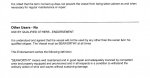
In terms of "Seaworthy" they do offer an explanation as follows:

insurance.jpg

I have contacted Dean Shaw to look at the post made by Jimmy/JFK and see how it relates to my policy. Certainly the online document looks familiar to me so I am fairly sure I will be covered under these terms. I'm particularly worried by the salvage limit if there is one. My boat is only a little tinker at 25' but it holds about 300 litres of diesel. I'm sure if it sank and leaked everywhere just outside Yarmouth at 100' deep £33,000 wouldn't go far for a salvage operation.
 
I don't see what "expect" has to do with it. There "just is" a risk of gradual sinking with a boat, and as a boat owner you can enter into a contract to put that risk with someone else, or not. Same with fire and theft. This discussion is about which insurers will take that risk off you, and which wont, or what conditions they impose (eg maintenance) as a condition of taking that risk, so that boat owners can make an informed choice about which policy to buy. I don't think your concept of "Well get real your insurer ought not to bear that risk", which is kinda what you are saying there I think, has any place in the discussion. Indeed I do expect my insurer to carry that risk, and I have an express term in my insurance contract saying that they do.

If the trot mooring is riskier, you'd obviously expect a higher premium AOTBE

I don't think we're disagreeing here in as much as we both agree that there's a reasonable expectation, as has been evident in these threads, over what a pleasure boat insurance policy should cover. What's not covered should be clearly signposted so that a customer can see what he's (not) getting for his money.

My "Well get real your insurer ought not to bear that risk" is that finding an insurer who will cover your boat on a swinging mooring for gradual sinking might be difficult or very expensive at best (I guessing).
 
I insure with Denovo and have just checked their 2012/2013 policy as it's the only one available to me at work. I'll check my latest one tonight when I get home.

In terms of "Seaworthy" they do offer an explanation as follows:

View attachment 37077

I have contacted Dean Shaw to look at the post made by Jimmy/JFK and see how it relates to my policy. Certainly the online document looks familiar to me so I am fairly sure I will be covered under these terms. I'm particularly worried by the salvage limit if there is one. My boat is only a little tinker at 25' but it holds about 300 litres of diesel. I'm sure if it sank and leaked everywhere just outside Yarmouth at 100' deep £33,000 wouldn't go far for a salvage operation.

Yep, I also have that definition of seaworthy, in the cert of insurance - but not in the list of definitions in the policy wording. Putting aside my basic OCD tendencies for a second, I don't like the way that clauses and definitions are scattered between the two documents. Even in the main policy wording they not (quite) in alphabetical order, which is why I missed the definition of speedboat at first reading.

I complete agree with Nautibusiness that Dean and his team are nice people to deal with - but this is a contract, and it has to provide the right cover. I'm already looking forward to the article that Hugo has promised us, doing a scenario-based compare-and-contrast between leading providers. I hope all the insurance companies that have been under discussion here in recent weeks will take part.

Cheers
Jimmy
 
N&G .... I would expect them to pay for damage arising from the boat suddenly sinking due to a seacock failing due to electrolysis. ... As a reminder:

The N&G exclusion:

What you are not covered for:
loss or damage resulting from electrolysis, osmosis or like conditions.

In this case, I do not see that the "indirectly" word makes any real difference and on this point I wouldn't criticise HKJ for using that word

Pete, I've quoted your post above but heavily cropped it down. I can't see how you expect the N+G will pay, based upon the words that you have yourself quoted. In your example, the proximate cause of the sinking seems to be electrolysis, so the loss is "resulting from electrolysis", as I see it. The absence of the word "indirectly" seems to me to make no difference.

Therefore I don't believe the contract requires N+G to pay. You've reached the opposite conclusion though. How come?
 
I'm already looking forward to the article that Hugo has promised us, doing a scenario-based compare-and-contrast between leading providers. I hope all the insurance companies that have been under discussion here in recent weeks will take part.

Yes, good of Hugo to "promise" that :D

I suppose the mag could do the article whether the insurers agree to take part or not, as all it needs is an expert to compare the policies which are generally available online or on request? Of course, they'd have to offer a right of reply to the insurer.
 
Yep, I also have that definition of seaworthy, in the cert of insurance - but not in the list of definitions in the policy wording. Putting aside my basic OCD tendencies for a second, I don't like the way that clauses and definitions are scattered between the two documents. Even in the main policy wording they not (quite) in alphabetical order, which is why I missed the definition of speedboat at first reading.

I complete agree with Nautibusiness that Dean and his team are nice people to deal with - but this is a contract, and it has to provide the right cover. I'm already looking forward to the article that Hugo has promised us, doing a scenario-based compare-and-contrast between leading providers. I hope all the insurance companies that have been under discussion here in recent weeks will take part.

Cheers
Jimmy
Jimmy, fwiw I would not criticise Denovo for having the definition of s/w in an endorsement and the main definitions in the policy. They way these products all work, for efficiency, is that there is a standardised policy then tweaks are made by endorsements. In this case the endorsement itself contains a "seaworthy" requirement that isn't in the main policy, and the definition that word therefore goes in the endorsement too because that's just the easiest way of doing it. Not totally lovely I agree, and it makes it harder for the customer to follow the plot which is a shame, but it does the job and the insurers have to be efficient

Each to their own, but I don't like that definition of seaworthy and in my opinion there are better (also some worse, mind!) versions offered by other insurers. In my view, a seaworthy definition should be limited to an absence of faults that the insured knows about or should have known about. But it is written without that limitation, so if there is a fault that renders the boat unseaworthy but which you didn't or shouldn't reasonably have known about (say, a hairline crack in a newish seacock fitted by a reputable yard) then the contract wording prima facie allows insurer to argue you are not covered. I'd hope many insurers would have sympathy in that example, but in my view you're better with a contract than with hope.
 
Jimmy, fwiw I would not criticise Denovo for having the definition of s/w in an endorsement and the main definitions in the policy. They way these products all work, for efficiency, is that there is a standardised policy then tweaks are made by endorsements. In this case the endorsement itself contains a "seaworthy" requirement that isn't in the main policy, and the definition that word therefore goes in the endorsement too because that's just the easiest way of doing it. Not totally lovely I agree, and it makes it harder for the customer to follow the plot which is a shame, but it does the job and the insurers have to be efficient

Each to their own, but I don't like that definition of seaworthy and in my opinion there are better (also some worse, mind!) versions offered by other insurers. In my view, a seaworthy definition should be limited to an absence of faults that the insured knows about or should have known about. But it is written without that limitation, so if there is a fault that renders the boat unseaworthy but which you didn't or shouldn't reasonably have known about (say, a hairline crack in a newish seacock fitted by a reputable yard) then the contract wording prima facie allows insurer to argue you are not covered. I'd hope many insurers would have sympathy in that example, but in my view you're better with a contract than with hope.

Not particularly wishing to pick an argument with you (we both already know that I wouldn't win it) but what is annoying is that the standard policy wording does make use of the term 'seaworthy' (clauses 2.2 and 10.1.7), without defining it. The cert of ins carries the only definition. That's kinda the beginning and end of my point.

Cheers
Jimmy
 
I complete agree with Nautibusiness that Dean and his team are nice people to deal with - but this is a contract, and it has to provide the right cover.

They are indeed very nice people to deal with (and seem to be very competitive), but on the other hand, I've never made a claim!

I've emailed Dean for clarification on three issues that may (hopefully not) relate to me: Salvage costs being limited to hull value, water in the engine bay from failed bellows etc, and I've queried failing seacocks. I am unsure if I am a speedboat or not as LOA is 8.1m including swim platform etc (26.57') and the limit is 26'. There doesn't seem to be a definition of length (hull length or LOA).

When I took the policy out, my quick laymans look over seemed to cover everything but on closer inspection, it appears not (Thanks JFM). I'm not planning on sinking my boat anytime soon, but it appears from the way the policy is worded, if it does I'm very restricted on recovery costs and I would have to foot the bill for anything over the boats value. Not ideal...............
 
Top