Where's northwood weatherfax gone?

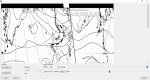
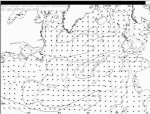
It seems the GYA Northwood is transmitting then. I have recorded 4 transmissions using the Dutch SDR. Two decode nicely and two do not. Must be something I am doing wrong. However the second one shows wave forecast for today

Swell.JPG
I am now trying to get the app to decode the same audio.
Hopefully when I am back on board and in an isolated Greek bay, I will pick up a signal on my Tecsun radio which I cannot here in landlocked north London

Fingers crossed I can get out to Greece in 6 weeks time!

TudorSailor
 
  • Like
Reactions: GHA
Thank you, all. I do jot now have HF/SSB receiver so have nor been able to check. Remember that Northwood is not part of the GMDSS. Offenbach/Pinnenburg should be your first choice. It is interesting to me that people-le are still using RTTY/Radiofax. For anyone around Europe, like NAVTEX, these must be good hsckups for those occasions when the internet is not available.
 
Last edited:
Another resurrection of an ancient thread, and an update. Northwood is still transmitting. Just received a synoptic chart.
Thank you for tjat. Presumably you can still receive Offenbach/Pinnenburg. Inmarsat and Iridium are now both part of the GMDSS but those spending short periods in area A2 can still use the cheaper (free), if less reliable, RTTY/RFAX/NAVTEX. No doubt it is only a matter of time before Satcoms becomes universally used.
 
Thank you for tjat. Presumably you can still receive Offenbach/Pinnenburg. Inmarsat and Iridium are now both part of the GMDSS but those spending short periods in area A2 can still use the cheaper (free), if less reliable, RTTY/RFAX/NAVTEX. No doubt it is only a matter of time before Satcoms becomes universally used.
Somebody is still transmitting faxes on the old Northward frequencies but not to the extent as before and reception here in Edinburgh seems to be more reliable now on the 4 mhz frequency. Must still be some geriatri s requesting?
 
Last edited:
Hello Frank,
see:
Wetter und Klima - Deutscher Wetterdienst - Informationstechnik - Sendeplan Seefax

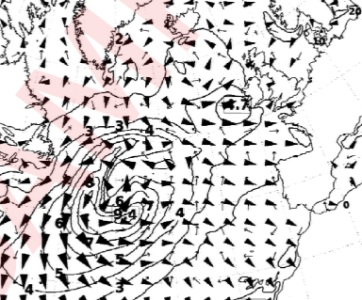
They also send a nice and unusual "Cross seas" chart, with forecast wind direction and swell, arrows/triangles of varying sizes
View attachment 173966
Thanks, Roberto. I usually recommend Hamburg as the GMDSS service but, I know that many people like Northwood as they broadcast U.K. Met charts or versions of them. The problem with Northwood is that they cannot be guaranteed for operational reasons.
Good to hear from you. Are you ashore now?
 
https://www.google.com/url?sa=t&sou...sQFnoECBIQAQ&usg=AOvVaw0xfy6lFJhzjRj_0wfAcV-y


Northwood or someone is always on when I check. The Web page gives the daiy schedule as they cover more than just marine charts in the schedule The frequencies I hear them on is on of the three below depending on propagation.

2618.5. Khz. 4610. Khz 8040 Khz


I use Seatty software. SeaTTY
Thank you. I am not sure now why I lost sight of that page. Must be getting old. I have not used RFax for many years now but I did use Seattle. Good to see it is still used.
I must say that I find it incredible that RTTY/RFax still exist. We were using them in the early 60s. The USCG has issued several warnings about discontinuation. Wasn’t it Mark Twain who said that reports of his death were greatly exaggerated? The same is do here!
 
Thank you. I am not sure now why I lost sight of that page. Must be getting old. I have not used RFax for many years now but I did use Seattle. Good to see it is still used.
I must say that I find it incredible that RTTY/RFax still exist. We were using them in the early 60s. The USCG has issued several warnings about discontinuation. Wasn’t it Mark Twain who said that reports of his death were greatly exaggerated? The same is do here!
One advantage of these antique systems is that providing you have a basic lap top ornotepad plus a short wave receiver you can receive these faxes.

Many folk have poss8bly moved to grib files however although these can be received by devices you have to get a request to the source and then have a clear channel to receive them. In these days of social media just don't get so involved with social media that your channel becomes blocked when you urgently need a grib file. It is easy to clutter up an Iridium link. 😉 😉 😉
 
One advantage of these antique systems is that providing you have a basic lap top ornotepad plus a short wave receiver you can receive these faxes.

Many folk have poss8bly moved to grib files however although these can be received by devices you have to get a request to the source and then have a clear channel to receive them. In these days of social media just don't get so involved with social media that your channel becomes blocked when you urgently need a grib file. It is easy to clutter up an Iridium link. 😉 😉 😉
I have some hands-on experience of using a basic laptop plus HF/SSB radio. This was using Hamburg transmission in our early Mediterranean days.

I have a Californian based grandson with a Silicon Valley background who is opting for HF/SSB. Although not a blue water sailor myself, I have had enough contacts with highly competent radio HF and WiFi operators to have a fairly comprehensive overall view.

I see the merits of HF radio systems. The 2007 USCG business case for continuation of HF seemed primarily that the public wanted it. Some of the requirement statements were somewhat specious. Familiarity with HF/SSB was apparent. The Luddite tendency was strong. However, I have to wonder how long it will be before the public demand for HF falls to such a level that it becomes impossible for USCG to justify the cost in hardware terms and Human Resources. If the industry really got its act together, capital and running costs would reduce enough for the case for discontinuing HF to become unanswerable.

One practical point I would make is that you do not need vast amounts of bandwidth to get sufficient weather data. The SailMail/SailDocs system is free to all. It allows email requests for GRIB data without massive infrastructure overheads. Processing and viewing can be done on board.The MailASail chart responder provides synoptic charts in compressed format, about 25kB for an Atlantic chart. The WWMIWS provides High Seas text forecasts to be bookmarked for quick delivery by email. Knowing URLs of forecasts allows access to forecast texts, again using Saildocs.

It can only be a matter of time before the reliability of immediate online access to marine safety information and its cost become such that the case becomes unanswerable. The idea of having to depend on fixed time slots for GMDSS broadcasts becomes intolerable in the face of instant availability and flexibility.
 
Last edited:
Top