Daydream believer
Well-Known Member
Looks like the sort of ripple we get in the marinas, here on the east coastView attachment 144229This was too big


Looks like the sort of ripple we get in the marinas, here on the east coastView attachment 144229This was too big

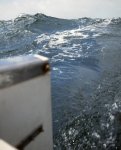
Not bad. It is terribly hard to show waves as they really appear, just as with skiing photos or video, it never looks as steep as it is. This was my best effort, off Beachy Head, but if you look closely the wave was probably only a couple of metres at most.This was too big

It's those ones that make me glad we have a centre cockpit?View attachment 144229This was too big
I would have thought a high up centre cockpit would give more motion to the crew & increase the likelyhood of sea sickness. The feeling of height must also be a bit insecure as the boat rolls as well. Presumably the crew go through a wider arcIt's those ones that make me glad we have a centre cockpit?
Not bad. It is terribly hard to show waves as they really appear, just as with skiing photos or video, it never looks as steep as it is. This was my best effort, off Beachy Head, but if you look closely the wave was probably only a couple of metres at most.
View attachment 144246
 . - except that maybe you should have stayed in bed.
True on some small high up centre cockpits. The sole of our cockpit floor is a foot lower than a Moody 44. Our cockpit is over the engine room unlike many aft cockpit boats that install aft cabins under the cockpit. Little to choose from in terms of cockpit height since modern boats have such high freeboard.I would have thought a high up centre cockpit would give more motion to the crew & increase the likelyhood of sea sickness. The feeling of height must also be a bit insecure as the boat rolls as well. Presumably the crew go through a wider arc

Too high is when they lift and crash down into the cockpit, that's when I retire into the saloon and keep an electronic lookout and hope that there is no other silly bugger out in it!I have always found it difficult to define wave heights when at sea.
Jonathan

Photos like that show one of the problems - you don't have a horizontal reference, so it's very difficult to work out the actual height of the wave. And the motion and visual clues all conspire to make you think it's taller than it is; for example, the stern of the boat is almost certainly pointed down, which automatically exaggerates the apparent height of the wave. But at that point it is likely that the stern of the boat is moving UP, so your body thinks that the stern which is actually pointing down is pointing up, exaggerating the apparent height of the wave even further.Not bad. It is terribly hard to show waves as they really appear, just as with skiing photos or video, it never looks as steep as it is. This was my best effort, off Beachy Head, but if you look closely the wave was probably only a couple of metres at most.
View attachment 144246