
Water sensor Yanmar SD20 sail drive

CeeDee

New Member
Joined
13 Jul 2017
Messages
4
Visit site
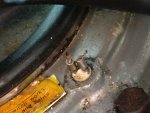
On my sail drive the water sensor for some reason has had the wires cut flush. I decided to try and remove it but have had no luck in budging it with a stilson, the outer white plastic has now been shredded and I have twisted the electrodes trying to get it out, the black plastic inner cover for the electrodes has been removed exposing the electrodes and the remains of the yellowish/white plastic body in the threaded top plate of the sail drive. Given it won't budge and has broken the top of the sensor body flush with the plate I can only think it has been epoxied in position. I measured the resistance across the electrodes and it does not seem consistent but is in excess of 20k Ohms and rises as I measure it on my multimeter, I assume it should really be open circuit. It would be easy enough to sleeve a connector on each electrode and hook it up to the wiring harness but the inconsistent meter reading indicates there could be contamination on the electrodes inside the void between the rubber diaphragm seals. I plan to order another sensor at the exhorbitant Yanmar price for what is just a pair of electrodes in plastic and a cable, although have considered making my own. Any thoughts on how best to remove the body in the plate and cleaning up the thread to insert a new sensor? I was planning on trying to pull out the electrodes from the body by drilling most of it out and just put up with the plastic bits falling into the void. I guess I will need to know the thread size to clean up the thread with a tap set but have no idea what thread is used on these sensors. Any thoughts or advice welcome. See attached picture of where I have got to.
 

Attachments

  • watersensor.jpg
    watersensor.jpg
    347.3 KB · Views: 27
That's a pain in the derriere. I can't imagine why anyone would epoxy it in as it's not necessary as there is a rubber washer. Mine are just screwed in finger tight so I can easily remove them

I would assume that it's broken as I would also expect open circuit with the seawater allowing a current flow. Either way, you need to get it out and make it removable again so buying a new one is inevitable.

The thread is about 1.5 cm deep. Below that there is a clear space of about another 2 cms before you reach the outer rubber skin. It will be easy to drill out as it's just plastic and the bits will just fall down onto the outer skin and can be easily sucked out with a vacuum cleaner with a bit of hosepipe.

The problem might be if you are in the water and the outer skin has ruptured. What you need to do, if you can't move it by grinding in a slot with a Dremel for a screwdriver, is drill a small hole, say 1 or 2mm into the plastic and ensure that the drill bit has tube over it or similar so it can only penetrate 1 cm and then go very slowly and gently after that until you are through the plastic. Then slowly pull out the drill. Have a small piece of Milliput or similar ready and if water starts to squirt out of the hole then push in the soft epoxy putty and it will harden. You will need to lift the boat to continue with the fitting of a new diaphragm.

If no water comes out, you now know exactly how deep the plastic is and can use larger bits until the whole lot is out. Hopefully, the threads will be clean but if they are not you will probably need a thread cleaning tool.

I would purchase the new sensor first and then you will know the exact depths, thread and bore so if you have to buy or borrow a cleaning tap, ideally not a tapered one, you will know exactly what size you need.

Richard
 
Last edited:
That's a pain in the derriere. I can't imagine why anyone would epoxy it in as it's not necessary as there is a rubber washer. Mine are just screwed in finger tight so I can easily remove them

I would assume that it's broken as I would also expect open circuit with the seawater allowing a current flow. Either way, you need to get it out and make it removable again so buying a new one is inevitable.

The thread is about 1.5 cm deep. Below that there is a clear space of about another 2 cms before you reach the outer rubber skin. It will be easy to drill out as it's just plastic and the bits will just fall down onto the outer skin and can be easily sucked out with a vacuum cleaner with a bit of hosepipe.

The problem might be if you are in the water and the outer skin has ruptured. What you need to do, if you can't move it by grinding in a slot with a Dremel for a screwdriver, is drill a small hole, say 1 or 2mm into the plastic and ensure that the drill bit has tube over it or similar so it can only penetrate 1 cm and then go very slowly and gently after that until you are through the plastic. Then slowly pull out the drill. Have a small piece of Milliput or similar ready and if water starts to squirt out of the hole then push in the soft epoxy putty and it will harden. You will need to lift the boat to continue with the fitting of a new diaphragm.

If no water comes out, you now know exactly how deep the plastic is and can use larger bits until the whole lot is out. Hopefully, the threads will be clean but if they are not you will probably need a thread cleaning tool.

I would purchase the new sensor first and then you will know the exact depths, thread and bore so if you have to buy or borrow a cleaning tap, ideally not a tapered one, you will know exactly what size you need.

Richard
Thank you for the feedback Richard, new diaphragms were fitted four years ago by the previous owner and so far as I know are in good condition. The boat is currently in the boat yard as everything has been locked down. I'll order a new sensor and see what what the dimensions are and hope I can clean out the thread.
 
Thank you for the feedback Richard, new diaphragms were fitted four years ago by the previous owner and so far as I know are in good condition. The boat is currently in the boat yard as everything has been locked down. I'll order a new sensor and see what what the dimensions are and hope I can clean out the thread.
I can't understand why the sensor issue wasn't sorted out when the new diaphragm was fitted. It would have been a 5 minute job at that time. Something doesn't seem quite right there. :unsure:

Richard
 
I can't understand why the sensor issue wasn't sorted out when the new diaphragm was fitted. It would have been a 5 minute job at that time. Something doesn't seem quite right there. :unsure:

Richard
Neither do I, seems stupid to cut the sensor wires. The wires it plugs into have just been folded and taped to the wiring harness. Replacing the diaphragms was raised by the surveyor and the owners agreed to have it done, cost circa £1k at the time. Only recently have I had the bandwidth to look at this, there are always so many other issues to deal with on the boat (1979 Colvic UFO 31). Whilst many people seem to focus on cosmetics I seem to spend all my time maintaining it!
 
In E Anglia, it's FrenchMarine...
Othewise there is an outfit mear Maidenhead

Look in the Yanmar website for UK dealers..

I am going to put a tapered blob of silicone over the wires to give them some protection from being bent over and braking .. which is why I need to replace mine..

I do, however regularly put a bit of pipe cleaner down the hole every now and then to check it is dry in the middle..
 
Thank you for the feedback Richard, new diaphragms were fitted four years ago by the previous owner and so far as I know are in good condition. The boat is currently in the boat yard as everything has been locked down. I'll order a new sensor and see what what the dimensions are and hope I can clean out the thread.
Hi I was wondering if you were able to sort this out and how. Also, was your boat in the water during the fix? I have the same issue - sensor is stuck and due to the tight working space I can't seem to get enough leverage to get it out. The white plastic part on the outside has started to crack. If I put any more pressure on it I will end up with exactly the situation you have in the photo. LMK please how it went for you! Thanks
 
The sensor is probably only there due to the scaremongering raised when Volvo had sail drives and yanmar and others didn’t
they then had to protect themselves when they introduced their own versions allegedly!
 
Top