Wansworth
Well-Known Member
Well you kept that under your hat…..at the cutting edge of science you should of least be able to afford a macwester26I used to work in a paper mill!
Though not actually making paper, you understand.
The Mill was at Wookey Hole, near Wells in Somerset. There had been a number of paper mills in the wider area, and the one at the village at Wookey Hole (now famous for its caves) since at least 1610, harnessing the power of a stream flowing off the Mendip Hills behind it.
Over the years there had sometimes been problems from other mills downstream causing pollution yet further downstream because of the particular materials (rags and straw?) they were using for the type of paper they were making, and then Wookey Hole Mill began being adversely affected by pollution of its incoming stream being used for minerals washing upstream on the Mendips, precluding the higher quality papers it had been making. Legal action over that was eventually settled in the Wookey Hole Mill's favour. So it wasnt all rustic sweetness and light.
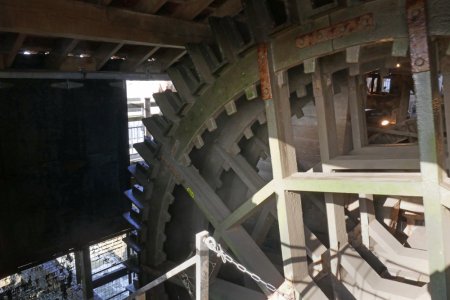
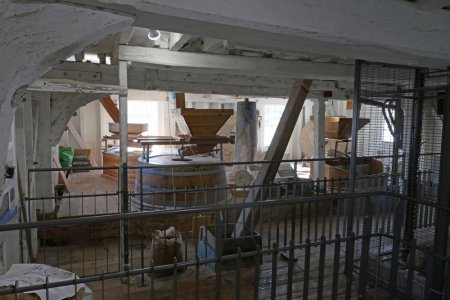
In the 19th century the Wookey Hole Mill business was thriving and a grand large building was erected by new owners at the front of the earlier higgledy-piggledy collection of buildings and sluices, with a huge undershot (IIRC) water-wheel on the side of it (earlier wheels may have been overshot). In the 20th century the business declined, eventually paper-making ceased and in the 1970s the Mill's land and building was sold to Madame Tussauds, who I think already owned the caves and tourist facilities next door.
Their intention was to incorporate the paper mill site into their tourist business, but the size and complexity of the jumble of buildings in various states of disrepair was a challenge. A survey of the existing buildings was undertaken, but among other things it was not able to definitively establish the paths of various subsidiary watercourses than ran under the buildings.
View attachment 206004
Thus it was that by the early 1980s the upper floors of the big frontage building housed Madame Tussaud's collection of traditional fairground machinery and artistry, but the ground floor was rented out to a company making absolutely state-of-the-art electronic wizardry, and it was there that I worked.
We were the prototypes and special models division of company building advanced data recorders that had been taken over by EMI. Strange to think now these data recorders were the size of wardrobes, and based around multi-track 2" tape recorders (the sort of thing you'd see in old film of computer centres). The company's regular models were built somewhere up near London, and our specialist division had previously been based in part of an EMI factory just down the road in Wells.
The specialist models we were building for the military (used in AWACS etc. (do I recall submarine communications?)), universities and NASA (the American space project, not the cheapie marine gadgetry company), would speed and slow the tape according to the amount of date coming in (down to half cassette speed 15/16ths inch per second, and up to IIRC 120 inches per second), and remember and reproduce the various speeds for 'replay'. (There might be no, or negligible, incoming data for hours or days, then sudden rapid bursts of information.) The speeds and speed changes involved were extremely challenging in terms of tape handling (not just to avoiding breaking/stretching the tape, but the tape being lifted off the record/playback heads by air cushions/waves etc.), and the electronics not at all less tricky. The maximum data speeds involved would now be considered quaint, but at the time were considered phenomenal.
I was a contractor, and my job was quality control of the wiring of these. One of my biggest challenges was keeping track of the dozens, sometimes hundreds, of the revisions, and subsequent alterations and reversals of revisions, in the course of building each of these machines as the design and construction sought to achieve the previously impossible, and iron out all the adverse side effects one small change would often have on the functioning of some other related element. Our specialist customers were always looking to go one step further, our sales people were only too pleased to say we would do it (to be fair, that's how the company survived and flourished), and our engineers and others like myself, would then have the challenge of turning the ambitious concept into reality, and against the clock! We were working at the absolute frontier of what was technologically possible at the time, and doing things that had never been done before.
So it was all the more strange that we would be doing this in a rural area, in an historic building the other side of the wall from a huge waterwheel, and as I worked I could hear through the floor above my head (and can still remember to this day) the thump and chords of a fairground steam organ playing a famous march!