

Akestor
Well-Known Member
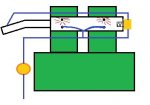
As I had some adventures lately with my Md2b, I was forced to understand fully how the cooling system works. Fortunately, all is solved and the antique is doing good. My adventure started with the fatal mistake of adding a bit of silicone at the water pump cover after I replaced lip seals. The result was that tiny pieces of silicone that had squeezed in the pump, went to the thermostat housing and clogged the 3mm hole of the bypass output, so no water could flow anymore. I reinstalled with a new paper gasket adding grease that made a perfect seal. I wondered why they would have made the bypass hole so tiny, but after finding out the functions, it made sense. I made a diagram of the MD2B, I wonder why painting on windows 10 is better than the painting program I had as a kid on the Atari 800, 1978 model?.
1. Suppose the engine is new, and there is no water at all inside.
2. The water coming from the pump, flows to the tee connection on the manifold, and then to the bottom side of the thermostat housing.
3. As the engine is cold, the only way the water can flow is towards the thermostat housing and out (it can't go up through the tee fitting as the air inside can't escape to let water in- thermostat needs to open for this.)
4. The engine heats up fast due to lack of water in the block and the thermostat opens.
5. With the thermostat open or partially open, the water can now flow from the tee fitting to the bottom holes of the manifold which leads the water inside the block. As more water is pushed in, it's exiting the block from the upper holes inside the manifold and then through the thermostat opening, inside the housing and out from the upper fitting of the housing.
So why when the thermostat opens, the water is flowing to the tee fitting and not the bypass out? Simply because the tee fitting is an 8mm hole and the bypass a 3mm having a lot more resistance to water but also because the moving part of the thermostat begins to block partially the 3mm hole, the more it opens the more is blocking the bypass forcing the water to travel thought the tee fitting! The result is a wide exit for the hot water through the upper fitting of the housing.
6. As the block and manifold are now filled with cold water, the thermostat closes, the water can only go out via the bypass 3mm hole on the housing and so it does.
7. When the water inside the block and manifold heats up, the thermostat opens again and the hot water naturally flows upwards to the upper holes as the cold water is inserted from the bottom holes
A very quick and easy method to check the cooling system for clogging is the following and it checks all the waterways from the tee fitting to where the water mixes with the dry exhaust.
1. Unscrew the clamp where the water hose joins the mixing elbow.
2. Unscrew the temperature sensor which is on the top of the manifold.
3. Blow in the hose like you would do with a ballon. You should be able to feel and hear the air bubbling with the water and coming out from the temperature sensor hole. We are blowing through the 3mm bypass hole at the housing, towards the tee fitting, then to the bottom holes of the manifold and inside the block, upper holes and inside the manifold, exiting at the temperature sensor hole.
4. If you cant blow it means that something has clogged and the first thing you should check before suffer uninstalling the manifold, is to check that 3mm bypass hole in the thermostat housing!
5. If the 3mm hole is ok, unfortunately the manifold should be out and all waterways including the tee fitting check and unclogged.
Well, that was all!
Thanks for reading.
1. Suppose the engine is new, and there is no water at all inside.
2. The water coming from the pump, flows to the tee connection on the manifold, and then to the bottom side of the thermostat housing.
3. As the engine is cold, the only way the water can flow is towards the thermostat housing and out (it can't go up through the tee fitting as the air inside can't escape to let water in- thermostat needs to open for this.)
4. The engine heats up fast due to lack of water in the block and the thermostat opens.
5. With the thermostat open or partially open, the water can now flow from the tee fitting to the bottom holes of the manifold which leads the water inside the block. As more water is pushed in, it's exiting the block from the upper holes inside the manifold and then through the thermostat opening, inside the housing and out from the upper fitting of the housing.
So why when the thermostat opens, the water is flowing to the tee fitting and not the bypass out? Simply because the tee fitting is an 8mm hole and the bypass a 3mm having a lot more resistance to water but also because the moving part of the thermostat begins to block partially the 3mm hole, the more it opens the more is blocking the bypass forcing the water to travel thought the tee fitting! The result is a wide exit for the hot water through the upper fitting of the housing.
6. As the block and manifold are now filled with cold water, the thermostat closes, the water can only go out via the bypass 3mm hole on the housing and so it does.
7. When the water inside the block and manifold heats up, the thermostat opens again and the hot water naturally flows upwards to the upper holes as the cold water is inserted from the bottom holes
A very quick and easy method to check the cooling system for clogging is the following and it checks all the waterways from the tee fitting to where the water mixes with the dry exhaust.
1. Unscrew the clamp where the water hose joins the mixing elbow.
2. Unscrew the temperature sensor which is on the top of the manifold.
3. Blow in the hose like you would do with a ballon. You should be able to feel and hear the air bubbling with the water and coming out from the temperature sensor hole. We are blowing through the 3mm bypass hole at the housing, towards the tee fitting, then to the bottom holes of the manifold and inside the block, upper holes and inside the manifold, exiting at the temperature sensor hole.
4. If you cant blow it means that something has clogged and the first thing you should check before suffer uninstalling the manifold, is to check that 3mm bypass hole in the thermostat housing!
5. If the 3mm hole is ok, unfortunately the manifold should be out and all waterways including the tee fitting check and unclogged.
Well, that was all!
Thanks for reading.
Last edited:

