Volvo MD2020 alternator failure?

Thank you for all the helpful replies so far. I went down to the boat today, and did the following:

1) Checked all the wires around the control panel, particularly to alternator warning light - no obvious fault
2) Disconnected Sterling regulator to eliminate that by disconnecting the white lead
3)Measured volts at engine battery - 13.40 - it is fairly new
4) Measured domestic batteries - 13.6 (they have solar charging)
5) measured volts at alternator and exciter - zero as you would expect
6) Turned on the "ignition" - exciter goes to 3.8v
7) Started engine. No alarm for about 10 secs. Then alarm starts so increased rpm to around 1500 which silenced alarm.
8) Measured volts at alternator - initially about 13.35 - then gradually climbed to 13.40 again - ie the same volts as the engine battery as it recovered after starting load.
9) After about a minute, alternator alarm sounded again. Increased to 1800rpm and this silenced alarm
10) Measured volts at engine battery and alternator - still the same at 13.40.

So any suggestions with this new evidence?
 
at 13.4 would the battery need charging from the alternator? May be the solar charge system is topping up both some how?
 
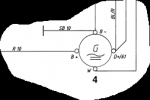
Not sure what you mean by measuring the volts "at the exciter" . Where are you making this measurement?

Is the warning light coming on or flashing when the alarm sounds ?

BTW I agree with david. If the start battery is showing 13.4 volts after standing for several days something must be charging it
 
By exciter I meant the third terminal on the alternator - I though this was called the exciter coil.

Yes I do have solar, and my batteries are new.

However, the alternator would normally be about 13.9v and would be positively charging after first start even if the engine and domestic batteries are fully charged.

When the alternator light comes on it is steady, not flashing.
 
Thank you for all the helpful replies so far. I went down to the boat today, and did the following:

1) Checked all the wires around the control panel, particularly to alternator warning light - no obvious fault
2) Disconnected Sterling regulator to eliminate that by disconnecting the white lead
3)Measured volts at engine battery - 13.40 - it is fairly new
4) Measured domestic batteries - 13.6 (they have solar charging)
5) measured volts at alternator and exciter - zero as you would expect
6) Turned on the "ignition" - exciter goes to 3.8v
7) Started engine. No alarm for about 10 secs. Then alarm starts so increased rpm to around 1500 which silenced alarm.
8) Measured volts at alternator - initially about 13.35 - then gradually climbed to 13.40 again - ie the same volts as the engine battery as it recovered after starting load.
9) After about a minute, alternator alarm sounded again. Increased to 1800rpm and this silenced alarm
10) Measured volts at engine battery and alternator - still the same at 13.40.

So any suggestions with this new evidence?

Take the alternator off and get it checked at your nearest auto electrical repair centre.
 
By exciter I meant the third terminal on the alternator - I though this was called the exciter coil.

Yes I do have solar, and my batteries are new.

However, the alternator would normally be about 13.9v and would be positively charging after first start even if the engine and domestic batteries are fully charged.

When the alternator light comes on it is steady, not flashing.

Still not sure which terminal you regard as the "third terminal"
1601637715464.png

Your earlier post implies that only the domestic bank is charged from the solar system but the reading of 13.4 on the starter battery suggests that it is also being charged

As already said 13.9 is low ......... I assume that's the reading at one of the batteries ( taken from the Nasa monitor perhaps) . I,d expect nearer 14.4 if measured at the alternator output. The low reading at the batteries suggests that you do in fact have a diode splitter and that the battery sensing connection of the Sterling regulator is incorrectly connected to the common input to the diode splitter instead of to the house battery positive.

Some (later) VP panels have warning light which flash I believe . I was only really trying to confirm that the warning light is coming on, not just the alarm sounding.

All the above has little bearing on the real problem though
 
I have disconnected the Sterling to eliminate that (and it is wired correctly - has worked well for years).

The voltage I am reading is the battery voltage. As you say, this is correct for well maintainied batteries, but lower than the 14.3 that I normally saw on the battery monitor. So I am fairly sure that my alternator is dead. So I am going to take it off and test it on the bench.
 
I have disconnected the Sterling to eliminate that (and it is wired correctly - has worked well for years).

The voltage I am reading is the battery voltage. As you say, this is correct for well maintainied batteries, but lower than the 14.3 that I normally saw on the battery monitor. So I am fairly sure that my alternator is dead. So I am going to take it off and test it on the bench.
In your opening post you referred to 13.8 volts as normal . :confused:

If you can do that it may be the most sensible way forward. If not take it to an auto electrician who can test it fully and repair as necesary
 
Take the alternator off and get it checked at your nearest auto electrical repair centre.

In your opening post you referred to 13.8 volts as normal . :confused:

If you can do that it may be the most sensible way forward. If not take it to an auto electrician who can test it fully and repair as necesary

Seems to be a funny echo in here.
 
Top