Volvo MD11c Not run in a few years, How to see if it runs

In general I think the idea of electric propulsion has yet to gain much traction because of the limited capacity of currently available batteries. I looked at the Uma site and would note that they have been cruising the ICW, hardly the most demanding environment. They also state that they wait for favourable winds before moving, which is fine with their lifestyle but may not suit the average leisure sailor.
Translate the project to the UK or a transatlantic crossing. Firstly, solar panels simply won't generate their stated output in the prevailing weather in the UK, so charging time to top up the battery becomes longer. Then dealing with tidal currents will sap the available power, as you need to increase thrust to overcome the tide: yes, you can in theory plan your sailing to make best use of tidal flows but you need to be able to cope with the unexpected and running out of battery power before you can reach a safe haven is something you need to bear in mind.
I think that the boat on the Uma site is a great concept but it lacks any redundancy in the system. Loose your ability to generate power and you're in deep,trouble. Not too serious a problem on the ICW but a real problem approaching a Caribbean island where you need power to negotiate the reefs before you can drop anchor because the wind changed from that forecast.
If the op is determined to go down the electric propulsion route, then if it were me, I'd be looking to fit or carry a generator so that at the very least I could produce some power if the solar/wind got put out of action for some reason.

I have also been reading here

www.bwsailing.com/bw/gear/silent-running/

The generator idea does appear to be the way to go and is even used on the Jeanneau 64 in the above article
 
I have also been reading here

www.bwsailing.com/bw/gear/silent-running/

The generator idea does appear to be the way to go and is even used on the Jeanneau 64 in the above article

Electric is great if your need is for frequent and relatively short (~1 hour) spells of "motoring" with a chance to recharge from shore power in between (leaving and entering harbour, say). It's not good if you want to do extended periods under power, though hybrids could well work for this. Many people nowadays use their engines as much as a source of electrical power as for propulsion, and in those cases it makes a good deal of sense to split the two functions.
 
I have also been reading here

www.bwsailing.com/bw/gear/silent-running/

The generator idea does appear to be the way to go and is even used on the Jeanneau 64 in the above article

Why run an IC engine to charge batteries and then use an electric motor to drive the boat, when you can attach the IC engine direct to the propeller? The efficiency losses are huge. What he has done is create his own lashup hybrid using a cheap low power petrol generator. Worst of all worlds.

If you really look at how electricity is used on big boats like the Jeanneau you quoted, it is almost never for propulsion, but to power systems and relies on a big generator and massive battery banks. It is nothing new, boats that have the space to fit a generator have had complex electrical systems for years. The only thing that sets the Jeanneau apart is that it is a production boat rather than a semi custom. The technology they use is nothing new.

Suggest you read the article in PBO November 2014 by Nigel Calder who has been running a series of projects on advanced electrical systems for pleasure boats. Inevitably his type of pleasure boat is rather different from yours and mine as he uses a Malo 46. This particular article is a summary of his findings on hybrid diesel electric power. You will see that except in certain very narrowly defined applications it is woefully inefficient.

No serious manufacturer of engines, electric motors or batteries is putting any research effort into alternative power for pleasure boats. Indeed rather the opposite, most are developing better diesel engines in all HP categories.

Anyway, back to your project. If you really are serious about crossing the Atlantic under sail in your Longbow and don't want a diesel engine then take it out completely, including the shaft and prop. Block up the stern tube. This will improve your speed under sail and give you huge storage space under the cockpit where you can store a decent inflatable and a 5hp outboard. You will need this when you get to the other side. Then mount a swingdown OB bracket on the stern and a removable davit so that you can lower your outboard onto it. This will give you far more usable power than your electric motor for harbour work.

Fit a self steering gear and reduce your electricity requirement so that you can exist within what you can generate with solar and wind. You will then be close to the early pioneer long distance sailors but with the advantage of GPS so you know where you are and an EPIRB so you can be found if it goes wrong for you.

As duncan says what you will not have is any reliable means of getting yourself out of trouble if you can't sail.
 
Tranona clearly you are not gonna be tje latest convert to electric propulsion.

Im not really sure why I would bother carrying an outboard and dinghy for towing purposes.when a Electric System could be installed with a honda 2kw Genetator for the same price.

The simple awnser is that as yet I have not had chance to try the suggested methods regards the volvo but if is kaput or has a limited life span Im not sure I really want to stick another noisy dirty engine in.

As far as manufacturers developing the technology I can assure you they are because that is the way the world is going.
Tesla has just produced an electric car that charges fast and travels over 200miles on one tank. Other manufacturers are following suit with their own car development and eventually production Leisure boats will follow the same line because wether you like it or not the combustion engine is dying and the technology for alternative power sources will be developed.

"Many years ago" putting a man in space with a computer operated system was the limit of our technology now you send emails and type on forums with a mobile phone with more processing power than the moon landings computer
 
But if Jeanneau are serious enough to develop production boats with alternative power then they are doing it because they are looking to develop those power systems accross the range its just a matter of time.
 
Erm...... if you can propel a heavy cruising yacht with 2kw of power, why has my heavy cruiser got a 31kw diesel engine in it ?

If you only plan to use the electric propulsion for berthing the outboard makes more sense. It isn't an additional expense, the electric gubbins is the additional expense, because you need the outboard for the tender anyway.

Sorry, it makes no sense to me.

Wise old man say "You can't make a silk purse out of a pigs ear"

By all means buy the Longbow at a giveaway price but think of ways to make it a nice version of an old Westerly without making it an expensive white elephant. Fix what's in it or look around for a bargain replacement while you update and improve the rest of the boat.
 
The situation with a boat is completely different to a car. Charge up stations are few and far between in mid Atlantic for a start. To run a 2kw generator you'd need to carry plenty of petrol with all the concerns over storage. The Tesla car range you quote is pathetic, can do over 600 miles on a full tank of diesel. Personally, think electric power for boat propulsion is a long way off and Nigel Calder's article bears this view out.
Getting back to your original question, I'd top up fuel and oil and basic engine checks such as belts, and fire it up. If it runs without masses of smoke or strange noises, you could consider a full service or partial overhaul and happily run for however it lasts. The early VP engines are pretty robust (I had an MD1 recently which ran fine if noisily until I had fuel contamination problems).
 
But if Jeanneau are serious enough to develop production boats with alternative power then they are doing it because they are looking to develop those power systems accross the range its just a matter of time.

It is not alternative power. It has a whopping great generator to power the electrical systems. The boat is still propelled by a diesel engine. common in big boats like that.
 
To be honest My primary plan is to work on the volvo the suggestion about Electric Propulsion was just an alternative if the volvo is kaput.....just not sure I will want to install another dirty deisel.

Yes I know cars are different and was simply making the point that this technology is being developed by mainstream manufacturers of both pleasure boats and car makers including volvo because the combustion engine is a dirty word and the whole world wants to move to cleaner greener renewable energy sources and eventually that technology will be as cheap and available as the mobile phone whos processing chip we couuldnt of imagined 50 years ago.
 
Forgot to say The 2kw Genetator if I go that route would not be power the motor but rather charge the Batteries as others have and are doing.
 
Tranona clearly you are not gonna be tje latest convert to electric propulsion.

Im not really sure why I would bother carrying an outboard and dinghy for towing purposes.when a Electric System could be installed with a honda 2kw Genetator for the same price.

The simple awnser is that as yet I have not had chance to try the suggested methods regards the volvo but if is kaput or has a limited life span Im not sure I really want to stick another noisy dirty engine in.

As far as manufacturers developing the technology I can assure you they are because that is the way the world is going.
Tesla has just produced an electric car that charges fast and travels over 200miles on one tank. Other manufacturers are following suit with their own car development and eventually production Leisure boats will follow the same line because wether you like it or not the combustion engine is dying and the technology for alternative power sources will be developed.

"Many years ago" putting a man in space with a computer operated system was the limit of our technology now you send emails and type on forums with a mobile phone with more processing power than the moon landings computer

Not suggesting you use the dinghy to tow the boat, but use the outboard on the transom just like many small yachts do. Your outboard is then dual purpose. Auxiliary power for your yacht and power for your dinghy.

You seem to know very little about the history of alternative propulsion for boats. I have heard all the promises of new technology coming soon for the last 40 years. It has yet to come, neither will it for three reasons. First the duty cycles of pleasure boats are very different from road transport, second the market is tiny and finally there is no government subsidy available.

The petrol and diesel engines used in pleasure boats are a by product of designs for other purposes. There is nothing (except possibly batteries) being developed for road transport that has any potential application in a boat. Electric power was first used in boats in the 19th century in small low speed river craft and still 120 years later that is the only successful application.

Have a look on the Electric Boat Association website. Only one mention of a sailing boat fitted with electric power and that is a Broads boat that has minimal power requirement and is never far from a charging point.
 
Forgot to say The 2kw Genetator if I go that route would not be power the motor but rather charge the Batteries as others have and are doing.

I got that. But you have to run the little petrol engine for so long to charge batteries up that will run down so fast it just doesn't add up to anything viable.

Your plan is to buy a 40 year old Westerly with a suspect engine for a giveaway price. Nothing wrong with that, but it is what it is and trying to make it into something else just creates an expensive white elephant. If you spend, say, a year updating/upgrading/tidying the boat up in general, during which time you find a bargain engine (assuming the one in the boat is dead) you'll have a nice, cheap old Westerly. Job's a good 'un.
 
No serious manufacturer of engines, electric motors or batteries is putting any research effort into alternative power for pleasure boats. Indeed rather the opposite, most are developing better diesel engines in all HP categories.

That simply isn't true. The Victoria 800 project, for example, has received a huge amount of support from a major manufacturer, to whom all its systems are, at their expense, connected for continuous monitoring and evaluation. Diesel engine manufacturers may not be at the forefront, but then Nokia (who) weren't at the forefront when the smartphone arrived and Polaroid (who?) concentrated on better chemical processes rather than digital technology.

I think it's very important to move with the times and not get stuck in the past. The days when yachts would lug entirely diesel propulsion systems around, including across oceans, in order to manoeuvre in harbour and run domestic systems at sea may don't have long to go. Just as the heavy GRP yacht has given way to the carefully engineered solution, so the crudity of a diesel lump and propeller will give way in turn to a much better overall solution to yacht power requirements.

There is nothing wrong in clinging to the past, of course, but it won't hold back the tide.
 
I have heard all the promises of new technology coming soon for the last 40 years. It has yet to come, neither will it for three reasons.

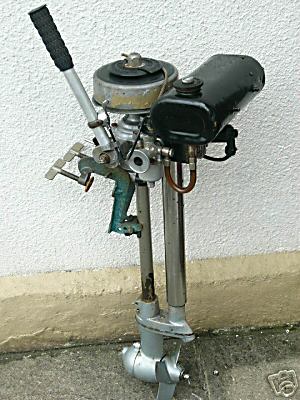
What an outboard motor used to look like:

FP_397_G2.jpg


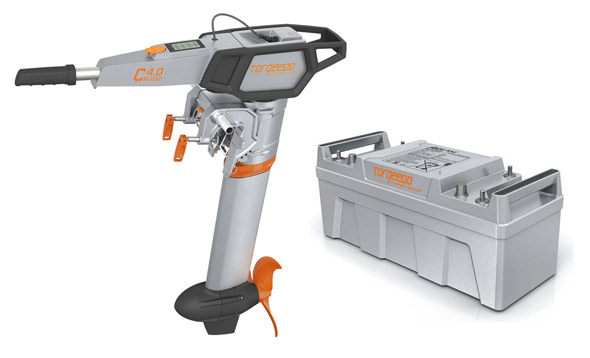
What an outboard looks like:

20430-Torqeedo.jpg
 
The outboard idea makes more sense now ;)

While I am optimistic about the potential for electric and hybrid drives ("you can't stop progress", as they say in Porpoise Spit), you really aren't going to move a 31' Westerley far or fast on £1500. If that's the budget then yes, definitely outboard.
 
The Portavadie ferry used to be a plug in hybrid. It ran out of electrons just after lunch and then they ran 3 gensets to provide the power. Apparently the gensets were running just about flat out so they broke down quite often. The old ferry was kept on standby for when it was needed. The hybrid has now gone and the old ferry is back on the route.

It's a nice idea but needs work.
 
The Portavadie ferry used to be a plug in hybrid. It ran out of electrons just after lunch and then they ran 3 gensets to provide the power. Apparently the gensets were running just about flat out so they broke down quite often. The old ferry was kept on standby for when it was needed. The hybrid has now gone and the old ferry is back on the route.

It's a nice idea but needs work.

That was the Lochinvar, which is now on Mallaig - Armadale while the first hybrid, Hallaig, is still doing Sconser - Raasay. The third, Catriona, is being fitted out at Ferguson's and is due to enter services later this year.

Short ferry crossings are ideal for hybrids, because you can have a small, efficient diesel running all the time, charging the batteries during layover and augmenting them during the crossings. I think we'll see a lot more of them.
 
That simply isn't true. The Victoria 800 project, for example, has received a huge amount of support from a major manufacturer, to whom all its systems are, at their expense, connected for continuous monitoring and evaluation.

how much did it cost? and how many other boats have followed suit/

There have been many attempts at trying to show that either electrical power or hybrids work as auxiliary yachts. All have disappeared without trace. None can deal with the fundamental drawbacks which have been discussed here ad nauseam.

Your one example of an experiment is not an indicator of future trends any more than the example I quoted earlier which also got support from manufacturers, only to demonstrate the real life limitations.
 
Top