Volvo 2003 questions. Anode location and electrical continuity between saildrive

Focused1

Active Member
Joined
27 Jan 2016
Messages
60
Visit site
Volvo 2003, non turbo, raw water cooled. I believe it is the original engine fitted in a boat launched in 1985.
First question.
Does anyone have a photo of the engine anode location?
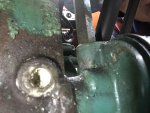
I have checked the whole side of the block (oil filter side) and cant find anything. There is a plug just behind the oil filter but it is a blank plug. No anode or thread for an anode. This plugs thread is about 12mm diameter. Should the anode be fitted to this plug?
Second question.
I was led to believe the saildrive should be isolated from the engine, mine is not. Removed the water intake pipe and still have continuity. Were some of these engines not isolated from the saildrive?
Thanks very much in advance
 
The anode is where you are looking, sounds like all the zinc is long gone. It is like a steel stud with the zinc on it. The later 2010/20 etc. series engines are isolated at the gasket of the rear engine casing with the gearbox drive splines inserted into a big rubber disc, but I do not recall any of the 2000 series having this provision, not so many of them were sold with sail drives.
 
Last edited:
The 2000 series had I believe 2 places where the anode was located one is on the opposite of the lock from the fuel pumps but the heater outlet may use this tapping the other is on the front of the cyl head as quandary suggests.
The continuity problem was not an issue or not perceived as one on the early 2000 engines predominantly fitted with alloy propellers
 
The anode is where you are looking, sounds like all the zinc is long gone. It is like a steel stud with the zinc on it. The later 2010/20 etc. series engines are isolated at the gasket of the rear engine casing with the gearbox drive splines inserted into a big rubber disc, but I do not recall any of the 2000 series having this provision, not so many of them were sold with sail drives.
Plenty of them used saildrives
 
Thanks very much quandary. Everything i needed to know in one reply. Much appreciated. Thanks for your time

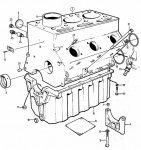
If an anode is fitted, it's screwed on to a steel plug which screws into the block roughly where you're looking (parts 24 & 25 in diagram). Alternatively, a plain steel plug can be fitted (part 23), which sounds like what you have.

Earlier saildrives weren't isolated. You could achieve isolation theoretically by adding an earthing relay, insulated return alternator, bushes on control connections, etc, but it probably isn't worth the hassle, assuming there haven't been big electrolytic problems in the last 20+ years.

2003.jpg
 
Last edited:
The continuity problem was not an issue or not perceived as one on the early 2000 engines predominantly fitted with alloy propellers

The type of propeller is irrelevant as it is isolated from the drive by a rubber bush. Some folding and most feathering propellers do however have anodes because they are constructed of mixed metals, usually some form of bronze and stainless steel.
 
Volvo 2003, non turbo, raw water cooled. I believe it is the original engine fitted in a boat launched in 1985.
First question.
Does anyone have a photo of the engine anode location?
I have checked the whole side of the block (oil filter side) and cant find anything. There is a plug just behind the oil filter but it is a blank plug. No anode or thread for an anode. This plugs thread is about 12mm diameter. Should the anode be fitted to this plug?
Second question.
I was led to believe the saildrive should be isolated from the engine, mine is not. Removed the water intake pipe and still have continuity. Were some of these engines not isolated from the saildrive?
Thanks very much in advance

The anode is where you are looking, sounds like all the zinc is long gone. It is like a steel stud with the zinc on it. The later 2010/20 etc. series engines are isolated at the gasket of the rear engine casing with the gearbox drive splines inserted into a big rubber disc, but I do not recall any of the 2000 series having this provision, not so many of them were sold with sail drives.

ITYWF that isolation of the transmission from the engine was introduced with the "B" series 2010/20 etc engines

A 2003 fitted with a sail drive might/ will ????? have a two pole electrical system, ie one which has an isolated negative return for the sensors and alternator, but uses an earthing solenoid to earth the block to battery negative during starting for the benefit of a non isolated starter motor.
 
Last edited:
My engine does not seem to use an earthing solenoid because there is electrical continuity between the earth post on the start battery and the engine block with and without a key turned in the ignition.
Should i be replacing the blanking plug for a plug with anode? With the engine being raw water cooled it seems strange that the engine was fitted with a blanking plug rather than a plug with anode. Or does the fact the engine and saildrive are not isolated mean the saildrive anode is offering enough protection to both the engine and saildrive?
Thanks
 
The saildrive anode wont do anything for the internal engine bits as they are not in the same body of seawater, nether can they "see" eachother.
 
My engine does not seem to use an earthing solenoid because there is electrical continuity between the earth post on the start battery and the engine block with and without a key turned in the ignition.
Should i be replacing the blanking plug for a plug with anode? With the engine being raw water cooled it seems strange that the engine was fitted with a blanking plug rather than a plug with anode. Or does the fact the engine and saildrive are not isolated mean the saildrive anode is offering enough protection to both the engine and saildrive?

Yes, you could easily add an anode if you're worried by its absence; just swap the plug for one with an anode on. Maybe you could say how long you've had the boat. If it's new to you, was there any evidence of electrolytic corrosion before you bought it?
 
Sorry pvb i think i posted my last post as you posted yours. I have had the boat since last spring. I have not seen any real evidence of electrolysis. The engine was supposedly serviced before I bought the boat. So this is my first turn at servicing this engine and getting to know things. Previous boat a sadler 26 had a shaft drive bukh dv10.
 
My engine does not seem to use an earthing solenoid because there is electrical continuity between the earth post on the start battery and the engine block with and without a key turned in the ignition.
Should i be replacing the blanking plug for a plug with anode? With the engine being raw water cooled it seems strange that the engine was fitted with a blanking plug rather than a plug with anode. Or does the fact the engine and saildrive are not isolated mean the saildrive anode is offering enough protection to both the engine and saildrive?
Thanks

Fair enough re the engine earthing. Worth checking out though. The earthing solenoids are quite large and mounted near the starter motor. Pretty obvious if you have one!

The sail drive anode protects the sail drive leg. It will not offer any protection at all to the insides of the engine cooling system ... that is the purpose of engine anode. I would try to identify the correct location for the anode and fit one. I beleive it fits onto a brass holder See Key parts website https://www.keypart.com/volvo-penta/diesel-engine/2003/19831990
 
Last edited:
Fair enough re the engine earthing. Worth checking out though. The earthing solenoids are quite large and mounted near the starter motor. Pretty obvious if you have one!

The sail drive anode protects the sail drive leg. It will not offer any protection at all to the insides of the engine cooling system ... that is the purpose of engine anode. I would try to identify the correct location for the anode and fit one. I beleive it fits onto a brass holder See Key parts website https://www.keypart.com/volvo-penta/diesel-engine/2003/19831990
This showed the later type holder with the male stud the earlier plug had female thread which often left you with the threaded part (steel ? ) in the plug which then appeared as if is were just a plug
 
If an anode is fitted, it's screwed on to a steel plug which screws into the block roughly where you're looking (parts 24 & 25 in diagram). Alternatively, a plain steel plug can be fitted (part 23), which sounds like what you have.

Earlier saildrives weren't isolated. You could achieve isolation theoretically by adding an earthing relay, insulated return alternator, bushes on control connections, etc, but it probably isn't worth the hassle, assuming there haven't been big electrolytic problems in the last 20+ years.

View attachment 69536

The electrics on the 2000 series are a bastard eg the parentage is very complex and varied
It started with an earth return system then a semi isolated system that turned earth return with solenoids and then went to fully isolated return with replacement parts being phased in over time it can turn out to be a case of working out which option you actually have
Spec number of the engine can help where to start from and the starter varies between the heavy one from MD 1/II to the later lighter unit with or without earth strap
 
Sorry pvb i think i posted my last post as you posted yours. I have had the boat since last spring. I have not seen any real evidence of electrolysis. The engine was supposedly serviced before I bought the boat. So this is my first turn at servicing this engine and getting to know things. Previous boat a sadler 26 had a shaft drive bukh dv10.

OK, so you're new(ish) to this boat. It's easy to add an anode, so you could do this if you wanted. If there doesn't seem to be electrolytic corrosion, perhaps you shouldn't worry and just enjoy the boat. One thing I would suggest is that, if your boat is marina-based and on shorepower, fitting a galvanic isolator could be worthwhile.
 
Took the plug to work today to measure the thread. Seems this plug has a 1/4 npt thread and the replacement plug for fitting an anode has a 1/2 npt thread. Strange
 
Took the plug to work today to measure the thread. Seems this plug has a 1/4 npt thread and the replacement plug for fitting an anode has a 1/2 npt thread. Strange

Perhaps you have removed the wrong plug ! I dont think that a 1/4" NPT threaded hole will be large enough for the anode to fit through.

(Would expect the thread to be BSP)
 
Top