Viking Anchors available again

Neeves

Well-Known Member
Joined
20 Nov 2011
Messages
14,077
Location
Sydney, Australia.
Visit site
I understand from looking at the website that anchors are now in stock and have been selling since the last fortnight. For those who have patiently waited for new stock and those who want to put bread on Ukrainian breakfast tables - now is the chance to buy and actively support the war effort.

I further understand that there are no US tariffs on steel nor anchors made in Ukraine, but check before you buy,

Jonathan
 
Do you possibly know if in the new batches they improved (as I half recall to have read that they were going to) the borders chamfering, and in turn the adhesion of zinc coating?
In my understanding, that has always been the only disappointing feature of their anchors...
 
Do you possibly know if in the new batches they improved (as I half recall to have read that they were going to) the borders chamfering, and in turn the adhesion of zinc coating?
In my understanding, that has always been the only disappointing feature of their anchors...
The last I heard was some months ago.

The Ukrainian company had invested in a machine to chamfer, round, the cut edges and reduce the issue. They thus appear to have taken on board the valid criticisms but whether the new batch enjoys the benefit - I don't know. I would have thought that having invested in the kit it would be used.

If you are considering buying one of the models - ask before you commit - its a valid question

Jonathan
 
I checked - all edges are now rounded.

But double check if you want to order.

Do you possibly know if in the new batches they improved (as I half recall to have read that they were going to) the borders chamfering, and in turn the adhesion of zinc coating?
In my understanding, that has always been the only disappointing feature of their anchors...

So.... no disappointments :)

Jonathan
 
The other item of news.

There is another method of galvanising, other than Hot Dipped Galvanising, HDG. The other method is Thermal Diffusion Galvanising, TDG, which is a solid state method, operated at lower temperatures - which is more gentle, to Q&T steels. I've used it a number of times making HT rodes (using a process commonly called Armorgalv, there is a variant called Green Cote, and it is the specified method for the studs holding up wind towers and HT spring clips for securing rails to sleepers). The original method was called Sheradizing (look it up in Google) developed in the UK by a gentleman whose surname was Sharard.

The problem with Sheradizing is that it relies on the zinc powder being 'carried' in silica sand and the whole lot tumbled in a large rotating oven, like a ball mill. Armorgalv and GreenCote, ie TDG, both do away with the silica sand - the use of which sends shudders down my spine (think silicosis).

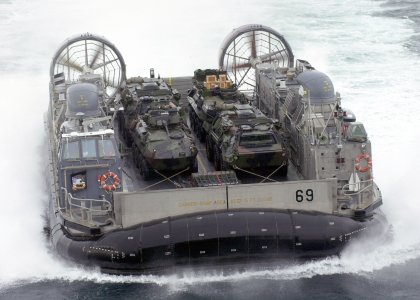
Most of the current research has been conducted in Israel (where Armorgalv was developed) and there are three operating plants there, of which I'm aware. There is a Sheradizing plant in the UK. A modern one, no silica, in Australia, that I use, at least 3 in China, a number, at least 5, in the US (where they process HT chains for the US Navy and Marines (for tie-down chains in landing craft and anchor chain for smaller vessels). TDG coating of tie-down chains allows the chains to be lighter and the galvanised coating lasts longer (than HDG) - the same reasons I use the process for HT chain.

I did think of establishing a business building HT rodes, centred round the Armorgalv process - and based on the idea that a rode should be engineered, with everything matching for fit and size - and offering the longer life (of the rode). But I cannot be bothered with the bureaucracy of 'business', having done it once already.

US_Navy_030113-N-2972R-114_A_Landing_Craft_Air_Cushion_(LCAC)_Vehicle_from_Assault_Craft_Unit_...JPG

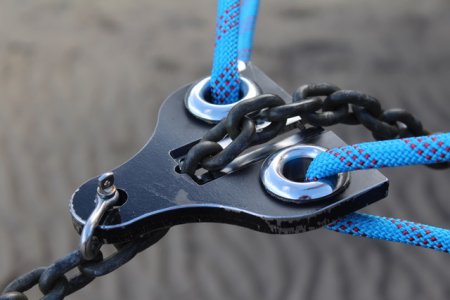
The advantage of these processes is that the galvanised coating, a number of layers of FeZn alloy, can be specified for thickness, the gal coating can be thicker, like double, that of HDG and the coating is harder than HDG. The coating in use, at least in the rode, self polishes on the seabeds to look like black stainless - and does not hold mud, so is easier to clean.

Our 6mm HT chain, replacing 8mm chain, after 7 years of service.

IMG_4759.jpeg


Another advantage - the slow cooling of the completed charge mirror, almost, the methodology of minimising hydrogen embrittlement, HE, as specified in a ASTM document - again check with Google. The disadvantage is that the oven sizes are not particularly large and big items, steel beams for example, cannot be processed.

Cutting to the quick

Contemporaneously Viking have some anchors being TDG coated in Israel. Testing is apparently 'in service' and results might eventually filter through to a change in the method of galvanising.

I don't know where the UK Sharadising plant is located (but its not a secret :) ) and if you want your chain refreshed or want to down size your chain - its worth considering.

Check for any news releases on the Viking website. I'll be coating a rode in the next quarter in Australia.

Jonathan
 
Top