
yotter
Well-Known Member
We are moving the batteries on a 1964 wooden boat from under the cockpit floor to a side locker, easier access and drier. In the process I am considering a new battery isolater/doide. The boat currently has a split doide and also a dreaded 1/2/both/off switch, which we will probably replace with 2 on/off switches for house and engine batteries I like the Victron ARGOFET since it seems to have a very low voltage drop see below.
Victron Energy Argo FET 100-2 battery isolator allows simultaneous charging of multiple batteries without connecting them together. This means that if you were to discharge one battery then it will not affect any other batteries, such as the starter battery. Usually adding a split charger will result in a big loss of voltage, however the voltage drop in Victron Argo FET isolators is less than 0.02 Volts at low current and only around 0.1 Volts at higher currents.
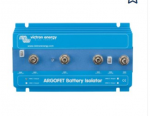
Some alternators require DC voltage on the B+ output to provide charge to the batteries and usually a diode or FET splitter will stop any voltage returning to the alternator, however this Argo FET isolator will give a special limited input to power the B+ when the engine run / stop switch is closed.
We also have a fault with the alternator/charging. The engine is a VP2010 with a standard 60A alternator. After it starts, there is no output from the alternator until we provide a 12V feed to the B+ terminal (don't ask how ). This ARGOFET claims to solve this issue. We would probably go for the 100A 2 output model, around £97 from ASAP. Any advise/pointers/suggestions appreciated.
We are not changing our anchor:-(
Victron Energy Argo FET 100-2 battery isolator allows simultaneous charging of multiple batteries without connecting them together. This means that if you were to discharge one battery then it will not affect any other batteries, such as the starter battery. Usually adding a split charger will result in a big loss of voltage, however the voltage drop in Victron Argo FET isolators is less than 0.02 Volts at low current and only around 0.1 Volts at higher currents.
Some alternators require DC voltage on the B+ output to provide charge to the batteries and usually a diode or FET splitter will stop any voltage returning to the alternator, however this Argo FET isolator will give a special limited input to power the B+ when the engine run / stop switch is closed.
We also have a fault with the alternator/charging. The engine is a VP2010 with a standard 60A alternator. After it starts, there is no output from the alternator until we provide a 12V feed to the B+ terminal (don't ask how
). This ARGOFET claims to solve this issue. We would probably go for the 100A 2 output model, around £97 from ASAP. Any advise/pointers/suggestions appreciated.We are not changing our anchor:-(


