Very small boat heating

2012-08-18 09.12.00.jpg
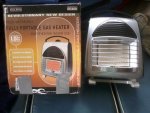
I have been using this gas heater for many years. it is catalytic with tilt safety valve and oxygen depletion valve. It uses gas cartridges at approx £1 each, a cartridge will last up to seven hours of continuous use, it produces a lot of radiated heat. No issues with moisture or carbon monoxide, but I always keep the hatch slightly open for fresh air.
 
View attachment 62698
I have been using this gas heater for many years. it is catalytic with tilt safety valve and oxygen depletion valve. It uses gas cartridges at approx £1 each, a cartridge will last up to seven hours of continuous use, it produces a lot of radiated heat. No issues with moisture or carbon monoxide, but I always keep the hatch slightly open for fresh air.

Where does the moisture go then?
Water is a product of combustion.
 
View attachment 62698
I have been using this gas heater for many years. it is catalytic with tilt safety valve and oxygen depletion valve. It uses gas cartridges at approx £1 each, a cartridge will last up to seven hours of continuous use, it produces a lot of radiated heat. No issues with moisture or carbon monoxide, but I always keep the hatch slightly open for fresh air.

No Carbon Monoxide. I hope you will declare this at his funeral....
 
So no one likes the idea of a generator. I thought it had merit. The one I saw being used was in the tender alongside the boat. It wasn't summer and not many other boats about. (Noise not so bad maybe?) So I'm still convinced it's a runner.

However, I think using that small catalytic heater located under a part open hatch (through which the carbon monoxide and moisture will escape with the rising hot air ) is the best suggestion. The boat will benefit from the radiant heat that catalytic heaters are known for!
Bremar.
 
No Carbon Monoxide. I hope you will declare this at his funeral....


If it's a true catalytic heater then the combustion is actually an oxidation reaction that will consume oxygen and produce CO2 and water. It stills needs ventilation as such but there is no risk from CO. Having said that I'd still want a COand smoke alarm (for the sake of £10-20 it'd be daft not to) as well as a gas alarm.

This is an option http://www.gaelforcemarine.co.uk/en/gb/Alke-Mini-Catalytic-Heater/m-1.aspx
 
If it's a true catalytic heater then the combustion is actually an oxidation reaction that will consume oxygen and produce CO2 and water. It stills needs ventilation as such but there is no risk from CO. Having said that I'd still want a COand smoke alarm (for the sake of £10-20 it'd be daft not to) as well as a gas alarm.
[/URL]

Indeed. Its amazing how many people on here are convinced that a catalytic heater is some sort of death trap on a boat - despite having been used for years in caravans without incident. I think the most common misconception is that there is a flame on these heaters so there must be CO given off. There is no flame on a catalytic heater.
 
No Carbon Monoxide. I hope you will declare this at his funeral....

I believe that catalytic heaters cannot produce carbon monoxide (they have to be producing CO2 to keep the catalyst warm enough to do anything) but they can deplete oxygen levels dangerously in a poorly ventilated space. If anyone knows for sure about this, I'd welcome either correction or confirmation.
 
I've got a 20 w solar panel and very little electrical equipment. Panel should produce 1.5a so 12 ahr per day I would hope.so no need to lug batteries around from my remote mooring.
Indeed.
And at 2 amps, you could get a useful period of heating from a battery small enough to take home and charge. 2hours of heating of an evening would only need a small motorbike battery or similar.
Maybe re-charge it while you're in the pub?
 
I've got a 20 w solar panel and very little electrical equipment. Panel should produce 1.5a so 12 ahr per day I would hope.so no need to lug batteries around from my remote mooring.

You will only get 20W on a sunny day with the panel well aimed. But these days, more powerful panels are a sensible price. Not sure what I'd expect at e.g. Dittisham today, assuming is as grey as it is here!
It's one thing to make panels your primary source, and another to have no backup.
 
I believe that catalytic heaters cannot produce carbon monoxide (they have to be producing CO2 to keep the catalyst warm enough to do anything) but they can deplete oxygen levels dangerously in a poorly ventilated space. If anyone knows for sure about this, I'd welcome either correction or confirmation.

The American Gas Association
(A.G.A.) standards specify that the concentration in free air of carbon monoxide from
such a heater should not exceed 200 p.p.m.,
air free basis. In closed rooms with low
oxygen levels (15.1 per cent) the carbon
monoxide level should not exceed 500 p.p.m.
Tests by Matthey Bishop over long periods of
operation of Cataheat systems have indicated
unburned hydrocarbon concentrations on the
face of the catalyst pad of less than 1500
p.p.m., air free basis as hexane, and of carbon
monoxide of less than IOOp.p.m.

That's from Matthey, who know a bit about catalysts.
The limit for CO is more like 30ppm now AFAIK?

Also what happens as the catalyst gets old and dirty?
 
If it's a true catalytic heater then the combustion is actually an oxidation reaction that will consume oxygen and produce CO2 and water. It stills needs ventilation as such but there is no risk from CO. Having said that I'd still want a COand smoke alarm (for the sake of £10-20 it'd be daft not to) as well as a gas alarm.

This is an option http://www.gaelforcemarine.co.uk/en/gb/Alke-Mini-Catalytic-Heater/m-1.aspx
These gas heaters are great, used by thousands over the years; all heaters need ventilation, just a small opening to get some fresh air in the cabin.
 
You'll need to things, adequate fuel supply, i use 40 litres a week if it's on constant, and enough panels. Mine draws about 2a.

I use an eberspacher in my Jaguar 24 that I originally bought for my Juno 18' trailer sailer.

2 x 50amp golf cart batteries that fit into one standard battery box.

20amp Solar panel.

Fuel tank off a garden tractor (£10.00) mounted in the locker and I top it up from my diesel can out of the car.

5amp charger on the outboard.

I always start it off with the outboard on for the first 10mins then just set the temperature and relax.

Below video of a sail after a particularly cold November night that was followed by a beautiful November day that I would not have sailed without the Eberspacher. (You can hear it on at the start of the video before I pull on my thermals!)


I use an eberspacher in my Jaguar 24 that I originally bought for my Juno 18' trailer sailer.

2 x 50amp golf cart batteries that fit into one standard battery box.

20amp Solar panel.

Fuel tank off a garden tractor (£10.00) mounted in the locker and I top it up from my diesel can out of the car.

5amp charger on the outboard.

I always start it off with the outboard on for the first 10mins then just set the temperature and relax.

Below video of a sail after a particularly cold November night that was followed by a beautiful November day that I would not have sailed without the Eberspacher. (You can hear it on at the start of the video before I pull on my thermals!)

That looks like a nice little setup Shaun, the batteries would cope with the Eber being on all day and the solar panel will charge it back up while you're away.

Your video demonstrates how you can get some good use out of the boat all year round. I only come out for a week in the Summer, when the marina does a cheap deal on the lift. We've had some cracking days out during Winter, the heating makes it even nicer :)
 
Top