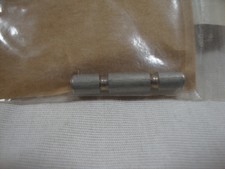
Using a nail as an outboard shear pin?

last time we sheared a pin on out little mercury tender motor, I took the prop off to discover the pin was in fact a bit of threaded bar.... Not having a pin, and needing the engine running again right away I put a roll pin in there as a temporary repair. This thread is a timely reminder to do something about it.
 
Errr...

s-l300.jpg

:encouragement:
 
This is mine also from E-Bay

s-l225.jpg


s-l225.jpg


s-l225.jpg
Stop digging, the op is talking about a Mercury anyway. Ive just dug out my spare pins, bought of a main dealer, originally in a Mercury pack and can confirm that they are plain SS pins. The original that broke was a yellow metal one and the dealer, who I queried when I saw they were SS confirmed that Mercury were now supplying SS because the yellow metal ones broke too easily.
 
last time we sheared a pin on out little mercury tender motor, I took the prop off to discover the pin was in fact a bit of threaded bar.... Not having a pin, and needing the engine running again right away I put a roll pin in there as a temporary repair. This thread is a timely reminder to do something about it.
Indeed, roll pins are a lot harder then mild steel or SS
 
Stop digging, the op is talking about a Mercury anyway. Ive just dug out my spare pins, bought of a main dealer, originally in a Mercury pack and can confirm that they are plain SS pins. The original that broke was a yellow metal one and the dealer, who I queried when I saw they were SS confirmed that Mercury were now supplying SS because the yellow metal ones broke too easily.

Skipper Stu,

but what size engine ? A ' yellow metal ' pin would seem ideal for a 2-5hp while a 50hp job on a RIB could probably cope with breaking a stainless pin before rodgering the prop ( much ) and transmission :)
 
Shear pins design is based in ultimate shear strength not ultimate tensile strength (UTS)

Mr Google tells me this

For example, for a mild steel with an ultimate (or tensile) strength of 60000 psi, the ultimate strength in shear would be 0.82(60000)=49200 psi. This material will fail (or fracture) in shear if the shear stress exceeds 49200 psi.

So for mild steel shear strength is lower than tensile strength.
If you are going to do technical then you need to tell us how big this piece of steel is that is going to shear at 49200 lbs! I suspect it would sink a bigboat never mind a little flubberdub!
 
Skipper Stu,

but what size engine ? A ' yellow metal ' pin would seem ideal for a 2-5hp while a 50hp job on a RIB could probably cope with breaking a stainless pin before rodgering the prop ( much ) and transmission :)
Duh! :)
The op said quite plainly in his post, Mercury 3.5.
That is what we are talking about!
 
So as I said in a galaxy far, far away use anything as a ' get you home ' but it needs to be a proper SHEAR pin asap. :rolleyes:

Requires one carries sidecutters, short nose pliers and ideally a new split pin for the prop then whatever one is going to use as a temporary shear pin, I often carry a temporary vice, junior hacksaw and box of bolts, but not for this reason - I have spare shear pins.
 
Last edited:
Best thing to do is do whatever you have to do until you can do the proper thing :rolleyes: After that, ask a question on this forum and get them arguing with their shadows.
 
I sheared my shear pin the other day on a Mercury 3.5 when my painter line fell in.

I went to an outboard workshop and they didn't have any but gave me a nail of the same diameter and said it would be fine. I asked it it would be too strong and not shear as easily as the genuine part. They said it would be fine.

I'm unsure what material the nail is but just want to get a second opinion on this?
I use the broken shaft of a pop rivet monel one are pretty good
 
If you are going to do technical then you need to tell us how big this piece of steel is that is going to shear at 49200 lbs! I suspect it would sink a bigboat never mind a little flubberdub!

49200psi tells me that's one square inch of steel. That's not too technical is it?
 
Cable breaks are always practiced during training and are not a rare event for real. IIRC weak links are 1000lbs.

Most clubs use Tost weak links which come in a range of strengths, each with its own colour. Wooden single seaters normally need a No 4 (blue); the biggest two seaters use a No 1 (black). I used to have great fun with the cowboys who sometimes flew the Scottish ASH-25 and wanted to launch on a No 1 instead of the appropriate No 2 (brown). No wonder they kept crashing it.
 
Skipper Stu,

but what size engine ? A ' yellow metal ' pin would seem ideal for a 2-5hp while a 50hp job on a RIB could probably cope with breaking a stainless pin before rodgering the prop ( much ) and transmission :)

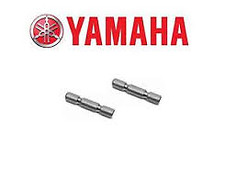
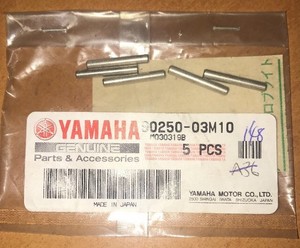
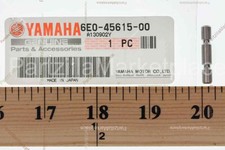
I think that's why Yamaha put grooves in some of them. It's an easy way of getting a range of strengths while keeping the overall dimensions the same.
 
If you are going to do technical then you need to tell us how big this piece of steel is that is going to shear at 49200 lbs! I suspect it would sink a bigboat never mind a little flubberdub!

Thats easy

You need the maximum torque that the engine will produce at the prop and the diameter of the drive shaft. This will give you the load that the pin must shear at divide by the shear strength of the shear pin metal in lbs/ sq in. this will give you the total area. As the shear pin in in double shear divide by 2 then calculate the diameter from the area and their you have it.
 
Top