Up or down?

Well, we may not be politically or nautically correct but the happy crew of Saguday always referred to going up the Wallet to Ipswich and down the Wallet back to the Blackwater - this being from a Tollesbury perspective from where basically everything is up... This is distinct from going up or down tide or up or down river, so fr’instance we might say we’re going downtide up the Wallet to Ipswich. Or we’re leaving Ipswich to go downtide down the Wallet to the Thames and up (river) to London.

For rivers and tides up and down has a clear meaning based on flow, but geographical locations to me need to be referred to via their cartographic orientation - either oop north or dahn sarf. The Wallet, lying vaguely south west to north east, is more uppish at the Harwich end and more southish at the Blackwater end.

Anyway, right or wrong, that’s how we do it. Maybe these days it should be more up-turbine and down-turbine?
 
I am sure this has been discussed/argued about before!!
I always think down as - if you have any sense - you are going downtide. But, then the other way is down as well??
I know one always travels up to London so I suppose that it should be up.


This is from railway speak... Up direction = towards London, Down = away from London, and any lines that aren't really obvious will be defined in the Sectional Appendix to the Rule Book. Of course that did give rise to interesting factors in Devon, as both Plymouth North Road and Exeter St David's had "Up" departures in either direction, one to the SR and one to the GWR (which was the obvious one)...
 
"Sorry there is only one way to view it" quoth he throwing down the gauntlet.

The earth is an oblate spheroid (as that nice Captain Cockcroft was fond of saying) so the equator is slightly greater diameter than the route up over the poles via the lines of longitude. Since the diameter is greater then it is further from the centre of the earth and to get there you are going up hill. So from Harwich to Bradwell is going south and must therefore be uphill. QED
 
"Sorry there is only one way to view it" quoth he throwing down the gauntlet.

The earth is an oblate spheroid (as that nice Captain Cockcroft was fond of saying) so the equator is slightly greater diameter than the route up over the poles via the lines of longitude. Since the diameter is greater then it is further from the centre of the earth and to get there you are going up hill. So from Harwich to Bradwell is going south and must therefore be uphill. QED
But, as shown by Isaac Newton (who predicted the ellipsoidal form of the Earth), the ellipsoid approximates the surface of equal gravitational potential, taking into account the forces required to balance the rotation of the Earth. The true surface of gravitational equipotential (the Geoid) deviates from the ellipsoid by up to about 200m; and is mostly within a few tens of metres of the ellipsoid. To put that in perspective, the difference between the ellipsoid and a sphere of the same mean radius is about 11 kilometres!

All that means that as far as the net force acting is concerned, you don't go "up" or "down" towards the poles.
 
... All that means that as far as the net force acting is concerned, you don't go "up" or "down" towards the poles.

Spoilsport! I rather liked the idea (though it’s contrary to my own ‘up/down’ usage) of climbing about 40m (by my crude reckoning) in going from Harwich to Bradwell. :(
 
Spoilsport! I rather liked the idea (though it’s contrary to my own ‘up/down’ usage) of climbing about 40m (by my crude reckoning) in going from Harwich to Bradwell. :(
I dare say that your pedantry includes denying Everest's status as the world's highest point, along similar reasoning.
 
"Sorry there is only one way to view it" quoth he throwing down the gauntlet.

The earth is an oblate spheroid (as that nice Captain Cockcroft was fond of saying) so the equator is slightly greater diameter than the route up over the poles via the lines of longitude. Since the diameter is greater then it is further from the centre of the earth and to get there you are going up hill. So from Harwich to Bradwell is going south and must therefore be uphill. QED

But how come Australia is always referred to as "down under". So heading south whether one has to go uphill to get over the equator or not is irrelevant. heading south is going "down" so Harwich to Bradwell is generally a southerly direction, hence down . Although it might be deemed that the Wallet actually heads east/west for some of its length in which case it is neither up nor down but " along"
 
I dare say that your pedantry includes denying Everest's status as the world's highest point, along similar reasoning.

Not at all! I was but following Mariner69’s whimsy and blame him and whoever started this thread.

On a related note, as up/down has been very thoroughly gone over, does anybody know when was the Wallet first so called, and are there any other Wallets around the UK?
 
Not at all! I was but following Mariner69’s whimsy and blame him and whoever started this thread.

On a related note, as up/down has been very thoroughly gone over, does anybody know when was the Wallet first so called, and are there any other Wallets around the UK?

It's obvious. The old name was Wallette, the suffix ette denoting diminutive size. So wallette is descriptive of the wave shape, like a small wall.��
 
It's obvious. The old name was Wallette, the suffix ette denoting diminutive size. So wallette is descriptive of the wave shape, like a small wall.��

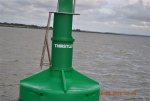
Keep it coming & we might get an explanation as to why the Thirslet buoy has suddenly been renamed the THIRSTLET.
Any good reason other than local authority incompetence. i suppose someone will suggest it has Saxon heritage to get out of trouble
Thirstlet small.jpg
 
Last edited:
I did drop a HUGE clue over the Wallet a while back. Think of it. The Wallet DID NOT lead to Bradwell (allegedly). So where did it lead (upwards!)?

PS I covered Thurslet a while back.

PPS I have been trying to work out how Pye End tis so called. It was called ye pies in the 16th century (I think, I'll need to read it up again). Must turn to the NtMs. Not many tonight.

So where was the Wallet heading to?
 
While I try to upload this week's NtM onto my web site (which seems to be suffering a major crisis), I might as well talk about the Wallet.

The evidence cannot be certain but the authorities favour:

1. The Wallet led from the Naze to Wallet Island (aka now Wallasea), arguably earlier it lead to the London River. Wallet Island is cited in the 16th century - Norden 1594 "In Crouche Creek or Cricksye Creek is Wallet or rather and more truly Walfleet Island and divers others of no name" Referring to the Wallet, "I take it to be the shore which lieth between Crouch Creek and St Peter's Chapel, the breadth onlie of Dengie Hundred thro' which upon the very shore was erected a wall for the preservation of the land and thereof St Peter's on the wall, and all the sea-shore which beateth on that Wall is called the Wallfleet, and upon that shore and not elsewhere, but up in Crouche Creeke at the end of the Wall where also is an island called commonly and corruptly Wallet Island" It is clear in Wagenhaer's east coast chart of 1585 that the Crouch did not exist. Perhaps a creek but Burnham was on the coast. The Wallet is either out via the Spitway or via inside some small banks along the shore into the Thames.

After the 16th century changes happened dramatically, said it is claimed as a land development off Burnham. Holliwick Point developed 4 miles out from Burnham and over the years the Buxey was started. Also the Crouch developed.

I think in Roman times the route into the Thames was up (sic) the Wallet along the shore from the Naze, passing the Colne and Blackwater, the Roman fort Othona (on which St Peter's was built), past the Crouch Creek, Havengore into the Thames. There is a crude chart of 1584 calling the channel from St Peter's Chapel to Black Tail Pt off Leigh 'The Wallot Deep'. On the sands outside of the Wallot Deep are a couple of beacons, one of which was the Whittaker (aka Whitacar).

There is at least one other authority who links the Wallet as a result of William the Conqueror. In gathering his invasion fleet, bad weather caused their 400 ships to take refuge in St Valery. The Abbot of St Valery organised a procession to carry the body of St Valery on the strand (beach) to pray for good weather. In a moment it is said the weather abated and next day William sailed for victory the next day. As a result the Abbot was granted certain lands in England included St Peter's on the Wall (at Bradwell). The argument suggests that the Wall, built first by the Romans with the fort to stop the Saxons landing. After the Romans left, the Wall ensured the lands drained (and probably caused the Buxey) and the Wallet got the name from the Wall rather than Wallet or Wallot's Island.

Now why is the Gunfleet so called?
 
Top
