afterpegassus
Well-Known Member
G12; As long as they can go off before immersion there's no problem.[QUOTE said:from my first post : "which sealer, that can be applied underwater, would be the best to use in these circumstances?"

G12; As long as they can go off before immersion there's no problem.[QUOTE said:from my first post : "which sealer, that can be applied underwater, would be the best to use in these circumstances?"

G12; As long as they can go off before immersion there's no problem.[QUOTE said:from my first post : "which sealer, that can be applied underwater, would be the best to use in these circumstances?"
I was replying to Vyv really, For my reply to you look at post number 2.
Lose the sarcasm pal.
Thanks for all the input.
Welding shackles for moorings I certainly approve of but I neither have the expertise or tooling to do this underwater.
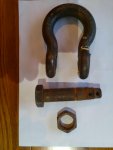
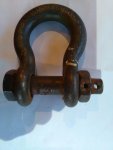
I will drill the nut and pin, apply Loctite topsides and assemble underwater, finally mousing through the drilled hole.
If I remember, I will feedback on the next inspection.
By way of feedback, all appeared ok on inspection 2017 & 2018.
When I dived today, the nut was hanging loose on the shackle pin, retained only by a strand of Monel.
The loctite appeared to have given up.
I have had this bottle for quite a few years now. Could it have gone off?
Glad I did the inspection as we're expecting a bit of a breeze over the next day or two.


At my club we have used galvanised steel shackles for moorings for decades - I cant remember one ever coming undone. We dont seal the threads because rust and corrosion makes then ever harder to undo. I used to mouse mine with AISI 310 mig welding wire again without a problem.
To my mind sealing the threads would make them more likely to come undone
I always understood that stainless and carbon steels should not be together underwater?
The reasons the nut and pin were drilled were that the nut could be wired when tight and that the siezing did not have to intrude inside the shackle as I've had issues previously with wear here.
 ).
).

...I had a problem previously of the chain inside the shackle wearing on the siezing so keeping that outside seemed like sense...

I'm maybe being thick here, but I still don't get it.
View attachment 80873
How does the chain inside the shackle wear on the seizing (which is a split pin)?
I think you misunderstand.
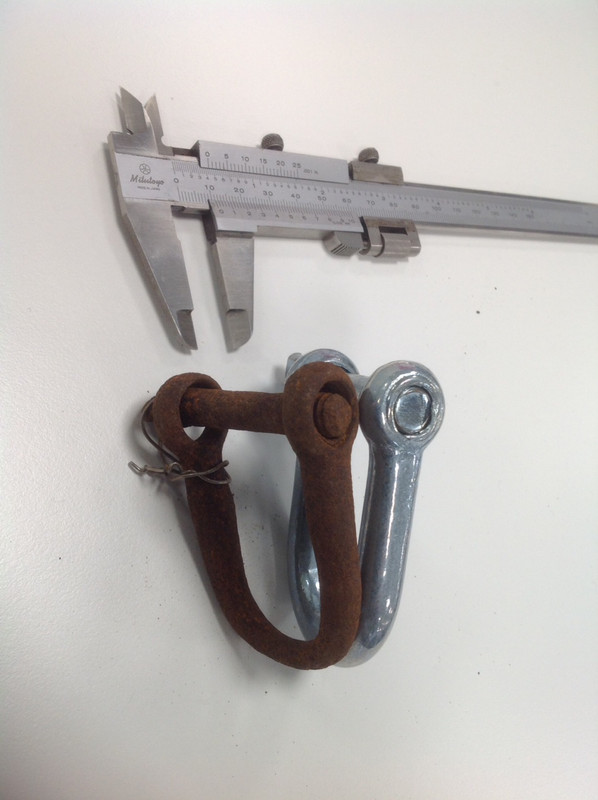
Normal mousing through the hole in the shackle pin demands wrapping the seizing wire round part of the bow of the shackle (just above the eye at the 'end' of the bow). The chain contained in the moused shackle can then rub on the mousing wire and caused premature failure. One way to over come this is to use Loctite - but if the thread corrodes the Loctite will soon fail.
The alternative solution is to use a shackle that is secured by a nut on the end of an extended shackle pin. These are standard assemblies and as in your photo come with a split pin to secure the nut (but you could always use Loctite). The split pin is then not subject to abrasion from the chain (but I find the pins rust quickly).
Jonathan
I would not be keen on the swivel in your picture - I've tested them and they invariably fail long before a matching shackle. You are also dependent on the integrity of the nut welded that forms the 'swivel'. The chain looks very undernourished. The galvanising on the chain, swivel and shackle will last about a month (or that's the life I have found here in Sydney - where mooring contracts simply use 'black' steel. I hope that is a genuine Green Pin shackle
Jonathan