TV onboard

Ah the old posting opinions as facts. You’ve even invented a story to back up your preconceptions.
They’re still wrong, but it’s not your fault, you were raised on books so facts and research are slower to come by.

You’re totally entitled to live in an alternate reality where science doesn't exist. Keep the TV on and the brain off

1. The "6 Minutes to Zen" Study (University of Sussex, 2009)

Researchers found that reading for just six minutes reduced stress levels by 68%. It was more effective and faster than listening to music, going for a walk, or having a cup of tea. It works by easing muscle tension and lowering the heart rate.

2. The Connectivity Boost (Emory University, 2013)

Using fMRI scans, scientists found that reading a novel creates a "muscle memory" in the brain. Connectivity increased in the left temporal cortex (associated with language) and the primary sensorimotor region. This "shadow activity" remained for days after finishing the book.

3. The Vocabulary Gap (Cunningham & Stanovich, 1998)

This famous study showed that even "low-level" children’s books expose kids to 50% more rare words than prime-time television or even a conversation between college graduates.

4. Theory of Mind (The New School, 2013)

Published in Science, this study found that reading literary fiction (rather than popular fiction or non-fiction) improved "Theory of Mind"—the ability to understand others' mental states. TV characters are often too one-dimensional to provide this workout.

5. Preventing Cognitive Decline (Rush University Medical Center, 2013)

A life-long habit of reading was linked to a 32% slower rate of cognitive decline in old age. Conversely, those who rarely engaged in mental activities like reading saw their memory decline 48% faster than the average.

6. The Blue Light vs. Melatonin Study (Harvard, 2014)

Research showed that reading an e-book or watching TV before bed suppressed melatonin (the sleep hormone) and increased alertness, leading to worse sleep. Reading a physical book did not have this negative effect, leading to deeper REM cycles.

7. The "Picture-Walk" vs. Screen Study (Cincinnati Children’s Hospital, 2015)

Brain scans of preschoolers showed that those who were read to had significantly higher white matter integrity in areas supporting language and self-reflection compared to kids who spent more time on screens.

8. Comprehension and "The Shallowing Hypothesis" (University of Stavanger, 2014)

Anne Mangen’s research found that students who read texts on paper scored significantly better on reading comprehension tests than those who read the same texts digitally. The physical act of turning pages creates a "mental map" of the information that TV and scrolling cannot replicate.

9. Concentration and Focus (Stanford University, 2012)

Neurobiologists used MRI scans to show that "deep reading" (analyzing a text) requires a complex coordination of multiple cognitive functions. Watching TV, by contrast, often puts the brain into an Alpha-wave state, which is closer to a light daze or "autopilot."

10. Empathy and Neural Simulation (Journal of Cognitive Neuroscience, 2009)

This study showed that when we read about a situation, our brain simulates the experience using the same neural pathways as if it were happening in real life. TV is viewed as an external observation, meaning the brain doesn't "practice" the experience as deeply.
 
Those studies don't say what you think they say though, you've again misinterpreted in order to support your opinion that reading is superior. As, I suspect, many of the researchers were attempting to do.

Most of the above are about relaxation and stimulation, which is not related to quality of information. The ones that are related to learning are simply measuring the cause and effect of putting more effort into learning, but never address that that effort can just as easily be put in with modern formats. It seems obvious that putting more time and effort in will produce better learning outcomes whether from a paper book or from YouTube courses.

What isn't shown in the above is the difference between learning a thing and learning to learn. Young people today are well served by learning to sift through enormous amounts of information quickly. Information changes very quickly these days and most of the books I learned from in school are entirely obsolete including much of the science from the time (only 30-40 years). The process of change is accelerating as more people are using better tools to advance more quickly. By the time information is committed to print it is very likely out of date.

There's nothing wrong with books, they are as valuable now as ever. It amuses me though that many book enthusiasts spend so much time trying to discredit more modern formats. If modern formats were so poor for learning then we wouldn't be accelerating knowledge in every field, we'd be slowing down.
 
I’ve just replaced my faulty tv….and upgraded it to 32 inch. I wanted to go bigger but my setup is 12v for the existing tv. 12v tv are extremely difficult to find and ridiculously expensive…and it’s almost impossible to find anything over 32 inches.
This is all unfortunate because 240v tv are incredibly cheap and come in any size you want.
So if I was starting from scratch I’d rig up a 240v supply and buy a domestic tv
 
I wanted to go bigger but my setup is 12v for the existing tv. 12v tv are extremely difficult to find and ridiculously expensive
Our projector screen probably gives us a 50" diagonal* and is just a piece of boat cover fabric (pvc coated canvas I think) in white that I had left over. The projector was a bit spendy but has a two hour battery life and runs/charges on USB. The big advantage is for someone looking in our saloon it looks like we have no TV as we put the screen away when finished, it just rolls up.

*we can also project on a sail outside on still nights so screen size can be much larger!
 
The other consideration for a television is the mounting.....it has to be extremely secure and not rattle but perhaps some rubber mounts to reduce vibration
 
I have a 24" HD-Ready 12V Android TV, probably meant for caravans (something like this, sorry for Finnish language, price is 239.99€ and specs aren't hard to understand). It has no TV antenna attached but shows Netflix, etc. using the boat's WiFi hotspot which has an unlimited data SIM. It uses the boat's Fusion 'car radio' device as Bluetooth speaker; the Fusion device is connected to basic external speakers in the fore corners of the saloon.

The TV normally lives in a bag stuffed next to the spinnaker on the fore cabin V-berth. When we watch it, it hangs from the top of the closed fore cabin door on a VESA mount intended for hanging monitors from office partitions (trivially adapted). There are no modifications to the door.

The TV's purpose is to allow us to see things we don't want to miss just because we're cruising, e.g. World Cup finals, and also to allow me to use the boat as a 'man cave' when in her home berth 🙂.
 
As said in a previous post, most tv`s are dc powered with a transformer incorporated in the mains lead. I installed a new smart tv (LG I think) which runs on 19 volts and wired using a dc-dc step up unit which was around £15.
 
We use a firestick from Amazon . It connects to my phone set up as a wireless hot-spot. I have an unlimited EE contract which is also unlimited abroad. More importantly you can get BBC etc abroad as it thinks the phone is in the UK. Saves needing a VPN which we had to have when I connected through the laptop
 
We use a firestick from Amazon . It connects to my phone set up as a wireless hot-spot. I have an unlimited EE contract which is also unlimited abroad. More importantly you can get BBC etc abroad as it thinks the phone is in the UK. Saves needing a VPN which we had to have when I connected through the laptop
Is a phone hotspot enough to watch a film in real time or do you have to download first ?
 
Those studies don't say what you think they say though, you've again misinterpreted in order to support your opinion that reading is superior. As, I suspect, many of the researchers were attempting to do.

Most of the above are about relaxation and stimulation, which is not related to quality of information. The ones that are related to learning are simply measuring the cause and effect of putting more effort into learning, but never address that that effort can just as easily be put in with modern formats. It seems obvious that putting more time and effort in will produce better learning outcomes whether from a paper book or from YouTube courses.

What isn't shown in the above is the difference between learning a thing and learning to learn. Young people today are well served by learning to sift through enormous amounts of information quickly. Information changes very quickly these days and most of the books I learned from in school are entirely obsolete including much of the science from the time (only 30-40 years). The process of change is accelerating as more people are using better tools to advance more quickly. By the time information is committed to print it is very likely out of date.

There's nothing wrong with books, they are as valuable now as ever. It amuses me though that many book enthusiasts spend so much time trying to discredit more modern formats. If modern formats were so poor for learning then we wouldn't be accelerating knowledge in every field, we'd be slowing down.
Aye its the same old story…
When I was young, kids used to be told off for burying their noses in a book, then told off for watching telly, then for listening to useless pop radio stations, then for wasting their time watching videos, then dvd’s, then for wasting their time on computer games, now for being constantly on their phones & tablets.
Every last one of these are means of delivering knowledge and entertainment, relaxation & learning.
The content is more relevant than the means of delivery, but even that is a personal choice, and rarely does the user confine the content to one single area.

I can’t recall where do I do remember reading some studies of current children's learning that concluded they are using more of their brain now than we did, that their overall hand eye coordination is better, ( computer games) and that their ability to multitask and filter information to prevent overload is far superior.

So when I told off my son for doing his homework 15yearsor so ago, telling him he couldn’t concemtrate while playing music and with a computer games running in the background, and he just laughed. He now has a masters in software design so I guess he was right :)
 
We have a Majestic 12v TV, which are designed for RV/marine use. Not particularly cheap and when we bought they didn't do smart TVs so we use an Amazon Firestick when in marinas with shore power (we haven't installed an inverter) and just the aerial when at anchor or on a swing mooring. It is easy to re-tune, having a bespoke button on the remote and we have been happy with it. Might upgrade to a smart version and will compare with others such as Cello if we do.
.
 
Aye its the same old story…
When I was young, kids used to be told off for burying their noses in a book, then told off for watching telly, then for listening to useless pop radio stations, then for wasting their time watching videos, then dvd’s, then for wasting their time on computer games, now for being constantly on their phones & tablets.
Every last one of these are means of delivering knowledge and entertainment, relaxation & learning.
The content is more relevant than the means of delivery, but even that is a personal choice, and rarely does the user confine the content to one single area.

I can’t recall where do I do remember reading some studies of current children's learning that concluded they are using more of their brain now than we did, that their overall hand eye coordination is better, ( computer games) and that their ability to multitask and filter information to prevent overload is far superior.

So when I told off my son for doing his homework 15yearsor so ago, telling him he couldn’t concemtrate while playing music and with a computer games running in the background, and he just laughed. He now has a masters in software design so I guess he was right :)
The point isn’t that you were wrong telling off your son....the real point is what does your son say to his children
 
As said in a previous post, most tv`s are dc powered with a transformer incorporated in the mains lead. I installed a new smart tv (LG I think) which runs on 19 volts and wired using a dc-dc step up unit which was around £15.
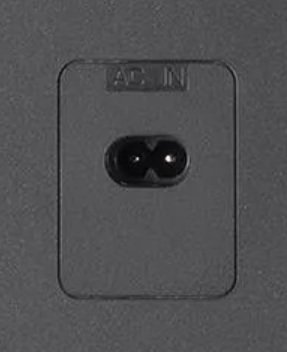
Could you give an example or model number for your LG set? I've got 4 TVs in the house and none of them have an external transformer. As a 12v TV might be useful, I looked at quite a few, all of them have a "Figure 8" ac in connector with integral power supply.

12/19v powered TVs with a remote PSU are not common at all so I have to disagree with the second part of your comment "most tv`s are dc powered with a transformer incorporated in the mains lead".

fig8.jpg
 
Could you give an example or model number for your LG set? I've got 4 TVs in the house and none of them have an external transformer. As a 12v TV might be useful, I looked at quite a few, all of them have a "Figure 8" ac in connector with integral power supply.

12/19v powered TVs with a remote PSU are not common at all so I have to disagree with the second part of your comment "most tv`s are dc powered with a transformer incorporated in the mains lead".

View attachment 206460
Google Search

Some still have an external transformer and some have both ac and dc inputs
 
Top