Tug navlights...don't think I was dreaming but...

concentrik

Well-Known Member
Joined
10 Jul 2008
Messages
496
Visit site
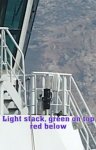
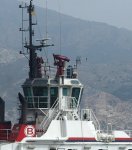
I noticed a cargo ship being aided by two tugs whilst arriving in port. The ship had a pulling tug at its bow and another tug, facing backwards and I imagine acting as a 'brake' at its stern. The front tug showed normal red to port but the trailing tug I think was also showing red to port. Since it was facing the other way I would have thought green. I can't see this mentioned in the Colregs. Maybe it was boatbrain, we have been aboard for quite some time!

Edit: sorry this should probably have been in the Lounge, now I don't know how to move it
 
Last edited:
Some Voith-Schneider tugs are very symmetrical, in that it's hard to tell the front from the back, because they tow equally well forwards, or backwards so look a bit like Dr Doolittle's Pushme-Pullyou...perhaps that might be the explanation ;)
 
I noticed a cargo ship being aided by two tugs whilst arriving in port. The ship had a pulling tug at its bow and another tug, facing backwards and I imagine acting as a 'brake' at its stern. The front tug showed normal red to port but the trailing tug I think was also showing red to port. Since it was facing the other way I would have thought green. I can't see this mentioned in the Colregs. Maybe it was boatbrain, we have been aboard for quite some time!

Edit: sorry this should probably have been in the Lounge, now I don't know how to move it

It's quite boatie. I don't think the IRPCS says much about lights to be shown when going backwards. The symmetrical ferries on the Clyde (like Largs - Cumbrae and Colintraive - Rhubodach) switch their lights round when they reverse at each end.
 
We have this all the time in Durban (highest ship movements in Africa) and it can be very confusing. The tugs in Durban move backwards even moving about the harbour without a tow.

I would like to know what would happen legally if there was a collision resulting in loss of live in the case of a tug traveling backwards without a tow at night.
 
It's quite boatie. I don't think the IRPCS says much about lights to be shown when going backwards. The symmetrical ferries on the Clyde (like Largs - Cumbrae and Colintraive - Rhubodach) switch their lights round when they reverse at each end.

But they don't always switch the polarity of the heading readout on AIS - I got caught out by that when a vessel I thought was going seaward down the Clyde ship channel turned out to be entering the dock I was leaving! No trauma, but there was a moment's "What the..." when I realized.
 
It's quite boatie. I don't think the IRPCS says much about lights to be shown when going backwards. The symmetrical ferries on the Clyde (like Largs - Cumbrae and Colintraive - Rhubodach) switch their lights round when they reverse at each end.
In the Norwegian addendum to the rules there are a specific rule for this.
 
Presumably those double acting ice-breaker tankers have two sets of lights, depending on which way they are going (for those who don't know them, double acting icebreakers have a normal, efficient bow at one end, and at the other the stern also forms an ice-breaking bow for when in the ice-floes.
 
I would have thought that the red light indicates the port side of the boat, and it's still the port side when you're going astern. If you 'change ends' what was the stern is now the bow, so the lights have to be changed. I don't know if there is a lighting set-up for "I am being towed backwards".
 
A tug working the stern of the tow in the manner you state is working in an ahead motion even if it is being pulled backwards. However a vessel moving astern's port hand light is still on the port side. Tugs are not double ended vessels.
It's not just voith tugs that work the stern of a tow while being towed astern themselves. Conventional tugs sometimes do it depending on the port, the Clyde springs to mind but it's hellishly dangerous and the cause of most tug disasters. If a conventional tug can work over it's bow it should even if it gives slightly less manouvering. Azi stern drive tugs all work over the bow.
However none of this makes any difference to the lights with the possible exception of the z-tugs of Singapore which are double enders for all intents and purposes.
 
Top