Tool for cutting plywood neatly?

That plunge method is very ingenious.
I would use a jigsaw but they can wander, so I would jig up the top with straight edge as a guide.
 
The one thing we don't know is the shape of the hole being cut. Rectangular, rectangular with rounded edge, circular?
Bearing in mind that the cutout is the lid, drawing back a jigsaw around the circumference (not as in the video) is a good way to start a circular hole but a 250 odd degree circular multitool blade is the neatest way I have found to start a straight line cut.
 
Its almost impossible for a beginner to make a perfectly straight cut with a jig saw, its extremely hard even for people who've done it a long time. The blade likes to wander from side to side everytime it hits a different bit of resistance in the wood, you push it too fast etc.
Guides might keep the jigswaw base straight, but the blade will still wander.

All depends on how neat a job the op wants.
 
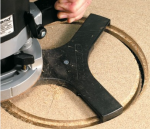
Notwithstanding that it isn’t exactly clear the shape/form of the cut-out that is required, I would go with a router, guide bush and template cut from thin MDF. A template will largely eliminate the skill that will otherwise be needed, minimise mistakes and achieve precise, professional results.
 
Notwithstanding that it isn’t exactly clear the shape/form of the cut-out that is required, I would go with a router, guide bush and template cut from thin MDF. A template will largely eliminate the skill that will otherwise be needed, minimise mistakes and achieve precise, professional results.
Well I totally agree with this but you and I are in a minority of (now) two.
 
Cheap tools do poor jobs.

The right tool for the OP's job, as has been established, is a jig saw. A cheap saw will wander and is (much) harder or impossible to control. A proper one will have a decent bottom wheel guide, some heft (weight) to it and will cut a clean, steady line. Invest some modest money and buy the right (best) blades for the job. With a modest bit of practice on some scrap, you should be able to manage a respectable plunge cut - no need to drill pilot holes.

If you do not want to invest in a decent tool, rent or borrow one and do not waste your money on a crappy piece of equipment, really, there is absolutely no comparison.
 
If the OP wants to use the piece he cuts out as a lid with a decent fit he can't drill any pilot holes of larger diameter than the thickness of the blade.

Unless he uses a gadget I'm sure I've seen advertised that cuts out the lid using a router and makes use of a plastic edging fitted to the lid that takes up most of the difference in the dimensions of hole and lid.

But hardly a thing worth buying for a single job.
 
Well I totally agree with this but you and I are in a minority of (now) two.

Well, I am not saying it can’t be done with a jig saw and I suppose it boils down to what one regards as acceptable but I would be amazed if someone not used to using one, could achieve a perfect cut. Guiding the cutter is the issue. You only have one go at such things so use a router/template.
 
Last edited:
Draw it and get it laser cut, the quality will be unbeatable and it might be cheaper than buying tools for a one off job.
I’d like a front seat in the audience for when they try to get the laser cutting machine into his boat...
(I believe the seat plywood he needs to cut a hole in is fixed and part of his boat furniture. )
 
Well, I am not saying it can’t be done with a jig saw and I suppose it boils down to what one regards as acceptable but I would be amazed if someone not used to using one, could achieve a perfect cut. Guiding the cutter is the issue. You only have one go at such things so use a router/template.

...and if the timber is thick enough you can rout a rebate in the seat for a lid with a matching rebate, using the same template.
 
Last edited:
If it is under a cushion as someone suggested, then why not use a plastic access door such as this, High Quality White Access Panel Inspection Hatch Plastic Revision Door All Size | eBay It takes all the skill and stress out of the job and still leaves a smart finish without having to spend money on expensive tools.
If the access is in vertical timber, that would certainly be a neat solution, but I doubt they'd be strong enough to be stood on, which is the ultimate fate of just about any horizontal surface on a boat.

As an averagely competent wood butcher, not a cabinet maker, I'd hack the hole slightly undersize the best way I could and not worry about the bit I cut out, tidy it up and make a lip that a lid could rest on all round, screwed to the underside of the locker top, then make a lid from a fresh bit of ply. Don't forget a finger hole so you can get the lid out easily!
 
If the OP wants to use the piece he cuts out as a lid with a decent fit he can't drill any pilot holes of larger diameter than the thickness of the blade.

Unless he uses a gadget I'm sure I've seen advertised that cuts out the lid using a router and makes use of a plastic edging fitted to the lid that takes up most of the difference in the dimensions of hole and lid.

But hardly a thing worth buying for a single job.
Routabout. I've got one, it's superb. Only makes 250mm diameter round holes though. Choice of 18mm or 22mm depth; it's intended for making holes in chipboard flooring in houses for installing plumbing or whatever.

https://www.trend-uk.com/en/UK/trend/content/content_detail.php?record_type=Knowledge&id=15888

1602925490454.png
 
Its almost impossible for a beginner to make a perfectly straight cut with a jig saw, its extremely hard even for people who've done it a long time. The blade likes to wander from side to side everytime it hits a different bit of resistance in the wood, you push it too fast etc.
Guides might keep the jigswaw base straight, but the blade will still wander.

It isn't too difficult. Use a sharp blade and don't force it.
 
Cheap tools do poor jobs.

The right tool for the OP's job, as has been established, is a jig saw. A cheap saw will wander and is (much) harder or impossible to control. A proper one will have a decent bottom wheel guide, some heft (weight) to it and will cut a clean, steady line. Invest some modest money and buy the right (best) blades for the job. With a modest bit of practice on some scrap, you should be able to manage a respectable plunge cut - no need to drill pilot holes.

If you do not want to invest in a decent tool, rent or borrow one and do not waste your money on a crappy piece of equipment, really, there is absolutely no comparison.

I have a very high quality Makita professional jigsaw, the blade still wanders, not massively, but it does. It is however 25 years old, so maybe its time for an upgrade.
I can get cuts which are extremely good (though not using a guide as you need to be able to compensate as the blade moves), but if I want a really perfectly straight cut, there is no substitute for a circular saw, I like the battery powered ones, home made straight cut guide & a plunge cut, quick easy and repeatable.

That said you're correct, the correct tool for the OP in this situation is a jigsaw. The cut won't be perfect, but its likely only the OP will notice.
 
Multi-purpose/oscillating cutter

I'd actually vote for this for the straight cuts - reserving a jigsaw just to radius the corners. With a steady hand, I'm always amazed at how straight you can cut (say, with the largest diameter & decent quality round/segmented blade). I also find it follows a scribed line really nicely.

the blade still wanders

In turn, I've always found this problem, even when using a guide... Perhaps a really sorted top-end jigsaw would make the difference, but that isn't what I'd choose to spend my £££ on. For me, at least, it really is just a 'one use' tool for cutting curves in sheet material!

With the multi-tool method, I would then use my router with a guide if I wanted a perfect machined straight edge. You could always tidy up the cutout edge on the cabinetry by hiding it behind some trim or beading. I plan to cut some draw fronts from the teak veneered ply in a very visible area (under the forepeak berth) and plan to use this method.
 
Top