Toilet pipes crud build up

davidmh

Well-Known Member
Joined
30 Jan 2015
Messages
477
Visit site
I have read lots of posts on the toilet problems but I still have some questions. Our Toilet is a Jabsco Manual type positioned below the waterline level.
What is the crud that builds up in the discharge pipe and how can it be prevented or reduced, What causes it, is it the Uric acid and seawater reacting. How can I remove the build up in the plastic tube that joins the bowl to the pump unit. I know I will have to replace the outlet pipe this winter , is has done 30 years so I cannot complain.
Jabsco say they have a toilet cleaner which you use like a domestic loo cleaner and it is supposed to keep the build up a bay but will not harm the environment or the toilet valves, anyone tried it?
The does the inlet pipe get a crud build up. I know the rotten eggs pong from the water in the pipes when you first flush it after not using it for some time is caused by the seawater sitting in inlet pipes. In mine the inlet pipe is direct from the seacock to the pumo and then from the pump up in a loop from the pump to the U bend and back down to the bowl. This bit of pipe seems to be worst it get warm from the sun on the hull, perhaps this makes it worse. Is there a simple solution to this smell other that giving it a good flush through when you first go aboard.
Lastly the methods for putting the 38mm (1.5 inch) pipe in the fittings. Manufactures say put the pipe end in boiling water to soften it and it should go on easily. Others add that when it is soft tap a wooden taper bung in the pipe to stretch it. I like the idea if the tapered bung but do you let the pipe cool and set a bit before you slide it on the hosetail.

Look forward to your responses.
David MH
 
Crud in the outlet pipe. It’s a variant of limescale, caused by the reaction of uric acid in urine with calcium salts in sea water. It’s impossible to completely prevent it forming but you’ll minimise it by flushing the toilet well with sea water and then pumping it dry plus pumping air through the pipe work. Jabsco reckon on 7 pumps per metre of outlet hose to put enough air through to push out most of the flush water. You need a strong acid to dissolve the crud; brick cleaner will do the job but others will reckon vinegar will do.
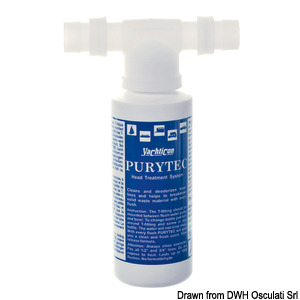
The inlet pipe shouldn’t get any limescale build up as there’s no urine for it to react with. We’ve got a gadget that Jabsco used to sell which you can fit between the inlet sea cock and the toilet: you put toilet freshener tablets into it. That kills the smell. Couldn’t spot it when looking on their site the other day, so they may no longer make it.
Always heated the end of the hose with boiling water and fitted it whilst hot, never bothered trying to use a tapered plug to permanently widen the hose end.
 
I have read lots of posts on the toilet problems but I still have some questions. Our Toilet is a Jabsco Manual type positioned below the waterline level.
What is the crud that builds up in the discharge pipe and how can it be prevented or reduced, What causes it, is it the Uric acid and seawater reacting. How can I remove the build up in the plastic tube that joins the bowl to the pump unit. I know I will have to replace the outlet pipe this winter , is has done 30 years so I cannot complain.
Jabsco say they have a toilet cleaner which you use like a domestic loo cleaner and it is supposed to keep the build up a bay but will not harm the environment or the toilet valves, anyone tried it?
The does the inlet pipe get a crud build up. I know the rotten eggs pong from the water in the pipes when you first flush it after not using it for some time is caused by the seawater sitting in inlet pipes. In mine the inlet pipe is direct from the seacock to the pumo and then from the pump up in a loop from the pump to the U bend and back down to the bowl. This bit of pipe seems to be worst it get warm from the sun on the hull, perhaps this makes it worse. Is there a simple solution to this smell other that giving it a good flush through when you first go aboard.
Lastly the methods for putting the 38mm (1.5 inch) pipe in the fittings. Manufactures say put the pipe end in boiling water to soften it and it should go on easily. Others add that when it is soft tap a wooden taper bung in the pipe to stretch it. I like the idea if the tapered bung but do you let the pipe cool and set a bit before you slide it on the hosetail.

Look forward to your responses.
David MH

The scale which forms in the outlet pipework is the result of bacterial action on nitrogen compounds in the "waste" This results in the production of ammonia . The ammonia raises the pH this leads to the deposition of carbonate scale.

More through flushing will help to prevent this.

Periodically flushing some acid through the system will help to prevent any scale that is formed from building up.

The rotten eggs smell is due to bacterial action on the sulfates in the water in anaerobic conditions. The solution maybe a system which does the flush water with a small quantity of a "disinfectant", such as LeeSan's Seasmart system
 
White vinegar is an inexpensive and reliable way of keeping a fairly new pipe clean-not sure it would be of much use on 30 years of build up.

I buy 20 litres from ebay in 5 litre containers.

When the boat is left, the inlet valve is turned off, white vinegar-I estimate about 2 litres-is poured into the bowl which is then pumped dry and the outlet valve turned off. This leaves the whole outlet pipe with a vinegar solution in it.

Been doing this for almost ten years with two boats. The vinegar fizzes in the bowl which never gets any build up.

I placed a piece of the clogging scale from a fellow clubmembers boat in a container of white vinegar, and while it did NOT disolve it, it made the outside considerably softer. Soft enough to go out with the flow of water. If you agitated the solution near the piece of build up, it was possible to see the surface breaking down.

No doubt stronger acids will have a more active result, but the vinegar treatment works for me.
 
Hi, I've used the Jabsco brand toilet cleaner. In my experience it does nothing to mitigate build up ... my policy is to invest in a length of new high quality vetus O/L hose every 5 or 6 years. Not a big expense in the scheme of things for a well operating heads and the vetus stuff is a doddle to fit. Vinegar would be cheaper though ! Phil
 
If you have a build-up of scale, whatever you do, don't disturb the pipe unless you are removing it to replace it or completely clean it out.

My toilet story .....

My boat is an ex-charter and I bought it at about 10 years old. About 16 years in, my Jabsco pump handle started leaking so needed attention. I just bought a new pump as I didn't particularly want to take the old one apart and fully service it - yuk!!!. It came off easily and was a piece of cake to replace. Job done I thought.

Unfortunately, the damage was done. In removing the pipe I had started to dislodge 16 years of scale that had built up on the inside of the pipe. This scale, when combined with sh!t and toilet paper then blocked the exit sea-cock. So yep, you guessed it, I took the other end off and dislodged yet more of the scale - which blocked the sea-cock again a few days later. By the 3rd time I put 2 and 2 together and realised that the pipe was full of scale and every time I disturbed it, the scale broke off and travelled down the pipe to block the sea-cock - so after getting intimately aquainted with the digestive machinations of my crew on 3 seperate occasions in one week, I took the pipe out completely and bashed it, jumped on it, whacked it off the pontoon and generally took my frustration out on it until all the scale was removed and then I re-fitted it. So far, all good.

Never again!!! .... If I ever have to disturb the pipe again, it will be replaced, no question. In fact, I'll probably pay someone else to do it.
 
Never again!!! .... If I ever have to disturb the pipe again....

Whacked out the crud in our pipe:

With a sheet winch handle on the pontoon in Boulogne mid 90s. A Kleenex had blocked the tiny bore remaining. No problem refitting it, quite floppy in a 30 degree heatwave. Not sure other pontoon occupants appreciated my efforts during their cockpit lunch.

With a lump hammer on the shoreline at Salcombe mid 2000s, about 7 in the morning. The previous day, at anchor, I had set out to replace the leaky loo, but a bit like your story, didn't appreciate that every time I touched the pipe, scale would dislodge and interfere with the works. Penny eventually dropped about midnight after all afternoon and evening spent assembling and disassembling etc etc.

With a lump hammer in Falmouth Yacht Harbour on a cold wet day this June. Blockage similar to the one 20 years previous.

So once every 10 years seems about right.
 
We change ours every couple of years and the build up is quite extensive - using a holding tank and therefore always pumping the absolute minimum to clear the bowl doesn’t help but practice means it’s a clean and 30 minute task.

Buying seaflow butyl next time so may start using more acid to keep it clean longer.
 
When we leave our boat we pour a couple of pints of fresh water into the bowl and flush it out. We get no smell from the heads which still has its 20 year old plumbing.
 
50.208.65.jpg


Got one of these on the water inlet, heads always smells very clean and fresh. It came with the boat and I didn't remove it.
 
Unfortunately, the damage was done. In removing the pipe I had started to dislodge 16 years of scale that had built up on the inside of the pipe. This scale, when combined with sh!t and toilet paper then blocked the exit sea-cock. So yep, you guessed it, I took the other end off and dislodged yet more of the scale - which blocked the sea-cock again a few days later. By the 3rd time I put 2 and 2 together and realised that the pipe was full of scale and every time I disturbed it, the scale broke off and travelled down the pipe to block the sea-cock - so after getting intimately aquainted with the digestive machinations of my crew on 3 seperate occasions in one week, I took the pipe out completely and bashed it, jumped on it, whacked it off the pontoon and generally took my frustration out on it until all the scale was removed and then I re-fitted it. So far, all good.

Never again!!! .... If I ever have to disturb the pipe again, it will be replaced, no question. In fact, I'll probably pay someone else to do it.

Similar story myself recently.

The scale was spilling everywhere when I moved the pipes around on deck prior to disposing of them.

The cause of the blockage was clearly a large lump of scale held in the bottom of the holding tank with shit.

I see no evidence that toilet paper contributes to blockages, as the heads (www.rm69.nl manual) seems to shred it fine. I know because the boatyard refused to lift me with a full and blocked holding tank, and I had to empty gallons of stale piss from it with a jiggle syphon and bucket.

Have replaced it with clear tube which I found in the ship's stores. I plan to fill with citric acid when scale becomes visible inside the hose.
 
Last edited:
My (now replaced) Jabsco liteflush toilet instructions said that any type of toilet paper could be used, but not excessively. My medical problems probably pushed that to the limit but having a powerful macerator/impeller always disposed of it.
 
We use hydrochloric acid at about 33% (as it comes) to keep the loo and pipes clean. We give it a treatment every couple of weeks or so.

I find that Hydrocholoric Acid in the form of Brick Cleaner once per year works fine. I make sure I do this at sea and put it through about one loo half full every five minutes to give it time to fizz and remove the build up. I respectfully suggest once a fortnight is excessive in terms of pollution and cost
 
Hydrochloric acid is not poisonous - your stomach is full of it - and it is not particularly bad for the environment provided it is well diluted before it is discharged.
 
Hydrochloric acid is not poisonous - your stomach is full of it - and it is not particularly bad for the environment provided it is well diluted before it is discharged.

Well you live and learn !
I would point out that the HCL emerging from my gut isnt enough to clear the build up of pee derived crud in the system !
 
Isn't there a bit of risk involved in leaving strongish acids sitting in brass/bronze seacocks? I've been lucky in that generous flushing has been good enough for me over the years.
 
My daughter has a composting toilet in her van, the essence of it is to keep the pee and poo separate, it is mixing that causes smells. The toilet is a complex construction involving buckets, bin bags, sawdust, a funnel, pipes and catheter bags. Should be doable on board.
 
Top