Toe-rail + rubbing strake Design ideas.

vas

Well-Known Member
Joined
21 Jun 2011
Messages
8,200
Location
Volos-Athens
Visit site
morning all,

one of the admittedly few areas that I've not sorted for MiToS rebuilt is the rubbing strake and toe rail design.
Originally boat had a inverted V alloy section (around 30mm high) as toe rail and the leftovers of a rubbing strake (just the alloy section running along the boat bolted with galvanized woodscrews :eek: )

I had a talk with one of the (2-3) companies that produce rubber sections (on various materials and infinite selection of shapes) and roughly sketched a section. He claims that it will probably be 300euro for the mold and another 400 for the 30odd metres of the rubber.
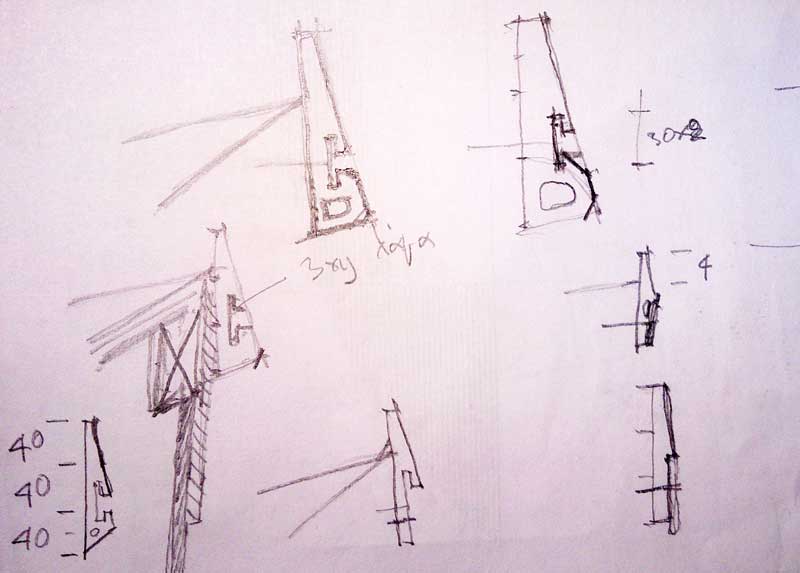
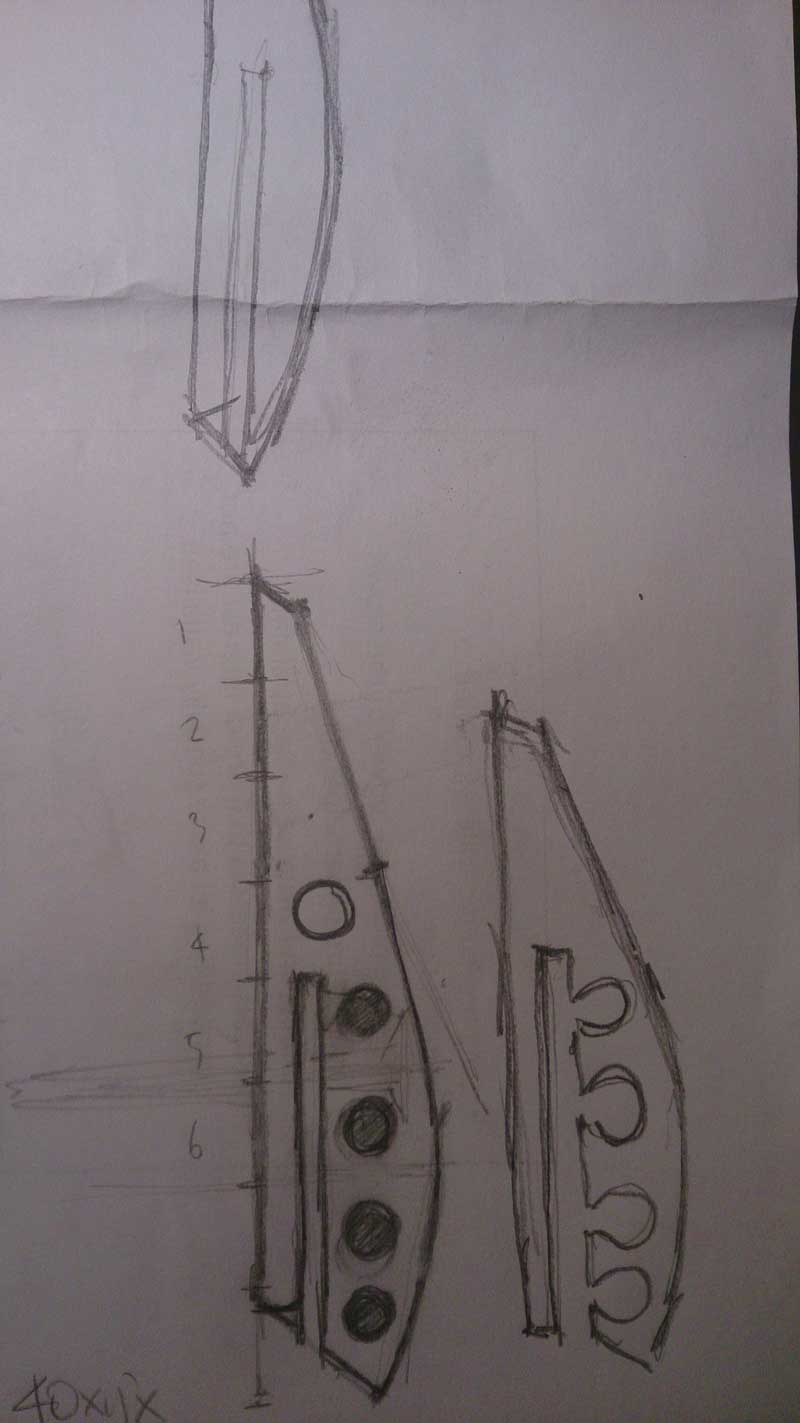
Now I'm attaching my sketches (ok, done over a long period of time but show the original idea and it's development) and I'd like the experts comments on that or ideas for improvement.
Basically, I'm thinking of a 70-80mm high section by 20-30mm max wide one bolted through the rubber and onto an inset alloy/inox section that:
  • will easily follow the double curvature of the hull
  • cover up detailing issues on the meeting point between hull and deck
  • work as a toerail
  • protect in minimal touching
  • help keep water down (rather iffy and v.low priority)
  • integrate visually with the step on the top of the hull (16mm by 200odd)

first sketches didn't have the alloy/ss inset, was added later when I started thinking the securing a bit more and when I tried to reduce the amount of rubber used (making it slightly softer and a lot cheaper ;) )

toerail+rubbingstrake_1.jpg

note on the above pic at the left hand sketches the varying angles of the hull to deck (ranging from 70deg down to 45deg at the bow) making the whole exercise slightly more difficult.

toerail+rubbingstrake_2.jpg


toerail+rubbingstrake_3.jpg

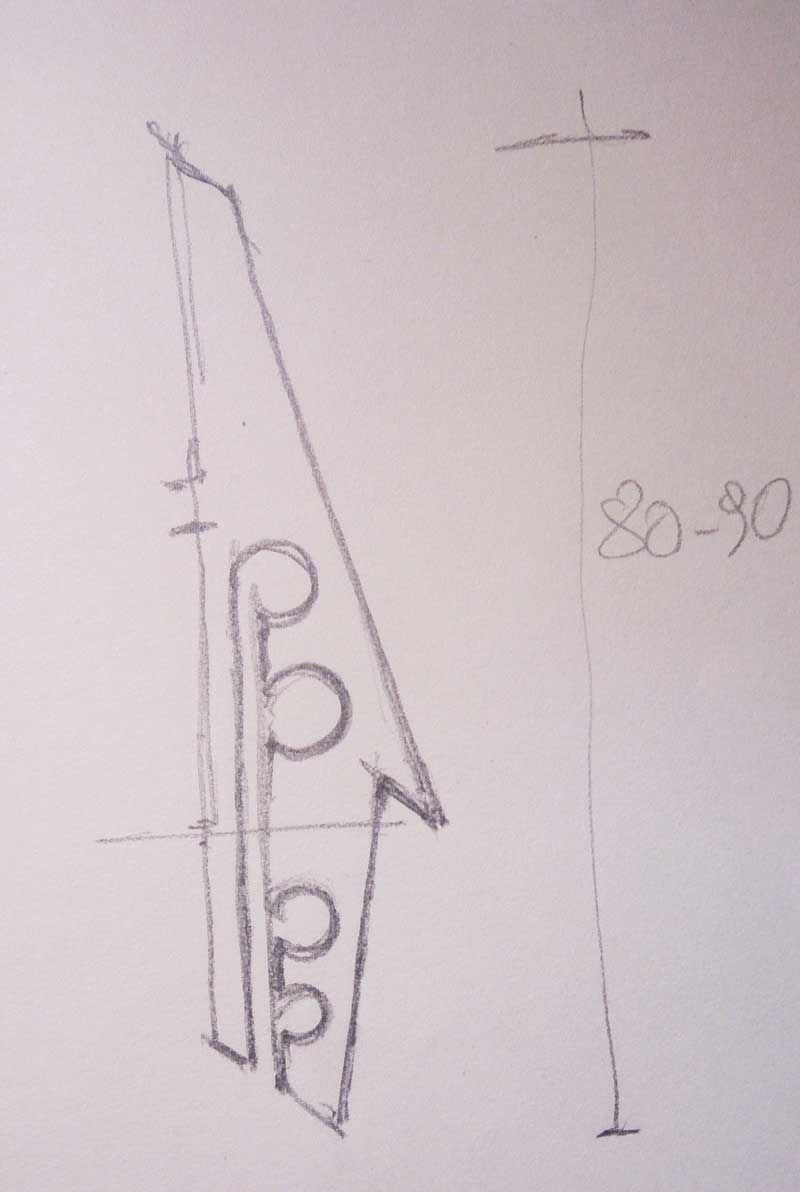
on the pic above (bottom right) you see a kink at the top going inwards towards the deck that could be implemented and help keeping mobiles and cans/glasses, still thinking about it.
Also toyed with the close section idea with a metal framed fully in it, but dropped it as soon as I was told that it will be 600mm long sections only :(
Further wouldn't be at all easy to curve and make it follow the deck/hull intersection.

Next looks quite ok with me (never liked the curved ones tbh and wont suit the boat lines anyway!)
toerail+rubbingstrake_4.jpg

Holes securing the rubber will be just under the lip created at the middle of the height and through the metal section that will slip in there. Guess one 5X50 ss torx headed countersunk screw every 150-200mm should do and keep it smooth and looking good.

ideas, as always, welcomed

cheers

V.
 
thanks, had a look at them Vetus and a few more but couldn't find something I liked (plus they are rather expensive to buy!)
another issue is that I'm going to be laying 8mm teak on the decks so not so keen on mixing it with synthetic teak lookalike :(

cheers

V.
 
seems that I timed my post when everyone is out and about...

anyway, can someone recommend the typical/right height above the deck for a toerail?

is 30mm ok, or should I go up to 40 or even 50mm?

cheers

V.
 
Vas, sorry, I have looked at this a couple of times, but this is way out of my knowledge. On my Snazi, the toe rails are circa 40 mm if that is of any help? There are regular gaps to allow water to drain, and then a drain at the stern of each side, unde a grill, which gathers sh!te.
 
thanks, yes even the size helps as I've stupidly threw to the skip all my original toerails...

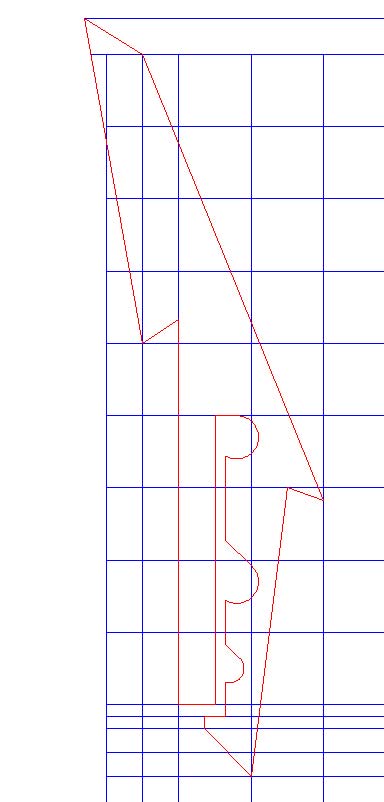
my first go in ACAD sketching it is the following.
Grid is 10mm so overall size is a tad over 100mm. Printed it and had a look at 1:1 scale and I didn't like it. Looks too damn small. So resized it (scaled it 33%) and it's now around 140mm and it looks more substantial.
Will have to send the drawing to the fabricator for comments and corrections.

This is the sketch:
toerail+rubbingstrake_5.jpg


cheers

V.
 
Vas I'd love to comment but don't really "get" the question. I mean, I have no idea of the nature of the joint you're trying to cover, nor of what you mean by "integrate visually with the step on the top of the hull (16mm by 200odd)". Also I do not understand what you propose in terms of both the rubber section and the metal section - I mean I'd like to see a sketch of each. I just do not get all your sketches - they need a bit of commentary or more precision(!). Finally I do not know if it is necessary for this to be planted on the hull side, which means a vertical toe-rail aft but an angled toerail forward, which I don't think would look great.

In general terms I don't like the top sharp edge and I think the whole thing has too much unsupported thin section. I think it risks looking pretty bad tbh. I would be thinking more along lines of a wooden capping rail in sort of 40 x 75 L section (angle), in teak or painted white, with the vertical web of the angle vertical all the way along, ie not twisting with the changing topside angle as it approaches the bow. Then a s/s rubbing strake just screwed onto that as a rub rail. But this is a bit of a guess as I do not know the joint detail you are trying to cover with this - picture would be good

BTW have you looked at the way they did it on that wooden Mystere in Antibes? Looks quite neat and has a nice safety-oriented toe rail iirc
 
seems that I timed my post when everyone is out and about...

anyway, can someone recommend the typical/right height above the deck for a toerail?

is 30mm ok, or should I go up to 40 or even 50mm?

cheers

V.

50 is nice but only if it doesn't look like a "thin wall". I mean it needs to be at least 35 wide if its going to be 50 tall. Your ACAD section looks way too thin to me, both aesthetically and engineeringly

Have a look at these pictures (most are inserted as links not hotlinks, because they are too wide and wd spoil this thread). In first pic teak planks and caulking are 45+5mm so you can scale from that and see the toe rail is something like 80x80 on a 58 footer

IMG_3299LR.jpg


http://i275.photobucket.com/albums/jj304/jfm2008/2007 Corsica and Elba cruise/IMG_4645.jpg
http://i275.photobucket.com/albums/jj304/jfm2008/2007 Corsica and Elba cruise/IMG_4675.jpg
http://i275.photobucket.com/albums/jj304/jfm2008/2007 Corsica and Elba cruise/IMG_4714.jpg
http://i275.photobucket.com/albums/jj304/jfm2008/Miscellaneous/IMG_2703.jpg
 
Last edited:
ideas, as always, welcomed

Vas,

when I read your post, have been searching for this pic,
here you can see a solid wooden part (with a gunwale on top) but just as a idea for your toerail,

03022012184.jpg


in this case,
the exposed part on the outside is completely covered with a SS U profile.
on the after part of the deck, this wooden part is one step above deck level, as in the pic,
on the front side, the wooden part is flush with the teac floor

as both you and George have prooved to be very capable with wood, imo a wooden solution would be much more appropriate.
you can route and sand the sloping shape of the hull..
your proposed extrusion is never going to look perfectly fitting, (= not nice) so not worth the effort nor expense. (imho)
 
apologies for late reply, was too busy working and too knackered afterwards to work on the pc and post :(
OK, the reason I setup this thread was exactly that, wasn't happy with my initial idea and didn't look it would work.

So, following your comments, I decided to follow a completely different approach closer to the SQ58 pics that JFM posted.

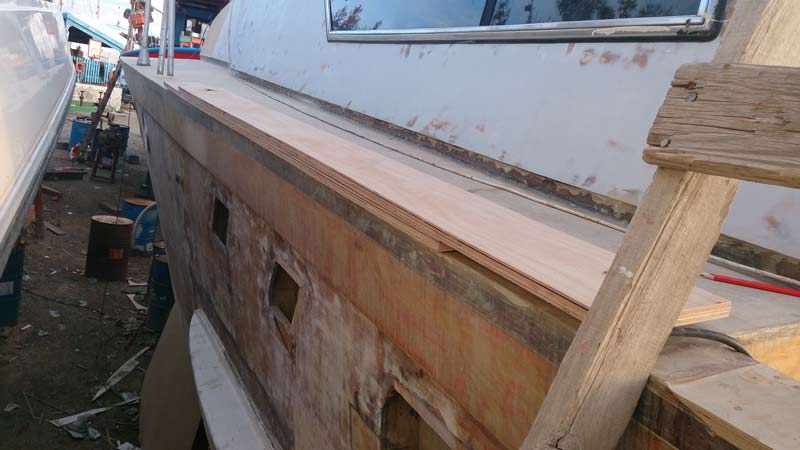
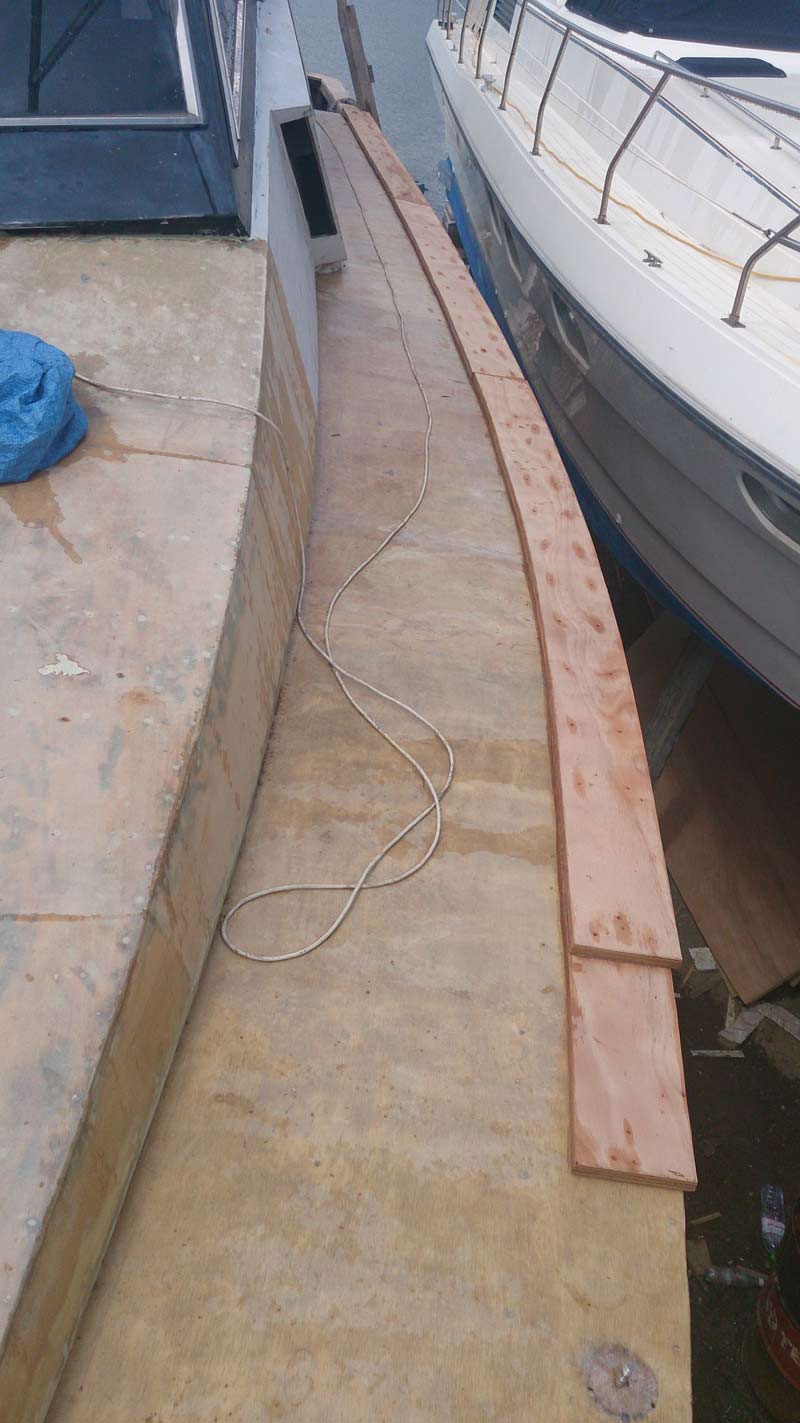
No sketches, but some pics showing half the job, by the end of the week should be v.clear and almost complete.

Two layers of 20mm marine ply and around 160mm wide all along the edge of the deck.
On top an approx. 15mm iroco protruding on both sides approx. 10mm. So the iroco caping is going to be around 180mm wide.
The good points are that this construction is rather solid and I can have some of the stanchion mounts secured on this and avoid the through holes to the construction underneath minimizing further chances of water ingress.
Also the rain/sea water running down the decks wont reach the capping and the stanchion mounts reducing further this risk.

Along the same route, all the bulwarks around the aft deck will be capped with solid iroco (avoid all the labour or laying teak all around)
Extra bonus is that when I decide to do the teak deck (wont have the time this year, so spring next year) I WONT have to dismantle half the boat in order to do so, but railings can be all in place ;)
The important thing is to avoid going over this week that the railings are off :eek:

So now it looks like this:
toerail+rubbingstrake_6.jpg


toerail+rubbingstrake_7.jpg


toerail+rubbingstrake_8.jpg


Currently port side is almost done, in the sense that the two layers of ply are cut roughly to shape, and epoxied together (and to the deck) to get the proper shape. Tomorrow the rest are going in, marked underneath (and from outside) to the deck-hull intersection shape, then planed to shape, test fitted and once happy will move to George's workshop to route the inner edge at constant width. Then I'll fit the M10 screws for the rest of the stanchions and epoxy it together. Once epoxied, I'll get another layer of matt and the necessary coats of epoxy over that and all along the sidedecks. Mind after all this treatment, the decks will be slightly wider than the P45 next to me (I've been using his as a model for my case :D )
Ah, before that ofcourse the pieces will be used as template for the iroco pieces that will come on top. Slightly complicated, but if the weather plays ball (Wed onwards) we should be ready by next weekend.

Hoping it will get the forum approval, one more points and 2 Q

I have left a water drain gap of 180X20 aft just in front of the last stanchion and plan to "close" the route of the waters running back to the aft deck.

I have to do the same up front as the bow, bows down :) Any reason NOT to have a similar gap either side of the bow roller?
and while I'm at it, do I secure the fairleads for the bow cleats ON this iroco capping?

I'm actually contemplating "elevating" the bow cleats and the (hated by all) windlass foot switches slightly (i.e. on a 20mm iroco) so that they'll be slightly above the teak deck when fitted. Any reason not to? Yes I dropped the idea of the footswitches on the hatch, since my horizontal winch is offset to port, the hatch has to be to strbrd and the switches are best placed to port...

more later on the main thread.

cheers

V
 
That's great Vas. Much much better imho. I like your idea of a system whereby you can fit the teak decks without undoing half the boat. Some thoughts:

1. Why not continue with the general idea and mount nearly everything on raised pads so you need move almost nothing to fit the teak? Cleats, fairleads, switches, etc. Really smart idea this imho

2. You could cut gaps in the capping rail for fairleads, like my first sq58 pic, but I wouldn't. Reason is that in the Med there are large downward loads on fairleads from the ground line chains, and having the fairleads on top of 2x ply + iroko will spread the load on the underlying hull structure very nicely indeed. Obviously you will need gaps to drain water

3. I like your logic of having fewer potential leak points and raising the stanchion bases above the rain puddles. You could even fit the stanchion bases with (hidden) s/s coach screws
coach-screws.gif


4. What will you do with the 40mm worth of plywood endgrain that you now have showing along the top of the hull sides? Glue on a thin iroko capping, 60 x 8 or something, and paint it white/same colour as hull? That would look quite good imho. ***You need to decide this before you cut the iroko capping, so you allow the extra 8mm width on the iroko!! ***
 
Yep, that's looking really good Vas. You might also consider additional drainage? You will get a lot of water sprayed up when on the plane, and you already know that any standing water is bad news for the future.
 
I have left a water drain gap of 180X20 aft just in front of the last stanchion and plan to "close" the route of the waters running back to the aft deck.
You have this exactly right imho Vas. You want to send the spray off over the side before it enters the aft cockpit, so you need a "breakwater" across the side deck (at the top of the step up from aft cockpit) plus a cut-out gap in the toe rail just in front of the breakwater. You can use a flush grating and a sump instead of a breakwater, but I think a breakwater is easier and perfectly ok

I have to do the same up front as the bow, bows down :) Any reason NOT to have a similar gap either side of the bow roller?
No reason not to. Seems a very sensible idea to me
 
glad you like it guys!

That's great Vas. Much much better imho. I like your idea of a system whereby you can fit the teak decks without undoing half the boat. Some thoughts:

1. Why not continue with the general idea and mount nearly everything on raised pads so you need move almost nothing to fit the teak? Cleats, fairleads, switches, etc. Really smart idea this imho
I'm still thinking about it. For example the 500mm round hatch will be also elevated 45mm (but all ply so epoxy and mat on top to seal it properly and strengthen the hole area)
Not sure on the aesthetics of having lots of iroko mixed seemingly randomly with teak. I'd be happier if cleats, footswitches and horizontal windlass was on a white plinth sort of thing. Need to also sort out how the water on the bows finds it's way out, means I'll end up with small 'islands" of white with SS fittings on them. Will have to decide by the w/e.

2. You could cut gaps in the capping rail for fairleads, like my first sq58 pic, but I wouldn't. Reason is that in the Med there are large downward loads on fairleads from the ground line chains, and having the fairleads on top of 2x ply + iroko will spread the load on the underlying hull structure very nicely indeed. Obviously you will need gaps to drain water
point taken will do just that, thanks!

3. I like your logic of having fewer potential leak points and raising the stanchion bases above the rain puddles. You could even fit the stanchion bases with (hidden) s/s coach screws
thought about that, but worried that they want be man enough for the job. So currently 10 cones on each side, 4 will be all the way through, 6 will be just on the 2X20mm+iroko on top. will buy and prepare the iroko tomorrow so not sure what thickness that will be, guess around 12-15mm (ideally 20mm but want to keep my budget reasonable)
4. What will you do with the 40mm worth of plywood endgrain that you now have showing along the top of the hull sides? Glue on a thin iroko capping, 60 x 8 or something, and paint it white/same colour as hull? That would look quite good imho. ***You need to decide this before you cut the iroko capping, so you allow the extra 8mm width on the iroko!! ***
when slanted towards the bows, it's more like 50-55mm!
Yes, plan is to first of all epoxy and screw the two plys in place, sand and smooth the sides flush to the existing, then epoxy/matt the whole deck and over the plys and down the side.
Then sand/fill/sand and more sand before painting. If it looks ****, I have the backup option of cutting and epoxying a 4mm ply all along the side (approx. 250mm high) and paint it. No end grain to mess (only the endgrain of the 4mm ply looking down (which will be rather vulnerable with water dripping down the sides...)
Hope we can get a decent finish on the epoxy and mat combo and stop there as I have to really make my mind up tomorrow or simply calculate a larger overhang anyway to cover the case of the 4mm ply.

You have this exactly right imho Vas. You want to send the spray off over the side before it enters the aft cockpit, so you need a "breakwater" across the side deck (at the top of the step up from aft cockpit) plus a cut-out gap in the toe rail just in front of the breakwater. You can use a flush grating and a sump instead of a breakwater, but I think a breakwater is easier and perfectly ok
yep, breakwater and the capping for the bulwark around the aft deck will be 15-20mm solid iroko. Obviously will end just where the cut-out is ;) Worried about ppl tripping over and ending up face down on the aftdeck though :( So plan to make this plinth almost 250mm wide so it's more like a step
No reason not to. Seems a very sensible idea to me
Yes, just need to decide where it's going to be, looks like it's going to be very close to the bow roller, leaving a good 500mm either side of the fairlead to distribute the loads.

Give me a few days and it's going to take shape.

Yep, that's looking really good Vas. You might also consider additional drainage? You will get a lot of water sprayed up when on the plane, and you already know that any standing water is bad news for the future.

P,
checked the geometry of the side decks, there's a clear peak one third of the length from the bow and then tapers of both sides. Adding another drain in the middle is pretty much pointless, if the geometry was flatter, I'd definitely do it (dead easy at this point tbh) but they wont do much.
Also wondering how big the bow drainage will have to be. The bow roller it self is shaped in a way that it will work as a drain, not big enough though at less than 100mm across :(

cheers

V.
 
Not sure on the aesthetics of having lots of iroko mixed seemingly randomly with teak. I'd be happier if cleats, footswitches and horizontal windlass was on a white plinth sort of thing.
Agreed. Then the only iroko is the capping rail, which will look ok and can even be varnished if you want

means I'll end up with small 'islands" of white with SS fittings on them.
Seems ok to me. Not at all unusual really

worried that they w[o]nt be man enough for the job.
I reckon they will. Into 15mm iroko and 40mm ply, sheesh!
How currently do you plan to install the 6 that are not right through? Some sort of captive head stud?

which will be rather vulnerable with water dripping down the sides
Yes, because not encased in the epoxy. Lots of sikaflex polyurethane adhesive would help seal the top endgrain

Hope we can get a decent finish on the epoxy and mat combo and stop there as I have to really make my mind up tomorrow or simply calculate a larger overhang anyway to cover the case of the 4mm ply.
Yes would be good to not bother with the 4mm ply. You could make the iroko 4mm wider and trim it off later if you do not use the 4mm ply...

Worried about ppl tripping over and ending up face down on the aftdeck though :( So plan to make this plinth almost 250mm wide so it's more like a step.
Yes but I think that is a "desktop" design point :D. I had this breakwater (80 x 80 section, approx.) on 2x Sq58s for nearly 7 years and no-one ever stubbed a toe. Many boats have same arrangement.

500mm either side of the fairlead to distribute the loads.
Good! sometimes the chains are heavy. Sometimes in a berth when you are on the limit of the berth's size, the groundlines point mostly down, say 30% from the vertical. Thus if you are worried about headwinds and tighten the lines with X Newtons of horizontal load on stern lines, you have 2X of tension in bow lines (divide by SIN30 degrees and all that)

Give me a few days
Looking at this project in the round, I think we can do that Vas:D

Also wondering how big the bow drainage will have to be.
I would think that something like 150-200 wide will be fine and look right
 
Last edited:
I reckon they will. Into 15mm iroko and 40mm ply, sheesh!
How currently do you plan to install the 6 that are not right through? Some sort of captive head stud?
yep, the M10 bolt has a 20X50X4mm plate through and welded on it, so i'll chisel out the right size on the bottom of the lower piece of 20mm ply and get the bolt through ;)
Have done that already planning to refit the stanchion bases as were originally done, so nothing to worry and act upon ;)

Looking at this project in the round, I think we can do that Vas :D
are you implying I'm slow John? :p

thanks for all the other comments, all points taken!

off to bed as I'm hoping on a 12h working session tomorrow

cheers

V.
 
Vas, I've just seen this thread, and while I agree that your latest approach is nice in many respects, there's one thing which would worry me slightly, particularly on a wooden boat.
Actually, that also depends on the "angle of attack" of the deck, when the boat is static - it might be not much of a problem if this AoA is (relatively) high.
Anyway, my concern is that the edge all around the deck might become a trap for the rain, leaving fresh water along that edge for much longer than it would stay/dry out without any obstacle.
And water is damn good at finding even the smallest entrance, if you give it enough time...
I understand that I'm a bit late with this thought, sorry about that.
There are many pros in your idea anyhow, so maybe it was worth going that route regardless of my concern.
I'd just try to seal VERY well along the whole length, between the edge and the deck! :)
 
are you implying I'm slow John? :p
:D It was a comment on the size of the project not the speed of the bloke doing it :D My, this armchair I'm in is comfortable :D

Ref MM's point, hmm yes food for thought. It's not too late because the toe rail isn't attached to the hull yet MM. IF the deck has a crown in it, which you'd expect and which it appears to have, and IF the beam at the step down from side-deck to aft cockpit is less than the widest (amidships) beam, you will potentially have a puddle

I say "potentially" because if the sheerline isn't horizontal (at rest) then its angle might drain the puddle. From your photos Vas it looks like even say 3 degrees of sheerline angle will avoid any puddle, and the boat easily has that much sheerline angle. You will need to check all this of course. If in doubt maybe put a 100mm opening/gap in the toe rail at the widest beam point.
 
Yep, all agreed.
Pics obviously are not enough to evaluate all that, but it shouldn't be too difficult for Vas to judge, looking at the real thing.
Btw, interesting to hear of "puddle". I just checked it on the dictionary, can't believe to have never heard that before....
....well, either that, or my neurons are decreasing faster than I thought! :D
 

Other threads that may be of interest

Top