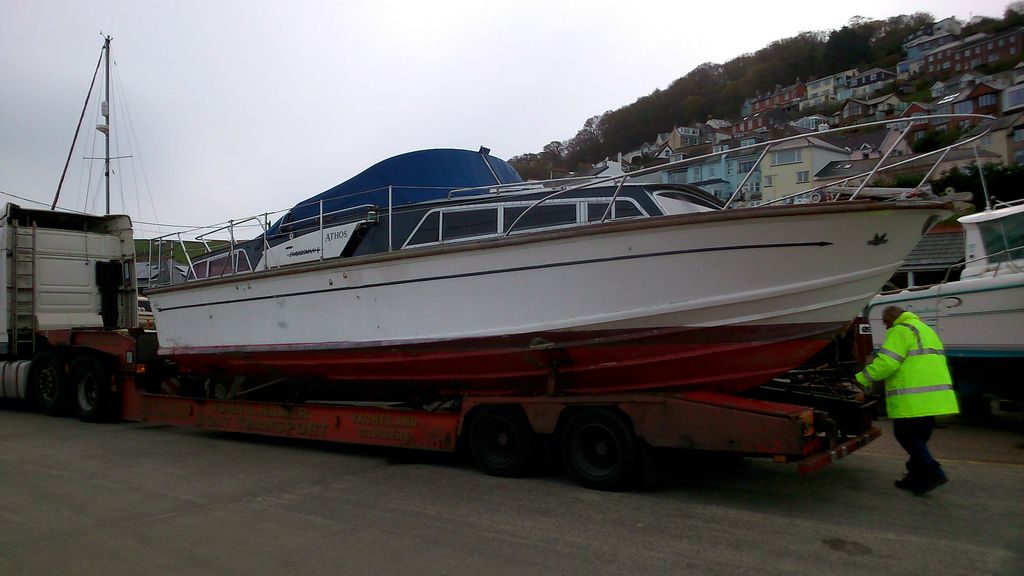
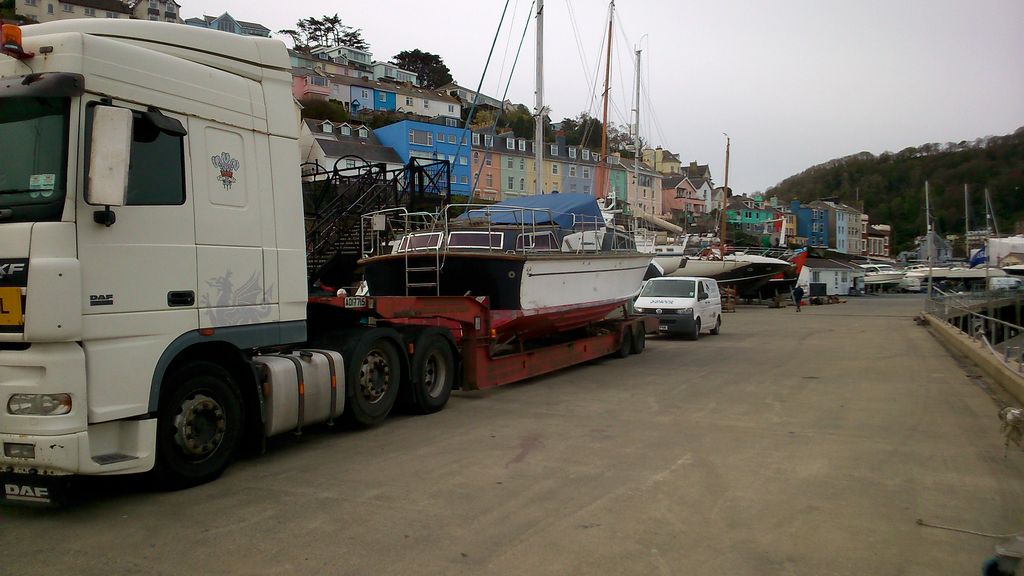
This is rather a nice old thing... (Fairey Swordsman 33)

Christ alive! I thought that stainless radar arch was another boat behind, that's shocking.

Nope, also visible in the pic on the travelift.

Personally I don't think the fenders on the bow do much for the looks either, though at least that's a simple fix for the buyer.

Pete
 
Is a hot moulded hull less tasty than the regular type?
It's just that I'm not aware of anything that considers a fibreglass hull to be a viable lunch :D

woodworm.jpg
 
Last edited:
There's a degree of mythology that surrounds the Longevity of Fairey hulls, as It's quite unusual for rot problems with a Fairey boat to actually start with the hull (and I've certainly never heard of one being munched by worms or weevils); generally the problems come from above rather than below, as the hot-moulded hardwood strip and epoxy hull is an expensive and comparatively inert structure, whereas the marine-ply topsides were quite cheap. The rot that can develop in the hulls of neglected boats tend to start around the grain ends, where the hull meets the transom or where the hull meets the deck. Most boats that have been properly restored in recent years feature a thin grp sheath to the topsides to keep the water from getting in, which goes a long way towards solving some of the issues of these boats. Having said all of that, overall, the survival rate of Fairey motor boats has been pretty good, and the spectacle of a neglected boat sitting in the corner of a boatyard, turning into so much kindling, seems now to be a mercifully rare sight.
 
There's a degree of mythology that surrounds the Longevity of Fairey hulls, as It's quite unusual for rot problems with a Fairey boat to actually start with the hull (and I've certainly never heard of one being munched by worms or weevils); generally the problems come from above rather than below, as the hot-moulded hardwood strip and epoxy hull is an expensive and comparatively inert structure, whereas the marine-ply topsides were quite cheap. The rot that can develop in the hulls of neglected boats tend to start around the grain ends, where the hull meets the transom or where the hull meets the deck. Most boats that have been properly restored in recent years feature a thin grp sheath to the topsides to keep the water from getting in, which goes a long way towards solving some of the issues of these boats. Having said all of that, overall, the survival rate of Fairey motor boats has been pretty good, and the spectacle of a neglected boat sitting in the corner of a boatyard, turning into so much kindling, seems now to be a mercifully rare sight.

Largely correct, its not epoxy its Bordon Aerolite. but essentially, yes, the hul l shells last very well, the ply falls to bits.

There's far too many rotting ashore.
 
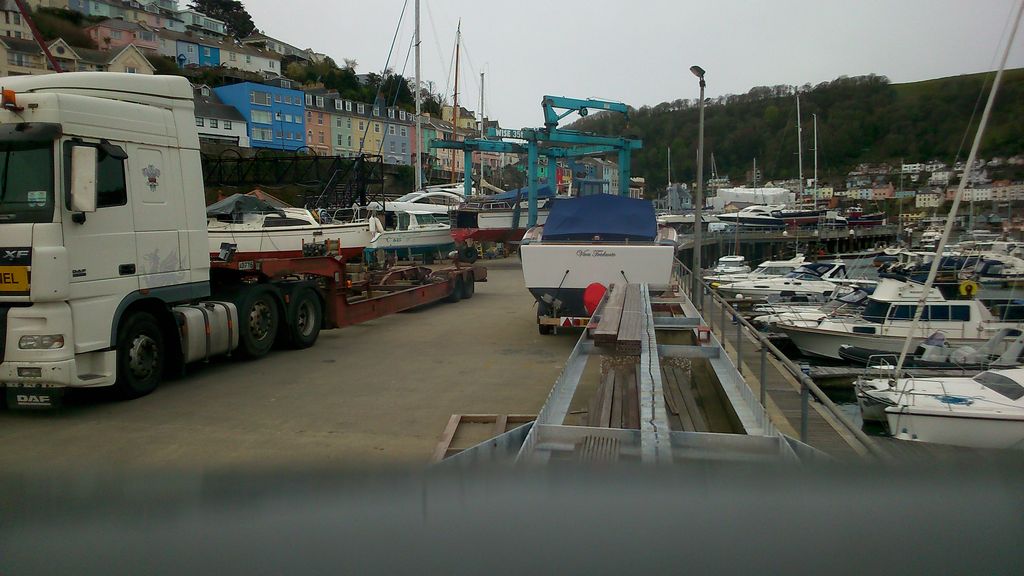
If I recall correctly, that Corvette in the bottom pic is called Misadventure, I always thought that an incredibly stupid name for a boat. Confusion in an emergency?

BTW - Another Swordsman resting on her keel....not the right way.
 
If I recall correctly, that Corvette in the bottom pic is called Misadventure, I always thought that an incredibly stupid name for a boat. Confusion in an emergency?

BTW - Another Swordsman resting on her keel....not the right way.

That was observant! It was the Levi hull on the trailer I thought someone would spot - Viva Tridante... Not really a good angle, but will try and get better next week - she's in the water now.

Yes, I saw the comments before about the stowing of the Swordsman on the keel. I doubt the owner or quayside knew that however and she's been in that spot about 7 years we think :( I've only been there a couple of months and not my job, so wasn't about to pick up on it. If owners provide manufacturer lifting/stowing instructions, they do follow them however and as far as I've seen don't usually need a reminder.
 
Top